
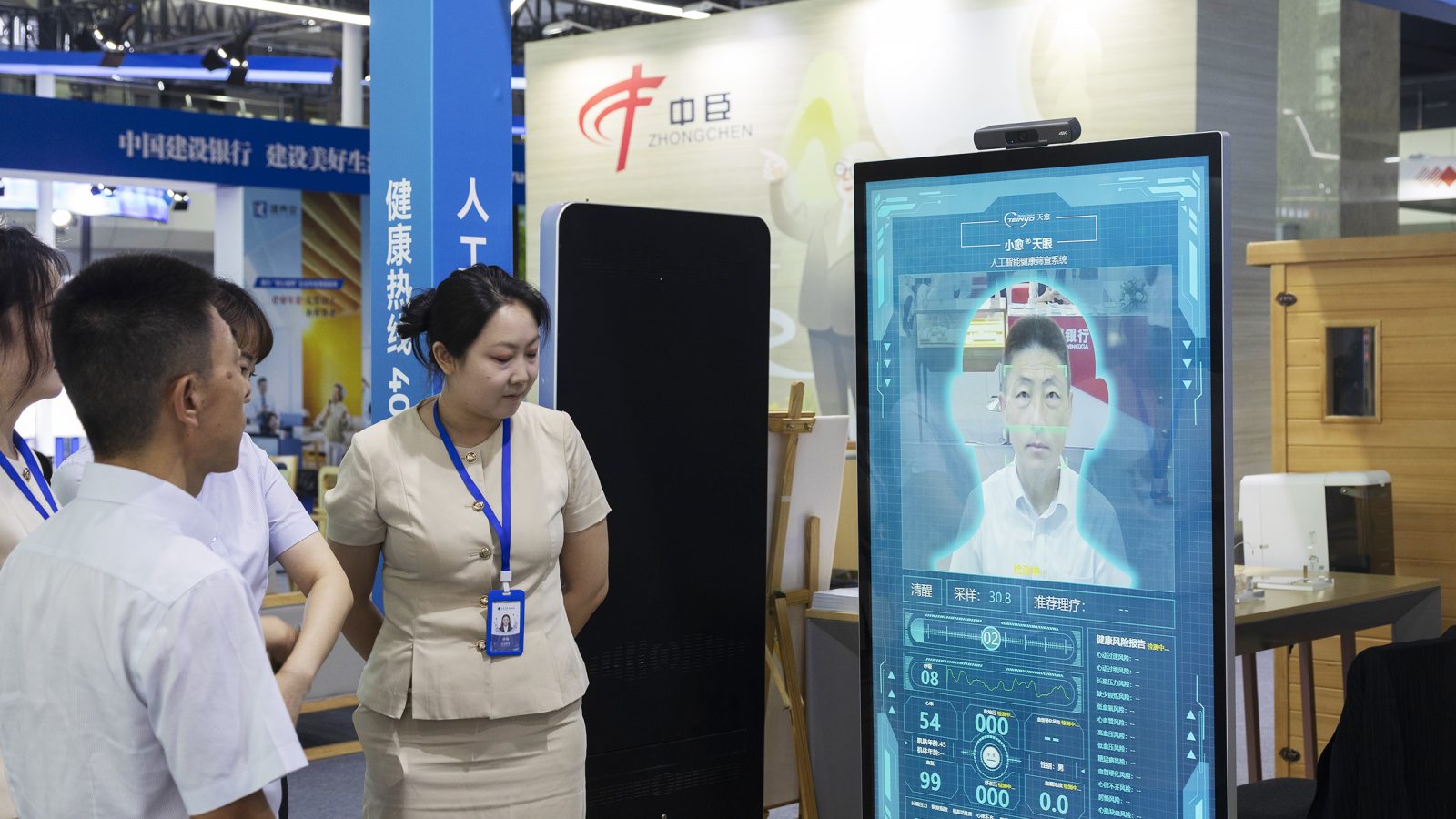
If you want to see a doctor in China, you’d first go to a mobile app. You can book an appointment at a hospital using the messaging app WeChat or payment app Alipay. You can also speak with a doctor on a telemedicine platform, or chat with the AI avatar of a doctor about everything from insomnia to diabetes. The Chinese government has encouraged the expansion of digital healthcare services to provide care to the country’s 1.4 billion people, and address longstanding challenges such as an urban-rural gap in healthcare and a lagging primary care network. With a strong biotech talent pool and an efficient clinical test system, China’s drug industry is having a breakthrough moment, as well. More clinical trials are being conducted in China than in the U.S., and China now accounts for half of global drug licensing deals, as Western pharmaceutical companies purchase rights to new medicines developed in China. Globally, the rise of China’s prowess in health tech has been met with both awe and suspicion. Ruby Wang, a physician and consultant who has worked in health tech in China and across the world, writes about these tensions in her upcoming book China Cure: The Rise of a Biotech, AI Medicine, and Global Health Superpower. Wang spoke to Rest of World about China’s health innovation and what it means for the world. With a massive population, you have to prioritize convenience and access.” The interview has been edited for length and clarity. The Chinese population is very optimistic about AI, and one of China’s most popular AI apps is a health app. How does Chinese society view AI in healthcare, and how is it different from the West? In the U.K. and in the U.S., tech is always an add-on in the health system. You are trying to screw an extra bit onto a rusty machine, whereas in China, because the infrastructure and the digital rails are so technologically enabled, society accepts that as normal. With a massive population, you have to prioritize convenience and access because there’s no other way to meet your needs. It’s not only China. I’ve seen it in Brazil, Kenya, and Ethiopia; when you’re a country that’s actively, frantically developing, you don’t have the luxury of waiting and watching, you just have to act. In the U.K., where I work with health tech, it’s always about “let’s think about the risks before we do anything.” China’s digital health is not directly exportable — the West would never accept an AI doctor avatar. But I think it’s important to be aware of, and learn from, China. Chinese company Akeso recently developed a cancer drug that could work better than Western equivalents, and leading pharma companies like Pfizer have committed billions of dollars to license cancer drug candidates from Chinese companies such as 3SBio and Innovent Biologics. You describe these as part of a “DeepSeek moment” in biotech. How did China get so good, so fast? It took decades of waste, mistakes, waiting for talent to come back, slowly building capacity and synergy through all of the things like tax incentives, office space, and capital investments. Now China has really good scientists building really good drugs at an incredible scale, boosted by China’s massive patient population, where no disease is rare. There are also low running costs, cheaper labor, and more hardworking people. This year, China’s share of global drug out-licensing deals could be as much as 60%. We can safely say that in the next few years, the proportion of global drugs originating from Chinese labs and talent will be higher. Unless tariffs and regulations like the Biosecure Act, the COINS Act, and BINSA prevent it, we are going to have Chinese drugs hopefully saving patient lives everywhere. [The Biosecure Act restricts federal contracts with certain Chinese biotech companies; the COINS Act restricts U.S. outbound investment into sensitive tech sectors more broadly; and the BINSA bill would extend that investment screening specifically to biotech.] There are some caveats. China is strongest in oncology, but in more sophisticated areas, such as immunology, China is less mature. Also, Chinese biotech companies are weak at commercializing. They know how to build a drug, but they don’t know how to sell it or build it into a health ecosystem. That’s also why we’re seeing such high levels of out-licensing deals. A Chinese company signs with Pfizer, and Pfizer sells that drug in the U.S., because Pfizer knows the U.S. Western policymakers and companies are debating whether they should embrace new drugs developed in China. It reminds me of the initial pushback against Chinese electric vehicles, drones, and AI models. What do you think of this debate? According to World Trade Organization agreements, medicines ethically and legally should not be subject to tariffs because access to them is a human right. But somehow they have been. The security-focused language and perspective have been normalized in a very dangerous way. Chinese products are cheaper and scalable, which is so important for developing countries.” Scientists collaborate across labs and publish together. That’s how science has always been. We work together and move faster. But somehow that is not happening enough. The argument that works is: “American companies will make money, too.” The Chinese government has identified brain-computer interface (BCI) as a strategic industry. What competitive advantages does China have? China’s new Five-Year National Health Plan calls for breakthroughs in brain-computer interfaces alongside drugs, vaccines, and medical devices. The broader National Five-Year Plan identifies BCI as a “future industry” that China wants to develop into a new source of economic growth. China has advantages across the whole ecosystem: electronics and hardware supply chains, engineering and manufacturing capacity, major clinical centers, AI expertise, and strong state support for moving technologies from research into clinical use. The U.S., of course, remains stronger in some frontier invasive technologies. But China has shown itself to be particularly good at compressing the distance between hardware, software, clinical deployment, regulation and manufacturing. One indication is the March 2026 approval of Neuracle’s NEO system, the world’s first commercial approval of an invasive BCI medical device. What else are you most excited about in Chinese biotech? The hardware piece of Chinese health is huge. Many products are designed for wellness and social care, which is really exciting. China is also producing a lot of highly specialist equipment, like ultrasound imaging machines, for use in the West, Africa, and Latin America. Chinese companies are also producing good surgical robots. Chinese products are cheaper and scalable, which is so important for developing countries. The narrative in the West is often about China’s usurping role in global health, and how dangerous it is that China is taking over power in places like Africa. But in terms of health technologies, what works in rural China can work in Africa, too. That relevance, and China’s recent history of health development, is something important for us to think about.
China is excelling in health tech. That’s good news for the world
Full Article
Original Source
Read the full article at Restofworld →KhanList aggregates and links to publicly available news content. We do not host full articles from third-party sources. Always verify important information with original sources.