
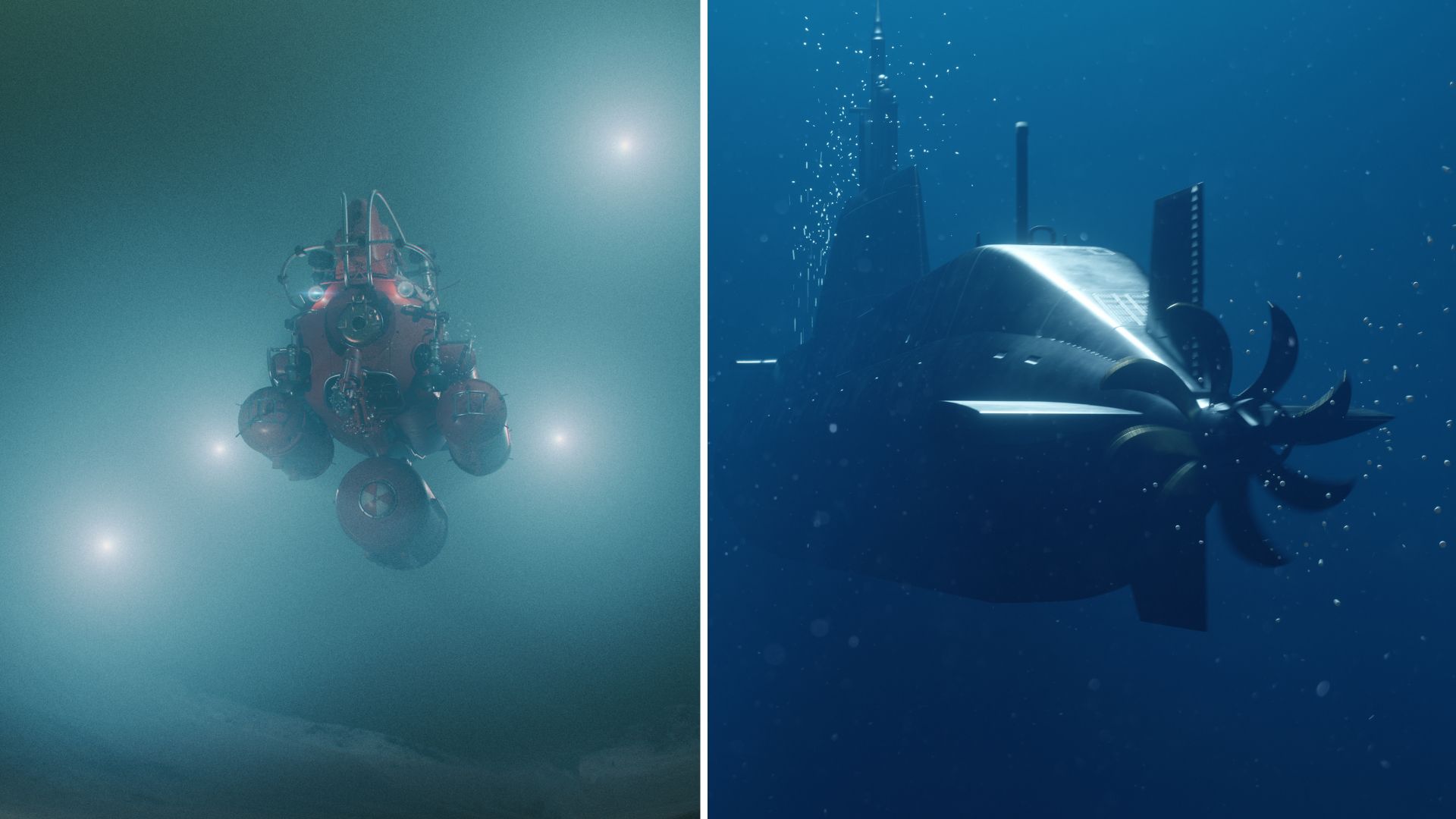
A report has revealed that China is exploring a new model of maritime defense in which contested islands in the South China Sea could be protected by networks of autonomous machines rather than relying primarily on human personnel. Outlined by researchers associated with the China Coast Guard Academy and Dalian Maritime University, the concept reflects the growing importance of drones and artificial intelligence in modern warfare. The proposal was discussed in a paper published in July in Command Control & Simulation, a Chinese military-technology journal supervised by China Shipbuilding Industry Corporation. Researchers envisage a coordinated system involving aerial drones, uncrewed vessels operating on the sea surface and underwater vehicles. Together, these platforms would form a multi-layered defensive network around islands and reefs, according to the Chinese media report. Shift from conventional island defense The idea represents a shift from conventional island defense, where soldiers and manned ships perform most surveillance and response tasks. Instead, the proposed system would use numerous relatively inexpensive machines that could monitor different parts of the surrounding maritime environment.Aerial drones could provide broad surveillance from above, while surface and underwater platforms could watch approaches that are difficult to monitor continuously from land. Artificial intelligence could then help process information from these different platforms and identify potential threats. Inexpensive uncrewed platforms can pose challenges The attraction of such a system is partly economic. Modern drone warfare has demonstrated that relatively inexpensive uncrewed platforms can pose challenges to much larger and more expensive military assets. Researchers cited the changing nature of naval warfare as a reason to examine how China could respond to attacks involving large numbers of unmanned systems. The rise of drone warfare has changed military thinking well beyond the battlefield. Uncrewed systems can operate in the air, on the water and beneath the surface, allowing military planners to distribute surveillance and combat capabilities across several domains. International organisations have also noted the rapid development of such systems and the growing debate over their security implications. China’s proposed approach appears to take this development one step further: instead of simply deploying individual drones, it seeks to make them part of an interconnected defensive architecture.Such a network could potentially continue functioning even if some individual platforms were destroyed or communications were disrupted. The concept therefore relies on redundancy—the idea that losing one drone should not bring down the entire defense system. The proposed technology is particularly significant because the South China Sea is one of Asia’s most contested maritime regions. China, the Philippines, Vietnam, Malaysia, Brunei and Taiwan have overlapping territorial or maritime claims in the wider region.China has already constructed and expanded facilities on several disputed features, making islands and reefs important elements of its wider maritime strategy. The introduction of autonomous surveillance and defensive systems could add another technological layer to this existing infrastructure.However, it is important to distinguish between a research proposal and an operational military deployment. The paper describes a possible future defence architecture; it does not, by itself, demonstrate that China has already converted its South China Sea outposts into fully autonomous robotic bases. The most striking aspect of the concept is its multi-domain character. In the air, drones could provide persistent surveillance and help identify approaching aircraft or vessels.On the surface, uncrewed boats could patrol waters around an island, potentially providing another layer of observation and response. Underwater, autonomous vehicles could monitor areas that are difficult for conventional surveillance systems to cover, including approaches around reefs and shallow maritime zones.Connecting these different systems could give commanders a much broader picture of activity around an isolated outpost. It could also reduce the need to place personnel in every location where surveillance is required.
China could deploy uncrewed aerial, underwater drones to counter attacks near contested islands
Full Article
Original Source
Read the full article at Interestingengineering →KhanList aggregates and links to publicly available news content. We do not host full articles from third-party sources. Always verify important information with original sources.