
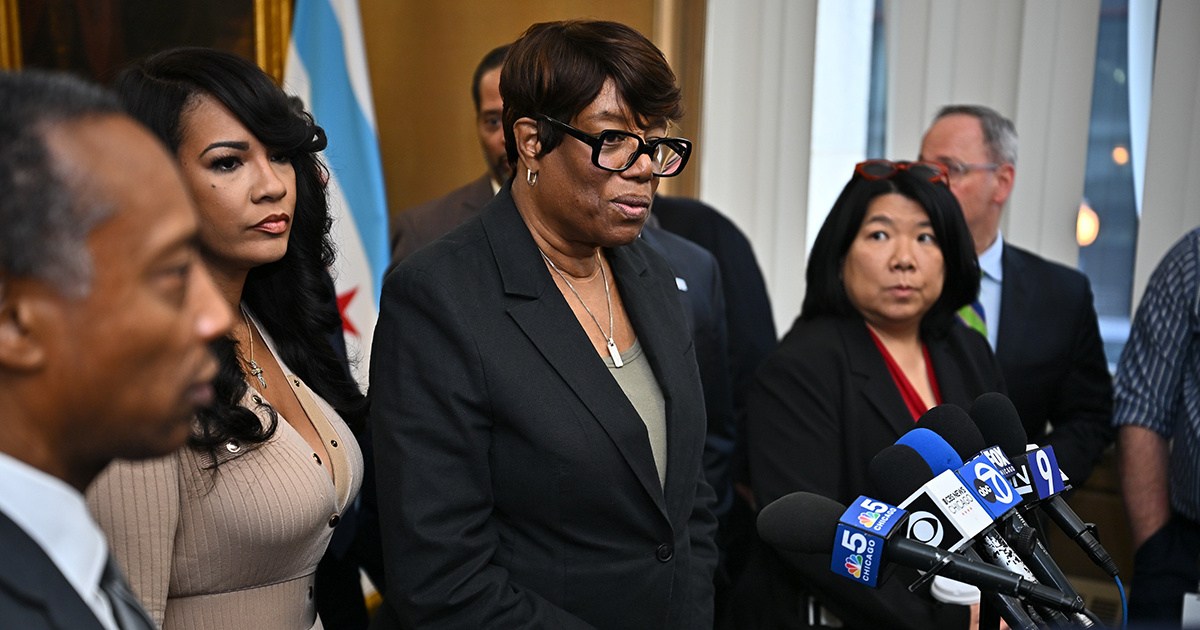
The debate over Chicago’s financial struggles — out in the open as never before — took a new turn on Wednesday as the City Council added to the scrutiny. The City Council voted 45-5 in a special meeting to give a leading alderperson the authority to hire an outside firm to independently review Chicago’s finances. It’s unclear if an audit would be complete in time for the City Council to consider its findings before the Dec. 29 deadline mandated by state law to pass a 2027 budget, in what likely will be contentious negotiations with Mayor Brandon Johnson. Later in the day came another sign of distress: S&P Global put the city on credit watch with a warning that the budget wrangling is likely to result in a credit downgrade within 90 days. The intense council debate over the city’s financial future comes in the wake of a package of stories published Monday by WTTW News and ProPublica that examined how a $55 billion debt burden, decades in the making, was hampering efforts to service Chicagoans and how the Johnson administration was turning to more borrowing to plug holes, such as large police settlements. Alderperson Pat Dowell had called for the outside review after former Chief Financial Officer Ashlee Gabrysch abruptly resigned Friday over what she described as a political environment that forced her to downplay certain facts about the city’s financial situation. Gabrysch argued that her integrity would be compromised if she stayed on. Just as Gabrysch had once been a trusted part of Johnson’s team, Dowell was once thought to be a mayoral ally. Johnson tapped Dowell, who endorsed him during the 2023 mayoral election, to lead the City Council’s Finance Committee soon after he took office. But since then Dowell has proven to be a thorn in the mayor’s side, refusing last year to support his proposal to impose a $25 per month per employee tax on most firms that have more than 125 employees and hike the city’s personal property lease tax. (Johnson continues to push for that idea.) The ordinance gives Dowell the authority to spend whatever is necessary “to determine whether any material or intentional misstatements of the city’s financial condition to investors, the City Council and the public have been made in any public document, presentation, offering or financial reporting within the prior three years.” The firm, or firms, hired to conduct the review will have access to all city documents and records, and all city officials must cooperate with the probe, according to the ordinance. “We must ensure that our math is correct,” Dowell said, vowing to act quickly. “The discrepancies over the past few weeks have been particularly disturbing to me. As my mother used to say, where there’s smoke, there’s fire.” Johnson said he welcomed the review and will not veto the ordinance. Chicago Mayor Brandon Johnson presides over a special City Council meeting on Wednesday. Victor Hilitski/WTTW News Justin Marlowe, a professor at the University of Chicago’s Harris School of Public Policy and the director of the Center for Municipal Finance, said he wasn’t certain an audit was warranted while acknowledging its importance in another way. He noted that the audit vote coupled with the inability of the council and the mayor to agree on a budget plan already may have done damage with credit rating agencies. “The way cities make their budgets matter,” Marlowe said. “It matters that for the third year in a row that there are disagreements over basic facts.” In short, Marlowe said, “Investors don’t like uncertainty, and this is creating a lot of uncertainty.” Alderperson Matt Martin said Wednesday that the analysis by ProPublica and WTTW was “sobering.” He is questioning some of Johnson’s borrowing strategies. Over the years, Chicago alderpersons have generally acquiesced to mayoral directives on finances. But that has changed under Johnson, in part due to his preference for a head tax but also because of the growing realization that the city’s finances have been undermined by a series of decisions from previous mayors. Similarly, top administration officials generally choose to leave City Hall either quietly or with words of praise for the current mayor. That’s not how Gabrysch handled her exit. The statement she released Friday made it clear she had severe doubts about the way Johnson was portraying the city’s debt problem. And she reiterated those concerns in a commentary in the Chicago Tribune over the weekend that also laid out her suggestions for how the city can more responsibly handle its budgeting (for example, “Don’t borrow to pay everyday bills, even if we’ve done so in the past”). Then, in a brief interview with the Chicago Sun-Times on Monday, she said she supported calls for a financial audit. “If this makes it easier for residents to see that Chicago actually is in a fairly dire fiscal situation where hard decisions … and shared sacrifices have to be made, that can be helpful,” Gabrysch said. “Shining some light on the city’s finances — whether or not they discover wrongdoing, but rather showing the nuances of how dire some things have become — could be worthwhile.” Chicago’s credit rating has been plummeting, adding to the cost of borrowing and leaving the city just two or three levels above junk status among leading Wall Street rating agencies. Gabrysch had been hired just three months ago from Fitch Ratings, with an eye toward shoring up the city’s reputation. S&P Global, one of a handful of major ratings agencies, released a statement on Wednesday about its “CreditWatch” for Chicago. It cited the intense battle over the budget and an increased likelihood that “the city will resort to significant one-time measures to balance the fiscal 2027 budget.” That means analysts see at least a 1-in-2 chance of issuing a rating cut in the next three months. Johnson’s administration has sought to portray Gabrysch as someone who fell short in her duties and mismanaged a major transfer of funds — characterizations she has disputed. Read More The mayor has dismissed the conflict that led to Gabrysch’s resignation as a “technical dispute.” When he unveiled his 2027 budget, Johnson and administration officials said 76% of the budget gap would be closed with “structural fixes” — long-term or permanent solutions — that would bring expenses in line with revenues. That could help the city avoid another credit downgrade. But Gabrysch told the City Council on Oct. 26 that the decision to borrow $481 million to cover the cost of resolving police misconduct lawsuits in 2027 and 2028 changed that calculation, reducing the amount the gap closed with revenue the city can count on in future years to just 56%. As recently as September, Johnson told reporters the city would not borrow to cover those costs. If the City Council approves Johnson’s proposal to borrow $481 million, the city’s massive debt burden — which now tops $55 billion — is set to grow for the second straight year to cover the cost of running the city, a sign of financial trouble. That distress, Johnson has argued, is largely due to the decisions of previous administrations. “It’s no secret: Our city finds itself in a precarious financial situation due to decades of mismanagement,” he said Tuesday.
Chicago’s City Council Orders Independent Review of Finances as Scrutiny Intensifies
Full Article
Original Source
Read the full article at Propublica →KhanList aggregates and links to publicly available news content. We do not host full articles from third-party sources. Always verify important information with original sources.