
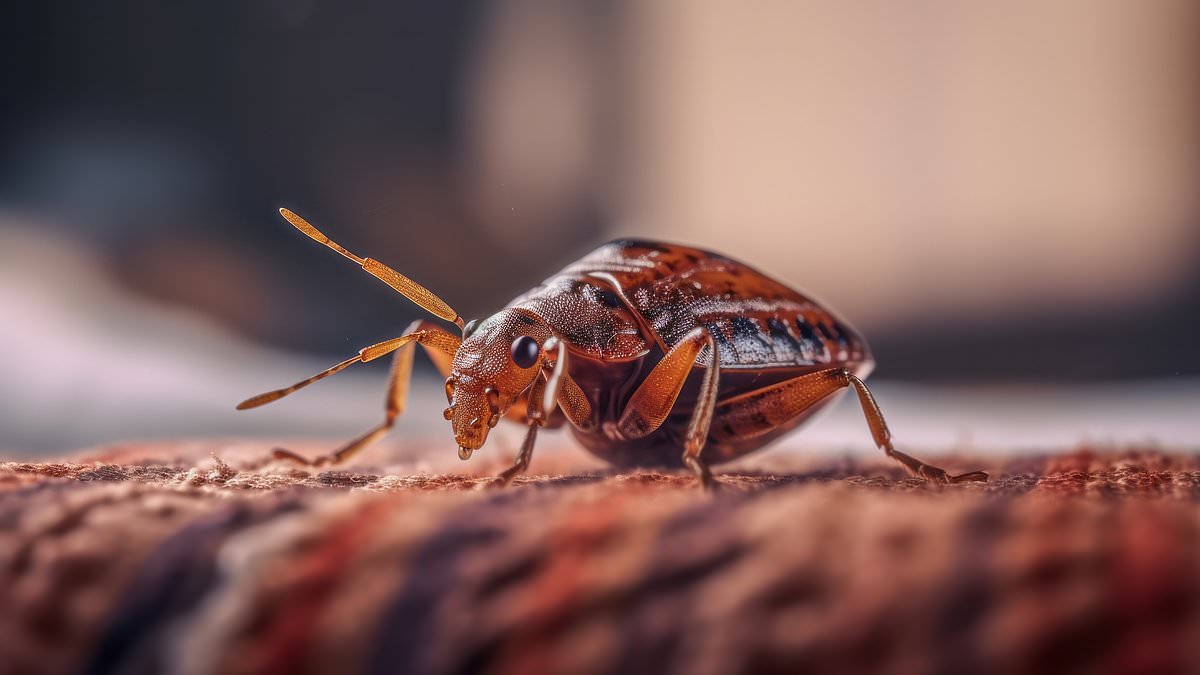
Published: 07:45 EDT, 26 October 2026 | Updated: 07:57 EDT, 26 October 2026 Changing the sheets is a chore that many of us dread, with the average Brit doing it just once a fortnight. However, scientists are urging people who live in busy cities to increase the frequency of their washes – to cope with the bedbug crisis. According to recent reports, cases of the tiny bloodsucking insects are at an all–time high, with an increase of 20 to 25 per cent across big European cities.With this in mind, Dr Gareth Nye, a Biomedical Sciences lecturer at the University of Salford, claims that Brits living and working in cities should be washing their sheets every four to five days. 'For the general population, washing bedding once a week is recommended,' he told M&S.'But for individuals living and working in densely populated cities, I suggest increasing this frequency to every 4 to 5 days due to significantly higher concentrations of airborne pollutants, exhaust particulates, and general dust.' Scientists are urging people who live in busy cities to increase the frequency of their washes – to cope with the bedbug crisisAccording to Valpas, a hospitality technology company, bedbug cases are at an all-time high. Martim Gois, co-founder and chief executive of the company, said Europe is 'at peak bed bug', with an unprecedented 'surge' in numbers observed in hotel rooms. The tiny insects can hide in mattress seams, bed frames and upholstered furniture and are often transported into homes through luggage, clothing and unwashed second-hand clothes.As a result, Dr Nye recommends washing your sheets more often, and at higher temperatures than normal. He said: 'Wash your bedding on a hot cycle of at least 60°C (140°F) for at least 30 minutes to ensure the heat penetrates the fabric entirely and kills bed bugs and eggs.'After washing, consider using a tumble dryer, as the heat of a tumble dryer is actually very useful for eradication, more so than the washing machine.'For both of these, don't overload the drum to allow the heat to penetrate the sheets. The tiny insects can hide in mattress seams (pictured), bed frames and upholstered furniture and are often transported into homes through luggage, clothing and unwashed second-hand clothes'Remember bed bugs don't just live in the sheets so regularly vacuum the seams of your mattress, the crevices of your bed frame, and the floor underneath the bed to physically remove any hiding pests or eggs.'Beyond the home, Mr Gois also urges Brits to be particularly careful if they regularly travel on trains. He told the Daily Mail: 'Bed bugs generally pass through trains in luggage. Longer journeys and sleepers give them more opportunity to emerge while passengers stay put.'Finding bed bugs far from a bed is worth taking seriously. It usually means there are enough of them to have spread beyond where they normally live: around beds.'On trains, they're usually passing through. When travelling, focus on where you sleep: choose a hotel certified bed bug-safe in real time, or check thoroughly on arrival.'Mr Gois explains how the insects like 'dark, undisturbed hiding places in luggage' and rarely travel on people.He recommends keeping bags zipped up and off the seats, as well as opting for hard-shell cases instead of fabric. WHAT ARE THE SIGNS THAT THERE ARE BED BUGS IN YOUR ROOM? Signs of a bedbug infestation could include: Small bugs or tiny white eggs in the crevices and joints of your mattress and furniture. Bites on your skin.Tiny black spots on your mattress – this could be their dried poo mottled bedbug shells.Blood spots on your sheets – these can occur if you squash a bug after it has fed an unpleasant, musty scent in your bedroom. They tend to prefer fabric or wood over plastic and metal, and often hide near to where you sleep. Even though bed bugs are parasites and can carry bacteria, they’ve never actually been known to spread disease They do, however, give itchy bites and cause allergic reactions in people who are sensitive to their bite—not to mention the fact that they’re a general nuisance. Source: NHS
Change your sheets every four DAYS, microbiologist urges Brits amid bedbug crisis
Full Article
Original Source
Read the full article at Dailymail →KhanList aggregates and links to publicly available news content. We do not host full articles from third-party sources. Always verify important information with original sources.