
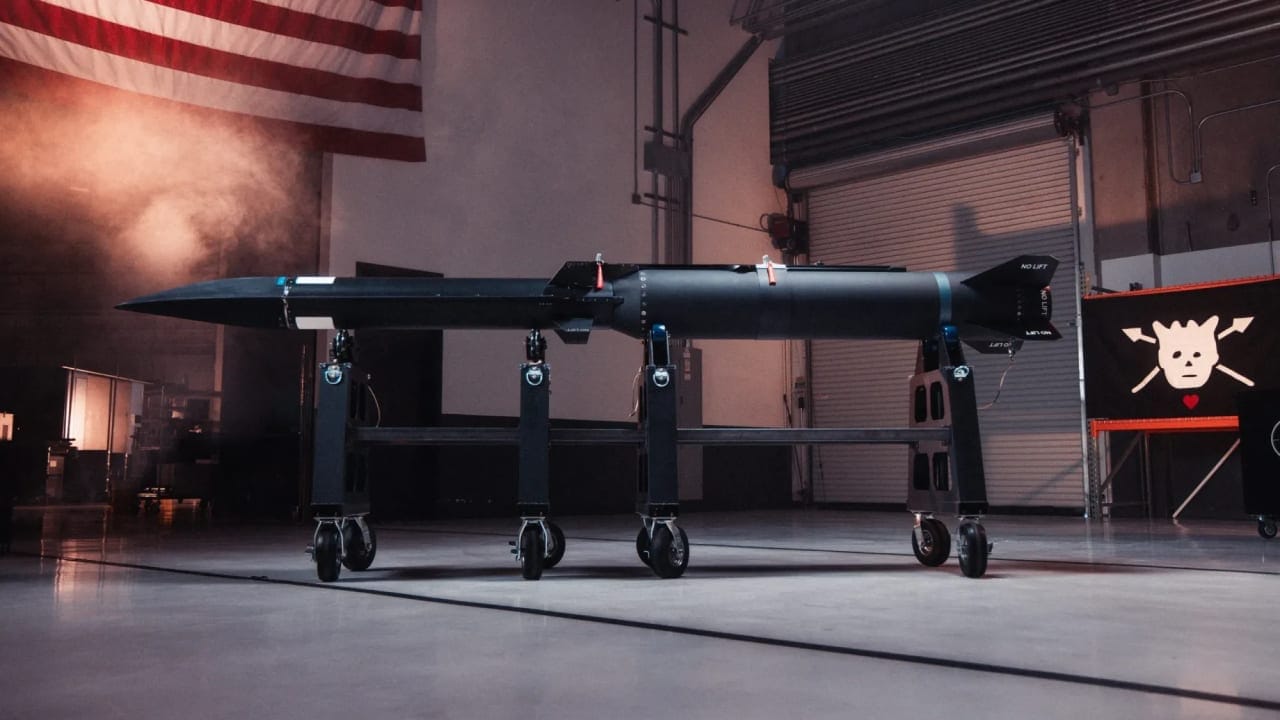
AUGUST 30, 2026 11:51Updated: AUGUST 30, 2026 12:53Castelion, one of the United States’ fastest‑advancing hypersonic weapons start-ups, has secured a $1 billion Series C funding round that would allow the company to dramatically expand its production of next‑generation strike and missile defense systems. The raise, which values the California‑based firm at $13b., demonstrates that Washington is accelerating investment in industrial capacity for high‑speed precision weapons amid intensifying global tensions.The round combines $800 million in equity with a $250m. revolving credit facility. It was led by JPMorgan Chase’s Strategic Investment Group, Andreessen Horowitz, and Carlyle‑managed funds, with additional participation from Lightspeed Venture Partners, General Catalyst, Altimeter, Interlagos, Lavrock Ventures, and T. Rowe Price.Castelion’s CEO, Bryon Hargis, formerly of SpaceX, said the new capital will accelerate production of the company’s flagship Blackbeard hypersonic strike missile.A Castelion hypersonic vehicle is test launched in the Mojave Desert, March 9 2024 (credit: REUTERS)“Deterrence depends on unapologetic American strength; highly capable weapon systems that adversaries fear produced in quantities they can’t imagine at a price taxpayers can afford,” he said. "There's a manufacturing renaissance underway, and this round turbocharges American production of Blackbeard. Designed in California, built in New Mexico, supplied from small and large businesses across the United States; Blackbeard is an example of what America can do when private capital and government work together."Blackbeard has advanced from initial design to a formal US defense program in under four years, an unusually rapid pace for a weapon in this class. The company is also developing a longer‑range precision strike system and new defensive capabilities intended for air and missile defense missions.A substantial portion of the funding will support the expansion of Castelion’s Project Ranger complex in Sandoval County, New Mexico. The 1,000‑acre facility, which has already received more than $250m. in private infrastructure investment, is being built out as a high‑volume manufacturing site capable of supporting sustained missile production. The Pentagon has outlined a potential two‑year procurement framework that could require at least 500 Blackbeard missiles annually, contingent on successful testing.Castelion’s relationship with the US Navy has deepened over the past 18 months, during which the company has secured more than $500m.in government contracts. Space News reported that the US Navy placed a $23.4m. firm-fixed-price order for 50 pre-production Blackbeard weapons and 50 shipping and storage containers.Other deals with the navy included advancing Blackbeard toward early operational capability and integration work for deployment aboard the Boeing F/A-18E and F/A-18F Super Hornet.Defense budget documents estimate the per‑missile cost at roughly $384,000, placing Blackbeard in a price tier that enables high‑volume procurement compared to traditional hypersonic systems.Founded by Hargis along with fellow former SpaceX executives Sean Pitt and Andrew Kreitz, Castelion previously raised $350m. in late 2025. While the company aims to field its first operational Blackbeard systems by 2027, Blackbeard still needs to certify its integration and flight capabilities.Hypersonic gapHypersonic weapons are systems capable of sustained flight above Mach 5. Unlike traditional ballistic missiles, which follow predictable arcs, hypersonic weapons can maneuver throughout their flight, making them extremely difficult to track and intercept. Their ability to fly in the middle-altitude band, higher than cruise missiles but lower than ballistic missiles, places them in a zone where existing radar networks and interceptors are least effective.The funding comes as the US seeks to close an expanding hypersonic gap with China and Russia. Both nations are actively developing and testing operational hypersonic weapons.China’s DF-17 missile system, first unveiled in 2019, features a hypersonic glide vehicle designed to penetrate advanced air defenses with a reported range of 1,500-2,000 kilometers. The People’s Liberation Army Navy has also begun fielding the YJ-21, a ship-launched hypersonic anti-ship missile capable of striking at extended ranges.Russia has similarly advanced its hypersonic capabilities with systems like the Kinzhal air-launched ballistic missile and the Avangard hypersonic glide vehicle, which can reportedly reach speeds of up to Mach 25 while performing evasive maneuvers.The US, meanwhile, has taken a more cautious approach to developing and testing hypersonic missiles. There is also the question of whether hypersonic weapons provide genuine strategic advantages beyond symbolic parity with adversaries. On the other hand, the potential cost of not developing these capabilities could be far greater if Chinese aggression in the Pacific escalates to armed conflict.Follow us on Google
Castelion raises $1 billion to accelerate US hypersonic weapons production
Full Article
Original Source
Read the full article at Jpost →KhanList aggregates and links to publicly available news content. We do not host full articles from third-party sources. Always verify important information with original sources.