
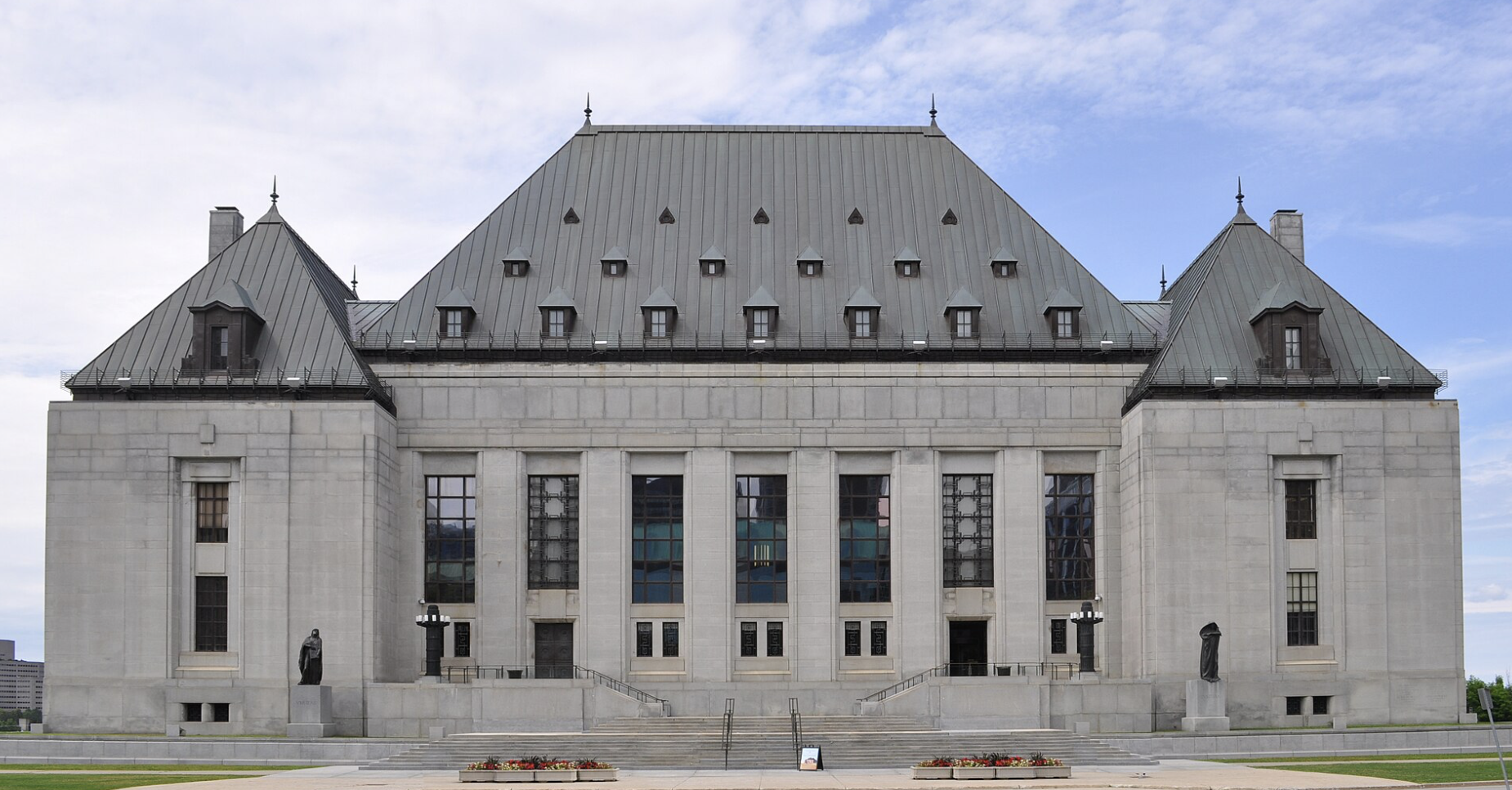
The Supreme Court of Canada on Friday upheld Quebec's highly contested 2019 law that bans religious symbols in the public sector. It was, more than anything, seen to be targeting Muslim women in the province who wear the hijab, but also impacted Catholics, Sikhs and other minorities. Quebec's population is 5 percent Muslim, according to the last census carried out in 2021. That figure is second only to Ontario. Amira Elghawaby, who was Canada’s first and only special representative on combatting Islamophobia, until her office was shut down earlier this year, called the verdict "devastating". "The promise of Canada’s Charter of Rights and Freedoms has been broken, and could be broken again and again. It means that religious freedoms, equality and the rights of all Canadians are no longer guaranteed," Elghawaby said in a statement released by the organisation she founded this year, the Muslim Communities Research Observatory. New MEE newsletter: Jerusalem Dispatch Sign up to get the latest insights and analysis on Israel-Palestine, alongside Turkey Unpacked and other MEE newsletters “This ruling will instantly further impact the lives and livelihoods of Quebecers, particularly Muslim women who wear the hijab. In one study, 71% of Muslim women surveyed had considered leaving Quebec, with the province standing to lose an estimated $3.2 billion in income. It may also open the door for further violations of rights and freedoms," she added. Technicality Oftentimes rulings by the highest court come down to technicalities. What the court was looking at in this case was the application of Section 33 of the constitution, known as the "notwithstanding clause", which shields Bill 21 from the Canadian Charter of Rights and Freedoms itself. US midterm elections 2026: Record number of hijabis elected to statewide and national offices Read More » It was until recently rarely used, and even seen as taboo to invoke. Former Prime Minister Justin Trudeau said in 2022 that Canada's charter "cannot become a suggestion". The Canadian Department of Justice acknowledges that it is a "unique" provision among constitutional democracies, because it allows the Canadian parliament or a provincial legislature "to derogate from certain sections of the Charter, namely section 2 (fundamental freedoms), sections 7 to 14 (legal rights) and section 15 (equality rights)". Section 333 does not apply to voting, mobility or language rights. "Once invoked, the notwithstanding clause prevents a court from declaring that legislation covered by a section 33 declaration is of no force or effect, despite any inconsistency in the legislation with the rights or freedoms under the listed Charter sections," the justice department says. The notwithstanding clause is valid for a renewable five years. "In short, Bill 21 is rooted in Quebec’s legitimate and historical commitment to ensuring the laicity of the state in a free and democratic society," Supreme Court Chief Justice Richard Wagner said in Friday's ruling. Impact It was in 2019 that Quebec first passed the contentious law that bans public sector employees from wearing religious symbols - the Jewish kippah, Sikh turban or Muslim hijab, among others - on the job. Bill 21 passed in a 73-35 vote at the time. The rightwing Coalition Avenir Quebec government, which held a majority in the provincial legislature, invoked the notwithstanding clause to limit debate on the bill. After it passed, Quebec's then-premier, Francois Legault, called it "a moment that Quebecers have long been waiting for". "It's very clear, when we talk to Quebecers, that they want us to ban religious symbols for people in positions of authority," he added. Within 24 hours, advocacy groups moved to challenge the law in court. Among them were the National Council of Canadian Muslims and the Canadian Civil Liberties Association, who asked the Quebec Superior Court for an injunction to bar the province from implementing the law. The groups said in a statement that Bill 21 "is unconstitutional and will cause irreparable harm to religious minorities" in the French-speaking province. Quebec: Why are politicians attacking an effort to combat Islamophobia? Read More » Nearly two years later, in a 242-page ruling, the Quebec Superior Court ruled that while Bill 21 has "serious and negative consequences for all those who wear religious symbols in public", it ultimately does not violate "the Canadian constitutional architecture". Still, the court struck down parts of the bill, saying that English schools in the French-speaking province would be exempt from the ban. It also said that members of the National Assembly, the provincial legislature, were allowed to wear religious symbols that covered their faces, such as the niqab. Quebec has long had debates over the issue of secularism and the protection of minority rights. In 2017, it passed Bill 62, which barred individuals from giving or receiving public services with their faces covered. It was met with widespread public protests and was later suspended after a Muslim woman in Quebec who wears the niqab filed a legal challenge against the law, arguing it violated her constitutional rights. Trudeau later called it "unthinkable" to "legitimise discrimination against citizens based on their religion".
Canada's Supreme Court upholds law banning hijabs in Quebec public sector
Full Article
Original Source
Read the full article at Middleeasteye →KhanList aggregates and links to publicly available news content. We do not host full articles from third-party sources. Always verify important information with original sources.