
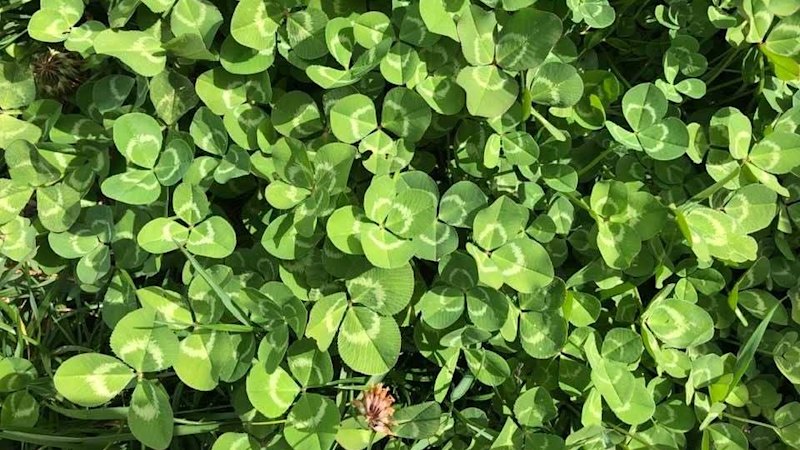
September 19, 2026 — 5:00amIt isn’t as if we’re obsessively on the look-out, patrolling lawns with our eyes to the ground, but some of us would very much like to find a four-leaf clover. Not because we believe it would bring us good luck – though listen, we’re open to that possibility – but because a four-leaf clover is a quirk of nature and coming across one would be a stroke of fortune in itself. That a sighting has eluded us makes us feel mildly aggrieved. And in our darkest moments, suspicious: what if the whole thing is a hoax?“Some people don’t believe four-leaf clovers exist,” says Helen McHugh, assistant director of the Australian National Botanic Gardens in Canberra. She says this with a hint of amusement because McHugh finds four-leaf clovers all the time. More than a thousand of them in the course of her life, she estimates. As a teenager, she found 70 in a single day. And she’s happy to pass on her technique: “I actually really love teaching people how to do it.”First, the fundamentals. Clovers belong to the genus Trifolium, meaning “three-leaved”. “Typically, each leaf stalk has three little leaflets,” says McHugh, but occasionally a genetic mutation causes the stalk to instead produce four – or even more – leaflets. She recommends focusing the search for these aberrant specimens on patches of Trifolium repens, known as white clover because it has white flowers and – more importantly for our purposes – a white line across each leaf. Viewed from above, the lines on a three-leaf clover form a triangle, McHugh explains. The lines on a four-leaf clover form a square or a diamond.White clover is common in grassed areas like parks and school ovals. “You stand over a patch and look down,” says McHugh, who found five four-leaf clovers in the patch pictured above. “You’re looking for that square or diamond shape. Let your eyes relax a bit so that you’re scanning rather than looking at individual leaves.” For McHugh, the scanning has become second nature. “Sometimes, I’m walking and I stop, and I don’t know why. And then I see a four-leaf clover. So my brain does it unconsciously.”Jane Cadzow is a senior writer with Good Weekend magazine.From our partners
Can you spot the four-leaf clovers in this photo? Here’s how to find them easily
Full Article
Original Source
Read the full article at Smh →KhanList aggregates and links to publicly available news content. We do not host full articles from third-party sources. Always verify important information with original sources.