
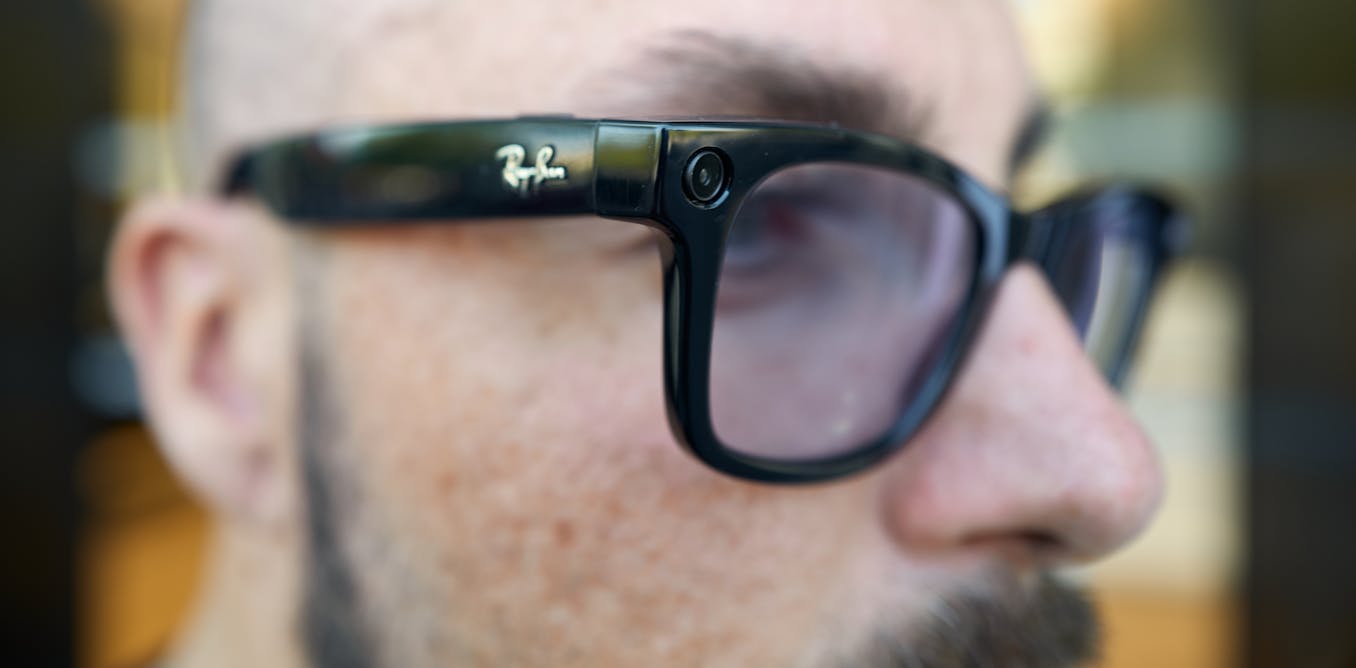
Businesses and local councils around Australia are increasingly bringing in their own restrictions on “smart glasses”, responding to customers’ concerns about being covertly recorded in public places. An Adelaide cafe recently banned smart glasses, citing safety concerns for vulnerable customers. Last week, Brisbane City Council banned the non-consensual use of all camera-enabled devices, including wearable technology, phones and cameras, from 21 public swimming pools. But businesses need to be careful about how they clamp down on smart glasses on their premises, because being too strict could break the law. Business rules come with limits If a private business has their terms of entry at their door, when you enter you are bound by those terms. Similarly, if you sign up to membership with them – such as joining a gym – that contract governs you. Australian businesses can impose whatever terms they like upon consumers, provided those terms are lawful. For example, a pub can refuse you entry if their rules prohibit torn or soiled clothing, and you are wearing ripped or dirty jeans. A library can eject you if you are being disorderly and disturbing the quiet for other patrons. But business terms that break the law are not enforceable. Why outright bans are legally risky An outright ban on patrons using smart glasses, whether recording or not, threatens to violate anti-discrimination laws. Smart glasses – including the best-known Ray Ban Meta glasses – can be fitted with prescription lenses. Alternatively, someone might simply require smart glasses to support their vision. In both cases, a blanket ban might constitute unlawful discrimination under Australia’s Disability Discrimination Act 1992. Smart glasses can also support people with mobility issues. Ray Ban Meta glasses offer “Be My Eyes” functionality, enabling hands-free calls and live captioning for phone calls. Other emerging models of smart glasses can apply augmented reality technology to float captions into the wearer’s line of sight, aiding people with hearing issues. Some can even capture conversations and produce transcripts. This could help people with visual, hearing or cognitive impairments. Businesses that discriminate against someone with a disability can face penalties such as fines or compensation orders, or the risk of having to redress any loss or damage caused. Following state and territory rules The Brisbane City Council’s approach – updating its terms of entry to public pools to restrict smart device recordings without people’s consent – is a safer model to follow. Prohibiting non-consensual recordings not only protects other customers, but is consistent with surveillance device laws in New South Wales,Victoria, Western Australia, South Australia, and the Northern Territory. These laws are fairly similar. They prohibit intentional use of “listening” or “optical surveillance” devices to listen to or record others’ private conversations, or to record your own private conversation with another person without consent. Queensland prohibits unauthorised use of listening devices under its privacy laws. Tasmania and the Australian Capital Territory are outliers. Their listening device laws don’t currently apply to optical surveillance devices. Read more: Smart glasses are going mainstream. Do current privacy laws protect us from the risks? What if you’re the customer? If your gym, sporting club, or another organisation you belong to suddenly restricts or bans smart glasses, what can you do? If a business imposes lawful terms and you sign your name to them, they legally bind you, even if you have not read or understood them. If the terms say the business can change its rules, and one of those rules now covers smart glasses, you’ll be required to conform. Be sure to check if there’s a notice requirement (that is, if you needed to be told in advance). For businesses without memberships, such as a cafe or bar, any such terms must be visible at the point of entry. By entering, you’ve agreed to the displayed terms. Any term permitting a business to temporarily confiscate smart glasses could potentially be legally challenged. If a business cancels your membership for possession or use of smart glasses, check its terms of entry permit this. If they don’t – or you have a valid reason to use smart glasses – the business could be challenged under contract, discrimination and consumer laws. Clear terms of entry are needed This week, the federal Attorney-General Michelle Rowland said the government is not currently considering a ban on importing smart glasses. With cheaper options such as Kmart’s $89 glasses now available, it’s likely we’ll see more smart glasses, with even more functions, appearing in cafes and shops. Restricting unauthorised or non-consensual recordings is a safer alternative to an outright ban. It’s consistent with surveillance device legislation and sets a friendlier tone for patrons. This will still be difficult to police, as it can be hard to tell when a patron is recording with smart glasses. (Though Meta just announced an upcoming update will stop its glasses working if the recording light is covered.) Clearer business terms of entry can help protect Australians’ privacy and safety in public spaces, without affecting people with legitimate reasons to wear smart glasses. Read more: Australia is eyeing a world-first ‘fair and reasonable’ test for data collection and privacy
Can Australian businesses legally ban customers from using smart glasses?
Full Article
Original Source
Read the full article at Theconversation →KhanList aggregates and links to publicly available news content. We do not host full articles from third-party sources. Always verify important information with original sources.