
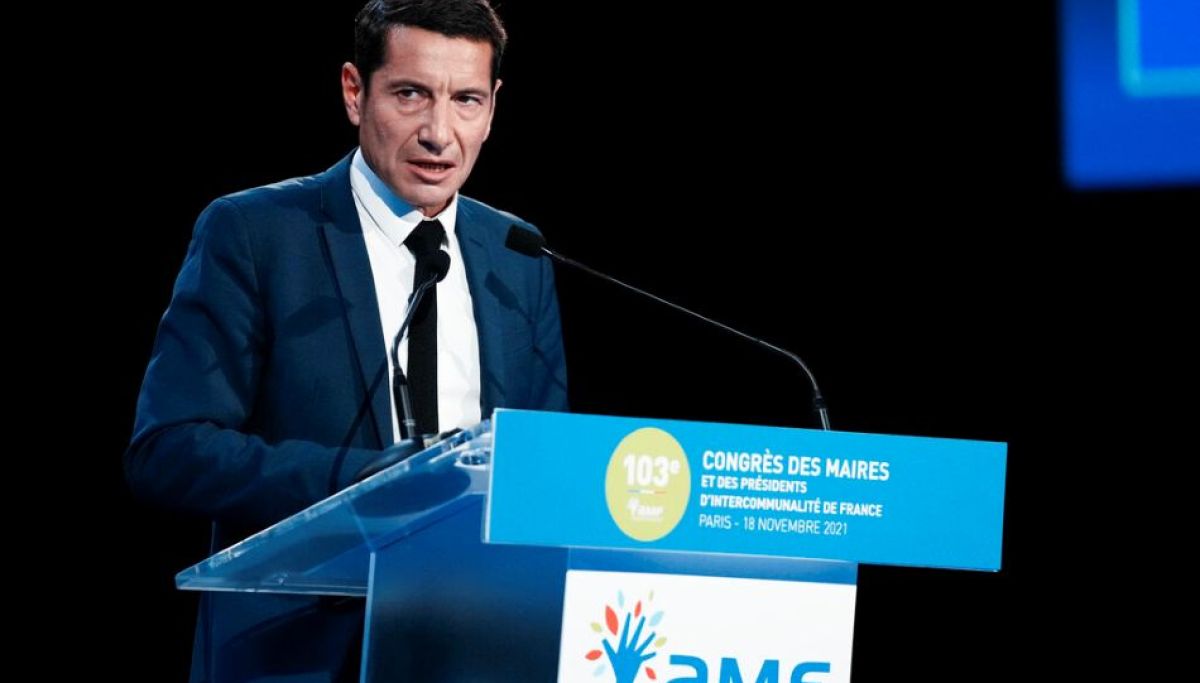
David Lisnard, the mayor of Cannes, has become the surprise story of France’s 2027 presidential race. Called the “French Milei,” he left the center-right Republicans to run under his own liberal banner, New Energy. His popularity has grown rapidly, with Harris Interactive now measuring him at 9% support in the polls, ahead of his former party’s presidential nominee.Lisnard says he would cut $224 billion from public spending, reducing payroll taxes in kind. In a country which has long regarded its welfare state with near religious devotion, his plan borders on heresy. Lisnard argues smaller government makes working people richer.Still, this would-be Milei remains far behind its established populists. A survey published Monday gives Marine Le Pen, the head of the far-right National Rally, 34% to 36% in the first round of the election. Jean-Luc Melenchon, the veteran of the far-left France Unbowed, draws 18% to 19%. Edouard Philippe, leader of the center-right Horizons party and a former prime minister under President Emmanuel Macron, follows at 12% to 14%. Raphael Glucksmann, a member of the European Parliament running for the center-left Socialists and his own Place Publique movement, sits at 11% to 13%. France’s top two finishers advance to a runoff, and the polling there favors Le Pen: 58% to 42% against Philippe, 60% to 40% against Glucksmann, and 68% to 32% against Melenchon. Le Pen’s party has shed its calls to abandon the euro and hold a referendum on European Union membership, opting to reshape the political union from within. She has courted markets with promises of finding $157 billion in savings by 2032, and a constitutional golden rule on deficits. But her legal troubles linger. In July, a Paris appeals court upheld Le Pen’s conviction for misusing EU funds but cut her ban on holding political office to 45 months, with 30 suspended. This clears her path to the ballot.At a rally outside Paris last weekend, Melenchon promised retirement at age 60, and a $1,900 monthly take-home minimum wage. He also called for France to leave NATO and reject involvement in American-led wars. On Ukraine, he has demanded security guarantees for Russia and has said that residents in southeastern Ukraine under Russian occupation should be consulted before any territorial settlement. This prompted Foreign Minister Jean-Noel Barrot to call him a “spokesman for the Kremlin.”Together, Le Pen and Melenchon command more than half of the first-round vote. That is a damning measure of France’s political condition. Russia is waging war in Europe, and the country’s two leading candidates back policies that would weaken Ukraine and NATO. That both consider these positions electorally viable is a bleak reflection of French society. And a reason for optimism in Moscow.The pro-European parties remain divided, raising the prospect of a runoff between Le Pen and Melenchon. Glucksmann, who won the center-left primary, offers firm support for Ukraine and a democratic alternative to Melenchon. Philippe, Macron’s former prime minister, campaigns on fiscal discipline, including retirement at 65. Another former prime minister, Gabriel Attal, is also running.For years, mainstream parties relied on voters setting aside their differences in the runoff to keep the far Right from power. That strategy, known as the cordon sanitaire, helped defeat Le Pen twice. French social strife and Le Pen’s growing popularity makes it a much weaker bet this time.Mario Draghi, the former European Central Bank chief, warned in his landmark 2024 report that Europe faces “an existential challenge.” The U.S. economy has grown far faster than that of the EU since 2010. Since 2000, Americans’ disposable income has also grown about twice as fast. Only four of the world’s top 50 technology companies are European, and European businesses pay two to three times as much for electricity.France testifies to this malady. Its economic growth has flatlined, and its debt has reached 119% of gross domestic product. Investors charge France more to borrow than Italy or Greece, the poster children of Europe’s last debt crisis. Protests broke out in September over underfunded schools and living costs and they turned into riots with looters ransacking Paris shops, burning cars, and in one case setting a town hall on fire. This month, as many as 1.6 million people marched again, demanding higher wages from a state living on credit. Indeed, France already devotes 57% of its spending, nearly a third of GDP, to social programs and healthcare.TRUMP ADMINISTRATION TO PUSH RUSSIA TO ACCEPT NATO-LIKE SECURITY GUARANTEES FOR UKRAINE FROM USFrance needs the kind of radical overhaul Lisnard promises.But that would mean confronting voters who have built their lives around benefits that successive governments did not dare to touch. For decades, American protection helped France afford a generous state while containing the cost of its own defense. As that protection becomes less certain, France faces pressure in that direction as well. Macron’s stalled reforms have postponed the reckoning. Whoever takes the Elysee next will inherit it.
Can a French Milei beat out the far Right and far Left in presidential elections?
Full Article
Original Source
Read the full article at Washingtonexaminer →KhanList aggregates and links to publicly available news content. We do not host full articles from third-party sources. Always verify important information with original sources.