
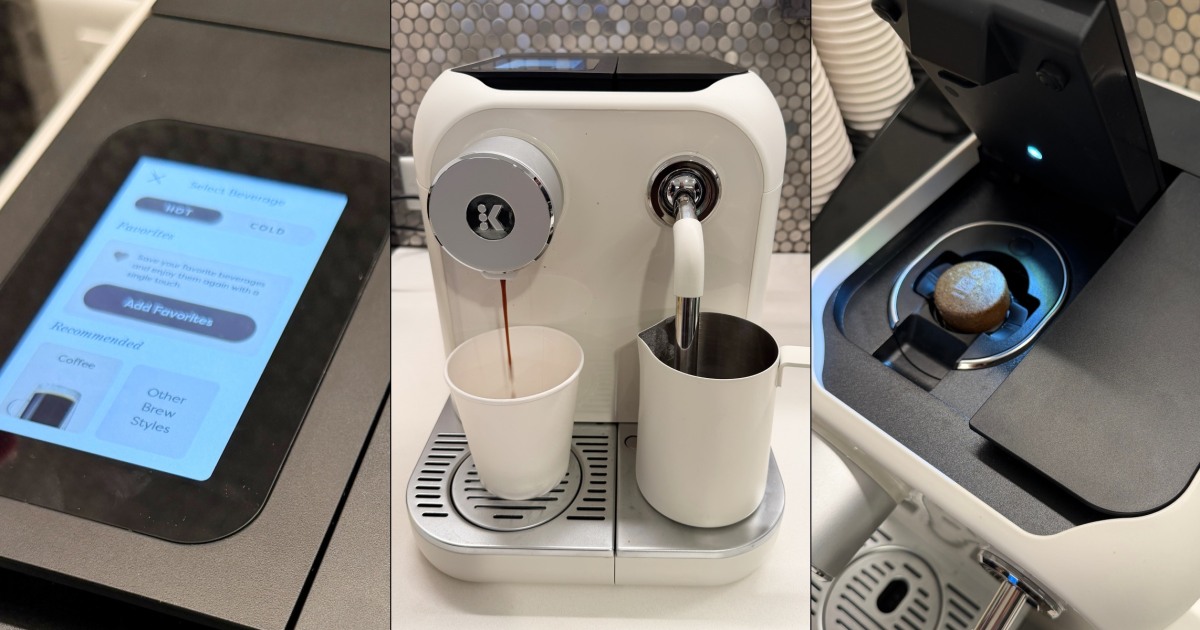
My family is full Keurig power users. We’ve had them in every family kitchen that I’ve ever walked into. We practically used K-cups as decor.Coffee makers are changing, though. Lavazza’s Tabli brews compressed coffee tabs without a capsule. Caraway’s new drip coffee maker has a stainless steel and glass brew path. Now, Keurig has the Alta, a $499.99 coffee and espresso maker built for its new plastic-free AltaRounds. It still takes K-cups.We received the Alta before launch and spent three weeks testing it alongside other coffee makers. I concentrated on the espresso drinks because those are what I spend money on when I’m out. My most recent large iced latte, with regular milk and three shots of espresso, cost $9.53. At that price, I did a little arithmetic.Want more from NBC Selected? Sign up for our newsletter, The Selection, and shop smarter.What is the Keurig Alta Single Serve Coffee and Espresso MakerThe Keurig Alta is a single-serve coffee and espresso maker with a built-in milk frother. It brews AltaRounds, portions of ground coffee (think: small chocolate bonbon) pressed into a round and covered with a plant-based coating in place of a plastic or aluminum capsule. When we spoke with the Keurig team, they said the plant-based ingredient was seaweed. It also accepts regular K-Cup pods. The machine reads a code on each round to set the brewing style, pressure and temperature. Its touchscreen has drink recipes, and the frother can prepare hot or cold milk foam. It can connect to Wi-Fi, allowing new drink recipes to be automatically added during system updates. You can also texture the milk manually.The AltaRounds look like little chocolate bonbons.How I tested itWe tested the Alta over three weeks, including comparisons with other machines in our office. I spent most of my time on the espresso drinks. I wanted to see how those drinks tasted, how much counter space the machine needed and whether the cost made sense against my coffee shop purchases.We measured its footprint against the Lavazza Tablì and Caraway coffee makers, compared its milk-frothing noise with our office Keurig and checked what happened when used rounds sat in the waste bin for several days.My experience with the Keurig AltaI liked the Alta’s looks and the flexibility of having coffee, espresso and a milk frother in one machine.What we likeIt looks good on the counterThe matte white finish is sleek, and the machine is about 11 inches wide. That feels reasonable for a brewer with a milk frother beside it. I liked how the two fit together without needing room for a separate appliance.The Keurig Alta comes is a few finishes, but we really loved the matte white Sandstone.You can keep using your K-cupsThe Alta accepts both AltaRounds and regular K-Cups. That makes the switch easier if you already have a favorite coffee or a cabinet full of pods. You can try the rounds and still brew the coffee you already own. We still recommend using a reusable K-cup versus the disposable ones, due to the environmental impact of the traditional K-cups.It also gives the Alta some flexibility while Keurig adds more coffees to the new format. For my family, compatibility with the existing stash is a selling point.The waste bin has a useful drainWith some other plastic-free pods our testers have tried, we’ve seen visible mold develop quickly when we didn’t empty the waste container every day. We left several used AltaRounds in the Alta’s bin for several days and didn’t see the same thing.The screen has a waste bin reminder when you haven't emptied it in a while.The bin has two levels, with used rounds above and water draining below. Keeping the two apart may have helped.Potential drawbacks to keep in mindThe flavor is still very KeurigTo our testers, the coffee tasted much like standard Keurig coffee, perhaps with a small improvement in flavor. If you already enjoy Keurig, that may suit you perfectly.I wouldn’t spend $500 expecting a dramatic improvement in taste alone. I’d want to use the espresso options and frother regularly enough to justify the upgrade.It takes up a lot of counter depthThe Alta measured about 15 inches deep without its water tank and 19 inches with it. The second number is the one to plan around.For comparison, our Lavazza Tablì measured about 12 inches without its tank and 15 inches with it. The Caraway coffee maker was about 11.5 inches deep. The Alta’s roughly 11-inch width is manageable, but it reaches much farther back on the counter than those machines.I’d consider appliance rollers or a sliding tray underneath so I could turn or pull it forward to reach the water tank. If you’re short on counter space, measure the spot and leave room to get at the tank before committing.Frothing peaked at 75 decibelsDuring our latte comparison, the Alta peaked at about 75 decibels while frothing milk. Our office Keurig peaked at 70 decibels during frothing.The rounds still come with wrappersAltaRounds have no plastic or aluminum capsule, but each one comes in a foil-based freshness wrapper, according to Keurig. You’ll still have packaging to deal with even if you compost the used coffee. However, Keurig’s press release states that “The company is validating a paper-based wrapper and is committed to transitioning to a recyclable paper-based wrap in 2027.”The AltaRounds are wrapped in a foil-based wrapper. Is it worth it?At $499.99, I think the Alta makes the most sense for someone who already likes Keurig coffee, wants to make espresso drinks with a built-in frother and will use it to replace regular coffee shop purchases. I’d have a harder time justifying the price for someone who mainly wants a better-tasting cup of basic Keurig coffee.How much would a three-shot iced latte cost?My $9.53 coffee shop order was a large iced latte with regular milk and an extra shot, for three shots total. For an Alta version, I used Keurig’s announced prices for one Single Shot round and one Double Shot round. That means using two rounds for each latte. This estimate assumes both are available and can be selected for the four-box starter offer.Keurig has priced an eight-count box of Single Shot rounds at $9.99 and Double Shot rounds at $10.99. That puts the coffee for a three-shot drink at about $2.62. With the $1.50-per-box subscription discount, it falls to about $2.25.Milk costs extra. For this estimate, I allowed eight fluid ounces of dairy milk at an assumed $5 per half gallon, which adds about 63 cents. That brings the ingredients to about $3.25 per latte, or $2.87 with a subscription.I used Keurig’s single- and double-shot labels for the comparison. The café’s espresso dose and milk quantity could differ.When would it pay for itself?The machine is the big expense, of course. Keurig’s stated $499.99 launch offer includes four boxes of AltaRounds. Choosing two Single Shot boxes and two Double Shot boxes would cover the coffee for your first 16 three-shot lattes.Counting the starter coffee and the ingredients consumed, the total cost including the machine works out cheaper than my $9.53 order after 73 lattes made at home, or 70 with a subscription. That’s about two and a half months if you replace one purchased latte every day, or 14 to 15 weeks if you replace five a week.The touchscreen allows you to select and customize your drink.After a year of daily use, each latte would average about $4.50 including the machine, coffee and milk, or $4.14 with a subscription. That is a considerable saving against my $9.53 order.My receipt is doing some work here. If your usual latte costs $6, the same regular-price calculation takes about 167 replaced drinks to break even. And if you keep buying your usual coffee shop drink, the Alta becomes another coffee expense. It only earns back the purchase price through drinks you would otherwise have bought.Alternatives to considerIf the Alta’s price is the sticking point, Lavazza’s Tablì Espresso Machine is listed at $129.99. It makes espresso, lungo and double espresso using compressed coffee tabs without a capsule. You’ll need a separate frother for milk drinks, and it only accepts Tablì Tabs. With both water tanks attached, the Tablì we measured was about four inches shallower than the Alta.If you mostly drink drip coffee and want a plastic-free brew path, consider Caraway’s 10-Cup Coffee Maker, which launched at $495. Its water reservoir and carafe are glass, and its water path and brew basket are stainless steel. It uses your own grounds to brew two to 10 cups. It won’t make espresso, but it takes up considerably less counter depth in our measurements.Frequently asked questionsYes, the Alta accepts regular K-Cup pods as well as AltaRounds. You can keep using coffees you already buy in the K-Cup format.No. AltaRounds are designed exclusively for the Alta brewer. You’ll need the Alta to use the new rounds.Yes, according to Keurig, which says the rounds are BPI-certified for home and commercial composting. That claim applies to the rounds themselves, not their foil-based wrappers.Why trust NBC Selected?I’m Becca Delman, NBC Selected contributor and senior product manager for NBCUniversal News Group Commerce. For this review, I spent three weeks testing the Alta with other Selected staffers, concentrating on the espresso drinks I normally buy at coffee shops. We compared taste, counter space, milk-frothing noise and the handling of used rounds, and I calculated the cost against my own latte order.Catch up on NBC Selected’s in-depth coverage of tech and tools, wellness and more, and follow us on Facebook, Instagram, X and TikTok to stay up to date.
Can a $500 Keurig earn its counter space?
Full Article
Original Source
Read the full article at Nbcnews →KhanList aggregates and links to publicly available news content. We do not host full articles from third-party sources. Always verify important information with original sources.