
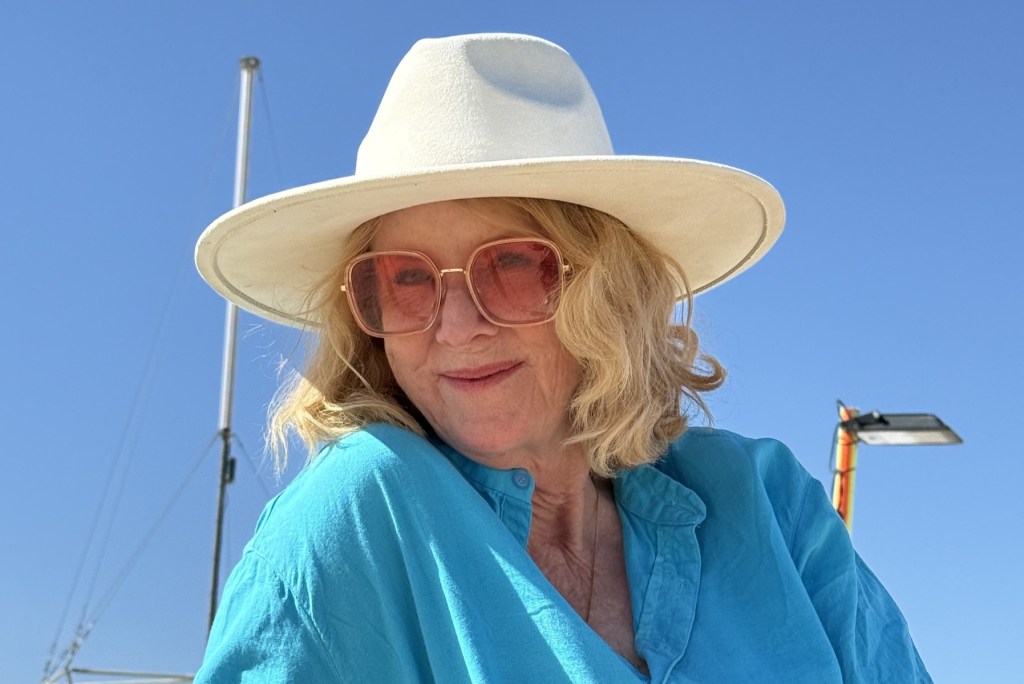
Burning Man Project’s longtime CEO Marian Goodell has announced that she’s leaving the position. Goodell will remain as CEO during the search for a new leader of Burning Man Project, the nonprofit organization behind the annual gathering in Nevada’s Black Rock Desert that also supports the global Burning Man community, including the worldwide network of official Regional Burning Man Events. Goodell will remain on the Burning Man board after stepping down. Related Goodell tells Billboard that while there is no set goal date to have someone new in the CEO role, she’s “fairly confident that having somebody in place at the beginning of the year — so they can spend some time with me — is a reasonable expectation.” She says that as one of the co-founders of Burning Man, she’s keen to help mentor a new CEO who will serve as the next generation of leadership in the event’s four-decade history. Burning Man has hired a search firm to assist with finding a new CEO, with the organization anticipating that it will field candidates from the global Burning Man community and beyond. Anyone can put themselves or someone else forward for the role at executivesearch@burningman.org. Goodell first went to Burning Man in 1995 — the sixth year the gathering happened in the Black Rock Desert after its early years on San Francisco’s Baker Beach. She helped found the Burning Man Project organization in 1997 and has been CEO since 2013. The organization now has 130 full-time employees. Goodell shepherded Burning Man through an acutely challenging era. Burning Man co-founder Larry Harvey died in 2018, and the Black Rock City event was canceled in 2020 and 2021 due to the pandemic. This gathering subsequently experienced several difficult years due to weather, most notably a rain event in 2023, along with funding challenges that led the organization to launch a $20 million fundraising push in 2024. Related Goodell says that as she exits the role, the next CEO “is inheriting a company and an organization that’s financially stable, that is behaving very responsibly about managing costs.” She notes that attendance at Black Rock City 2026 was roughly 64,000, a number the organization plans on capping going forward. “If we look at what’s happening around the world and the culture, it doesn’t make sense to keep pretending that we could be at 78,000 [attendees] while gas prices are what they are, and Canadians don’t want to come to America,” says Goodell. “We need to be able to plan for expenses, size, volunteers, leadership, ice sales, etc. Why not just cap it at a place we found really amazing this year?” Goodell also notes that the organization is “poised to start an endowment… Philanthropy is our cutting edge.” Here, she talks about her decision to step down from the CEO role, and what comes next. Why are you leaving, and why now? When I took over the role that my co-founders asked me to [take] in January of 2013, the whole point was that we were only going to run it as founder-led for as long as it took for the DNA of the organization to take on the instinct that the founders had themselves built through our collaboration and work together. It was always, always going to be that. Related And why now — mostly because it’s time. It’s really easy for me to see that the work I’ve done is taking hold. I’ve been working on this [exit] since about 2022, 2021, right at the tail end of the pandemic when we had time on our hands, and I really looked at what we were doing inside the organization to actually prepare us for it… For me, it was more that during the pandemic we had the time to reflect and to create the organization in a way that makes it feel like we’re on the road to success. That the mission is actually not just Black Rock City. That people are getting it. And that’s what we’re seeing. As you wrote about in 2024, the regionals are now doing Burning Man culture more than what’s happening in Black Rock City — and that’s the win. What is the next CEO inheriting? What’s the state of the org going into 2027? The org, the event and the culture are all in great shape. The need to bring Burning Man culture out into the world is as strong as ever. The event did fabulously this year. We expect to have an event next year that’ll be about the same size. You’ll hear announcements about how we will [plan for] size and ticket sales in the near future. Nothing smaller, nothing bigger seems like the right size for where we’re at. And the organization structurally is in fabulous shape. The last time we spoke was November of 2024, when the $20 million fundraiser was kicking off. Where are you financially, and what will the next person be inheriting in terms of finances? The next person is inheriting a company and an organization that’s financially stable, that is behaving very responsibly about managing costs. It’s leaning into the opportunity that philanthropy provides us, so that we can make ticket prices available to a wide variety of people. They’ll be inheriting an organization that is leaning into the real mission, which is to bring Burning Man out into the world and managing the resources towards both the endeavors of Black Rock City and being out in the world. 2024 was hard — we did not hit our mark. [In] 2025 we hit our mark, we ended up with money on the books. This year we will hit our mark; it does not look like 2024… We are not in a state of crisis at all. We don’t leave in states of crisis. Related The last years have been difficult, to say the least, with the pandemic forcing two years of cancellations, then a very hot 2022 and a major rain event in 2023. How do you reflect on those crises and your role in being there through them? If you look at my tenure from 2013 and the first number of years, there’s really no crisis you can point to until Larry passes away. And then you end up with this series of challenges, one after another. The whole point of Burning Man culture is to continue bringing in new people. Stepping aside for the next leader, the next generation. I’m talking the talk. We’ve brought the Rising Sparks up. [Editor’s note: Rising Sparks is a collective focused on bringing a new generation of artists, leaders and other Burners into Burning Man.] I’m the one that found the gal. I met this 22-year-old who comes and says, “I want to crack the code — I don’t understand why my generation isn’t here.” We did see an increase in young people this year. When I spoke to a woman recently here in San Francisco, she said, “Yeah, we came this year, but we were 25 [people], and we’re normally 40,” and I said, “What are you doing to recruit the next generation?” Thunderdome didn’t come this year, and one of the things she said was, “We’re getting older and having babies and don’t feel like coming.” So I don’t know why I should stay on any longer rather than find the opportunity to mentor. If we do this right, I’m a mentor. Just like we want when we turn over good leadership. There’s no other festival that proactively looks to its community to imagine how they want to step in. I’ve been watching for the right timing for me to step aside. It’s when I’m not tired, when I’m not done, when I’m ready to be a mentor and support the next generation. Related What qualities does the ideal CEO candidate need? When we started talking about this, people were like, “Oh my god, we’re never going to find anybody.” And I said, “I don’t necessarily think that’s true.” People keep over-indexing that I’m a founder, but it’s more about finding leadership to run the organization that’s dug into the culture. It’s someone who brings people together, can make clear decisions that advance the mission, and is enthusiastic about philanthropy. It could be someone who runs a nonprofit or a business — I do not think we need nonprofit experience specifically. I think you need deep cultural experience. And not necessarily all Burning Man. If you understand culture and you understand how to hold a space for culture, you’ll do well. You’ve gotten so much criticism over the years, and the Burning Man documentary that was released in July included footage of Burners talking about wanting you to leave the CEO role. How tough does one need to be to be in this role? The next person is definitely going to have to have thick skin. I’ve been here long enough to see waves of feedback, whether toward me, or other founders, or leadership in different departments. One has to be firm in understanding what you’re here for, what your values are, and be committed to the big picture — not take it personally. I really, really rarely take it personally. I know that I’ve done a good job. And you’ve got to be authentic. Anybody who comes to this job with ego and thinks they’re going to do it to be famous is going to hurt themselves. But if you come to it to be of service for something that is truly transformative — the people in the organization, the volunteers, the temporary employees, all of the community — that is the kind of person who needs to look at this. Who will have input in deciding on the next CEO? The board has a search committee with five board members leading it. They’re working with a search firm. The plan is to have candidates vetted by board members first, and then staff, including myself, will all have input. But I’m not a decision maker. I trust the process. The board knows that if they put someone in place that the staff aren’t excited about, that’s going to be like organ rejection. You don’t want that. Related What’s been the most difficult decision you’ve made during your tenure as CEO? Canceling the event in 2021. That was the hardest decision because it took a long time to get there, and it had factors I couldn’t control. In 2021, we were all starting to get access to vaccines, and there was a lot of pressure to vaccinate participants and move forward. But when we had to make the decision — in March and April of 2021 — children still weren’t getting vaccinated, and our international participants couldn’t come. And then there was a divide right down the community — employees, extended volunteer leadership, theme camp leadership. Some camps said, “No way, we won’t do it.” Other camps petitioned us and said, “We need this.” Board members were saying, “Are you kidding? We need the hope. We need the community. We need to build together.” So listening to both ends of that strong opinion, while knowing we’re not going to do an event without children or without international people — that was the hardest part. I was so anxious. Not because of making the decision, as much as the energy required to really listen to all sides. What are you proudest of? I’m really, really proud of the honor of being part of this — the opportunity to meet Larry at a time when I could join the others and we could collaborate, when we were all in it together. I used to tell people: You get the short straw, you do it for a while, until you can hand it off to the next short straw. One of my best decisions was to quit my other job and do this work. Is there anything else that you want to accomplish before you formally step down? I feel very good about what I’ve accomplished. I don’t feel anything is left undone. I’m going to continue leading, inspiring the staff and listening to the community and building foundations for the future… to continue operating in a way that helps us all keep asking questions and listening to ideas from the community, particularly in some of the operations for the event. How do you run the gate better? How do you have less of a wait? Do you design the city differently? Do you change the date of the event? All of those are setting foundations of the future. What do you want people to know going into this transition? I think the most interesting thing is that this has never really been done before. I’m trying to set a good example — setting a template for how this can happen within this community and this organization. Why not create more space for people to step in and bring their ideas, their innovation? That’s the main goal. I’m not going anywhere. There’s no buyout. There’s no exit strategy in the traditional sense. This is the exit strategy.
Burning Man CEO Marian Goodell to Exit: ‘I’m Not Tired, I’m Not Done — I’m Ready to Be a Mentor’
Full Article
Original Source
Read the full article at Billboard →KhanList aggregates and links to publicly available news content. We do not host full articles from third-party sources. Always verify important information with original sources.