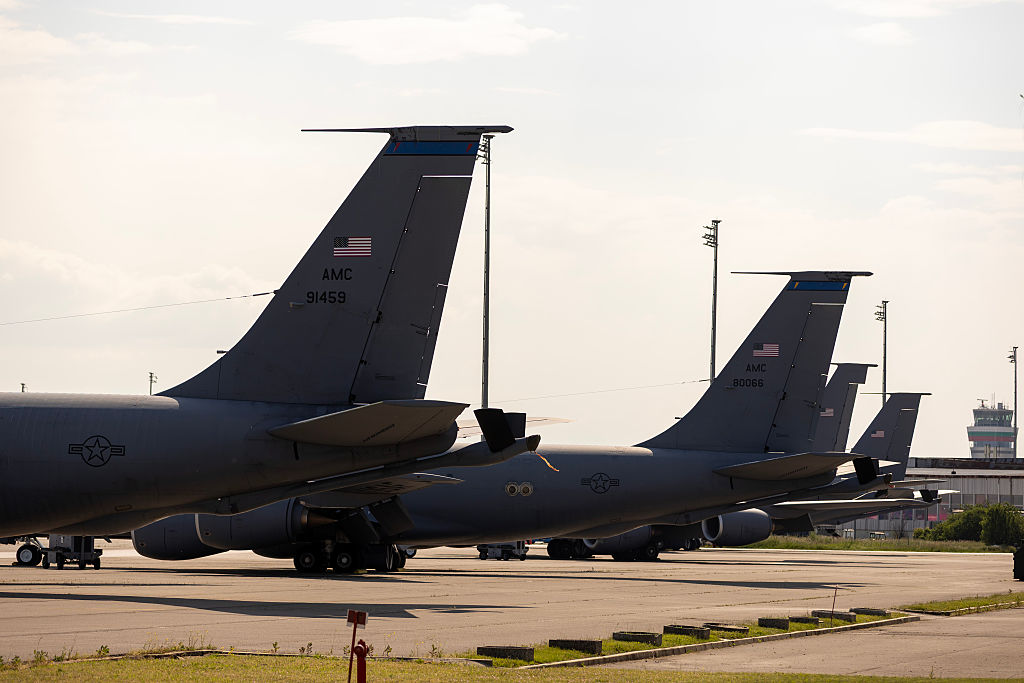
Bulgaria’s parliament approved a U.S. request to station up to eight KC-135 aerial refueling aircraft and 250 military personnel at Bezmer Air Base in southeastern Bulgaria despite direct, public objections from Tehran. The vote was 136 to 13. The approval is particularly striking given who delivered it. Rumen Radev, Bulgaria’s newly elected prime minister and ex-president, whom Russian state media dubbed the New Orban before his April election victory. He has not been a consistent Western partner. He has recognized Crimea as Russian and opposed military aid to Kyiv. And in May, amid a dispute over visa access for Bulgarian tourists, Radev expelled U.S. aircraft that had been stationed in Bulgaria under the same defense cooperation agreement he just invoked to approve this deployment. That reversal matters. U.S. military operations across Iran have intensified in recent weeks, and Washington is actively working to sustain long-range air operations across the Middle East by leaning on allied infrastructure in Europe. Bezmar Air Base fits within this plan. The KC-135 can transfer up to 200,000 pounds of fuel and is compatible with Air Force, Navy, Marine Corps, and multiple allied aircraft. In conjunction with other U.S. bases in Europe, a temporary force at Bezmer could contribute to U.S. refueling missions from Europe and reduce dependence on airfields closer to the fight. Iranian strikes this year left more than a dozen U.S. installations across the Gulf, including Al Udeid Air Base in Qatar, damaged or only partially operational, reinforcing the value of positioning tankers farther from the fight. Something that both Sofia and Tehran understand. This is what allied burden-sharing looks like in practice not just combined exercises, but small NATO members absorbing real risk to support U.S. operations. The United Kingdom and Germany have shouldered a far larger share of that burden, hosting the bombers and fighter aircraft that have flown direct strikes on Iran under Operation Epic Fury. Bulgaria will now face Iranian threats, domestic opposition from the pro-Russian Vuzrazhdane party, and potential influence operations casting Sofia as a participant in U.S. “aggression” toward Iran. Slavi Vassilev, deputy chairman of Progressive Bulgaria’s parliamentary group, said the quieter part out loud. In a social media post following the vote, he wrote that the decision “will put Bulgaria in a position to ask something of its allies,” adding: “After that, it will be our turn to politely ask for something else. And we will get it.” The U.S. should take that seriously and get ahead of it. The ask for Washington is concrete. Sofia’s own defense ministry acknowledged earlier this year, according to Novinite, a Bulgarian local news outlet, that spending at 2 percent of GDP is insufficient to close existing capability gaps, given personnel shortages and persistent modernization backlogs. A 2025 GLOBSEC analysis found that internal infrastructure bottlenecks such as degraded roads, missing transport corridors, and aging logistics networks could hamper NATO’s military mobility and crisis response preparedness. Bezmer and Vrazhdebna air bases are already in line for anexpansion under NATO’s Security Investment Program that will increase their capacity to host allied forces and equipment, but the broader picture remains cloudy. Bulgaria is mid-transition on its F-16 fleet, and accelerating pilot training pipelines and sustainment support through U.S. programs would directly strengthen this crucial southeastern flank. Washington should push the alliance to prioritize and accelerate all of it. The December 2025 U.S.-Bulgaria Strategic Dialogue identified infrastructure modernization as a bilateral priority but stopped short of specific commitments. Bulgaria’s vote in favor of the U.S. is the needed signal to convert that language into action. Reagan Easter is a senior communications associate at the Foundation for Defense of Democracies (FDD). She previously worked with Homeland Security Investigations and holds a degree in international affairs from The George Washington University. For more analysis from Reagan and FDD, subscribe HERE. Follow FDD on X @FDD. FDD is a Washington, D.C.-based, nonpartisan research institute focused on national security and foreign policy.
Bulgaria approved U.S. Tankers Over Tehran’s Objections
Full Article
Original Source
Read the full article at Fdd →KhanList aggregates and links to publicly available news content. We do not host full articles from third-party sources. Always verify important information with original sources.