
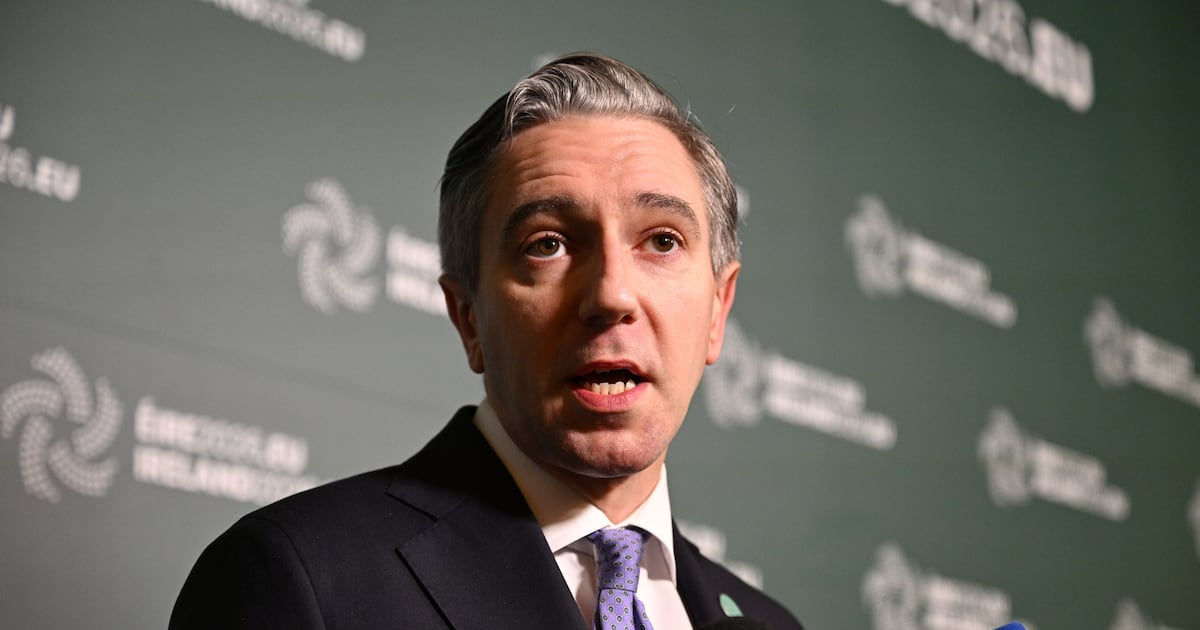
Minister for Finance Simon Harris has said his tax package in the upcoming budget would be worth “hundreds of euros” to workers while warning there was a limit to what the Government could do on income tax.He said the income tax package would absorb roughly €1.2 billion of the overall €1.5 billion earmarked for tax measures.Critics say this merely inflation-proofs the budget without giving workers a meaningful tax cut.If the tax bands and credits, which determine how much individual workers pay in tax, are not adjusted for wage inflation each year then workers end up paying proportionately more in tax to the exchequer.READ MOREThe cost of widening the tax bands and increasing tax credits to account for wage inflation is currently put at just under €1.2 billion.Nonetheless Harris insisted the measures would make an impact.“Nobody in Government would be of the view that hundreds of euros of additional benefit to families doesn’t make a difference,” he said at an event in Dublin hosted by the Economic and Social Research Institute (ESRI).[ Budget 2027: Teenagers set to receive €100 voucher for cultural eventsOpens in new window ]“Things can be impactful and modest [at the same time],” he said.Reducing income tax, reducing childcare bills, “if you can somewhat help them [families] with energy costs, if you can make targeted interventions with the families most in need, I think all of those things need to be seen in the round”, Harris said.The Coalition made a commitment to identify areas “where we could make real and structural change over the lifetime of the Government. I really see childcare as one of them,” he said.Harris has said he is considering a tax break for childminders. Soaring energy costs and why ‘we can’t protect everyone from the impact of war’In his state-of-the-economy-style speech to the ESRI, Harris acknowledged that high costs were leading to frustrations among consumers.“These frustrations have created a space for a populist brand of politics that promises easy answers,” he said.“But the populists have no answers. Scapegoating minority groups, blaming somebody from somewhere else and intimidating politicians is not the path towards progress.” “It is dead-end. A failed ideology. A road to nowhere,” he said. The Minister said the Government had allocated €1.25 billion to help alleviate some of the cost pressures, particularly from higher energy prices.Soaring energy costs and why ‘we can’t protect everyone from the impact of war’“People all across Ireland, particularly those in rural Ireland, that do not have access to regular public transport could not fully absorb the increase in petrol and diesel prices,” he said. Government interventions, including reductions in excise duty on fuels, had reduced energy inflation by 0.6 per cent, he said, while hinting that he would move to cut the cost of home heating oil, which has rocketed since the US attacked Iran earlier this year.The measure is not expected to involve a VAT cut as the industry has called for.“The Government cannot do it all, but when the position of the public finances allows help to be provided, it should be provided,” he said.The State is expecting another record corporation tax haul this year. Without it, the healthy budget surplus (expected to be in the region of €8 billion) would morph to a budget deficit, potentially restricting the Government’s budgetary spending.“However, longer-term, we need to move away from treating symptoms and begin to tackle the cause,” Harris said. The Minister also highlighted again that he would be introducing a new State-backed investment scheme on budget day.“Details of the account will be announced on budget day, but the facility will be easy to understand, tax efficient and flexible,” he said. With Irish households holding €175 billion on deposit, accruing little or no interest, Harris wants to encourage households to invest in higher-yielding assets. The scheme is expected to carry a flat rate of annual tax.
Budget 2027 income tax package will deliver ‘hundreds of euros’ to workers, Harris says
Full Article
Original Source
Read the full article at Irishtimes →KhanList aggregates and links to publicly available news content. We do not host full articles from third-party sources. Always verify important information with original sources.