
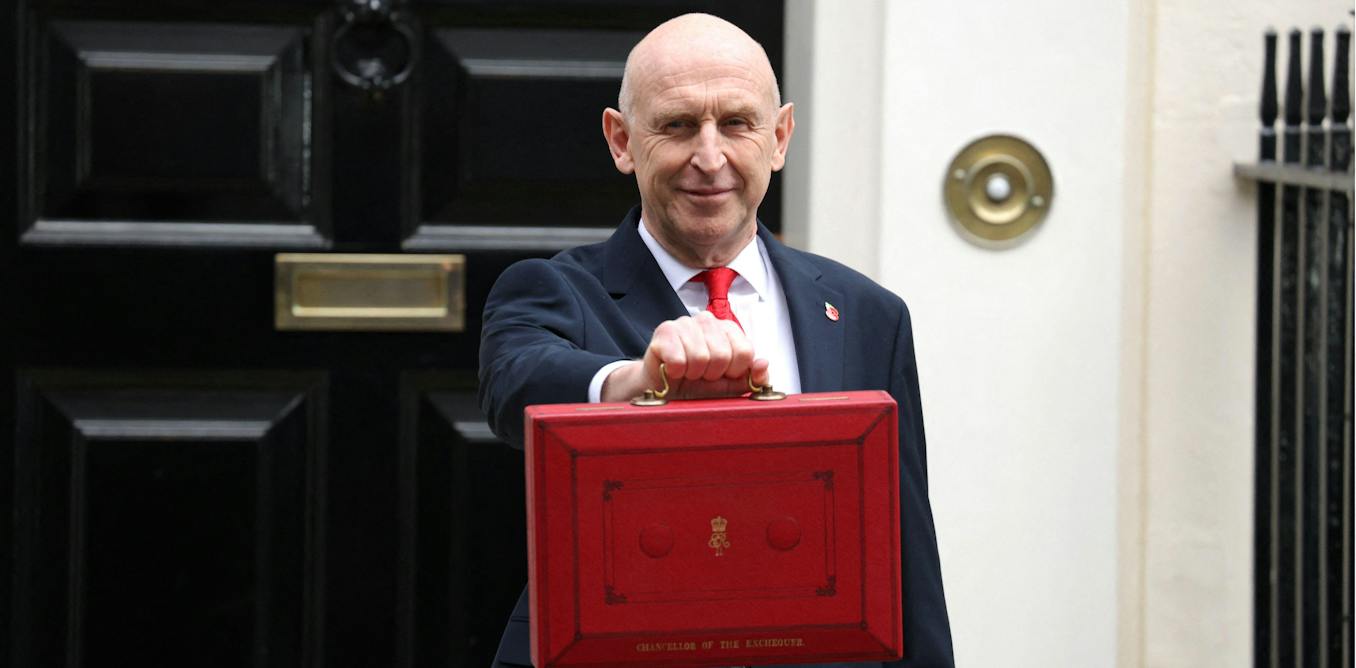
It was a “breathing space” budget from Chancellor John Healey. In the absence of big surprises or bold change, Healey’s trade-off appears to be small reliefs now in exchange for “fresh hope” in the future. Here’s what our experts made of the chancellor’s first budget. Targeted help with energy costs as bills keep rising Jonquil Lowe, Visiting Academic, The Open University This budget took place against a backdrop of global turmoil and rising inflation, driven largely by higher energy costs. These are continuing to squeeze household budgets. From January, the energy price cap is predicted to rise by 27% to nearly £2,200 a year for a typical household. Help with energy costs is therefore an important move. This support includes a £100 energy payment for households in England in council tax bands A to D (the devolved governments will receive equivalent funding to replicate this). There was also a commitment to abolish the standing charge for gas (currently on average 30 pence a day). The amount will instead be added to the charge for the unit cost of each kilowatt-hour used. This gives households more control over their bills – it will mean that limiting the amount of gas they use will have a bigger effect on reducing their cost. However, one worry is that squeezed households could still risk their health by not heating their homes adequately. Labour’s manifesto pledged not to raise taxes on working people. This budget technically kept to that if we assume that working people just receive earnings. But building on last year’s changes, this budget has introduced another increase to the tax rates on interest from savings and rental income. Landlords and some savers will be taxed at a basic rate of 24% (currently 20%), higher rate 44% (from 40%) and additional rate 49% (from 45%) from April 2027. This makes it all the more welcome that a proposal last year to cut the cash ISA limit for savers aged under 65 to £12,000 is being abandoned. Everyone, regardless of their age, will still be able to put up to £20,000 a year into a cash ISA (or cash and money funds within a stocks-and-shares ISA) and receive the interest tax-free. The government will also consult on setting up a first-time buyer ISA to replace the Lifetime ISA and help people save for a home. From February 2027, a new scheme called Your First Home will provide equity loans for first-time buyers purchasing new properties. The loan, worth 20% of the purchase price, will be tax-free for the first five years. To be eligible buyers must have a household income of no more than £110,000 (£140,000 in London). Read more: It’s not just rough sleeping – Andy Burnham’s housing plans need to include the ‘hidden homeless’ The budget also delivered a higher tax-free personal allowance for pensioners on the lowest incomes. The new Pension Tax Allowance will be applied automatically, with HMRC doing the sums. Pensioners with income up to £13,037 (the full state pension) will pay no income tax from April 2027. For comparison, for younger people the standard allowance is frozen at £12,570 until April 2031. They would pay £93.40 tax on an income of £13,037. The announcements come on top of a drip feed of “everyday fixes” in the days leading up to the budget. These included reform of carer’s allowance so that carers no longer lose their whole allowance of £86.45 a week once their earnings pass a weekly limit of £204. But it has already emerged that this much-touted change will not come into effect until 2030 while the government updates its IT systems. Small clues that this government is chasing growth Maha Rafi Atal, Adam Smith Senior Lecturer in Political Economy, University of Glasgow For years, the UK has faced a structural deadlock: a public that demands robust state services, but which rejects both the broad-based income taxes and pro-growth measures like increased immigration that might fund those services. Under Rachel Reeves’ chancellorship, Labour tried to get around this by raising the necessary taxes indirectly – from everywhere but income. This made it more expensive for businesses to operate, failing to jumpstart growth. In this budget, John Healey has tried a different tack, deploying selective business reliefs alongside a commitment to increased defence spending. Together, these measures make a calculated gamble that state stimulus can rescue the economy from lacklustre growth. In a growing economy, the government gets more tax revenue to fund services even without raising rates, because there’s more economic activity to tax in the first place. The reliefs for business are welcome. Raising the small business rate relief threshold – effectively removing half of all shops, restaurants and gyms from the rates system – provides breathing room for local economies. When paired with the electricity bill reduction for core industries and the introduction of “founders’ relief” for entrepreneurs selling shares in their business, the budget offers some incentives for corporate investment and entrepreneurial risk. The chancellor has also listened in part to businesses that complained of rising costs as a result of the increase in employers’ national insurance and the new measures in the Employment Rights Act. While the minimum wage is set to rise, the government has restored a lower rate for younger workers. This will benefit some businesses in employing people more cheaply, but the government also hopes it will help absorb school-leavers and graduates into the workforce, increasing productivity and reducing the welfare bill. The budget introduces two distinct avenues for the state to proactively stimulate growth. First, through accelerated defence commitments (spending 3% of GDP by 2030, for example), the chancellor is injecting capital directly into domestic supply chains, manufacturing, and high-tech engineering. Second, the roadmap for fiscal devolution offers a regional stimulus by promising to let mayors keep 100% of local business rates by the end of the decade, as well as a share of income tax receipts. This kind of arrangement, to fund infrastructure and attract business, is standard practice in most federalised systems. But its absence has been an unusual quirk of UK devolution. Yet, while these measures are constructive, it is not clear that they are enough to reverse the grim reality: growth is stagnant at just over 1% and the Office for Budget Responsibility predicts it will stay that way. Unlike its predecessor, this government seems to accept that it desperately needs some growth, and therefore some private investment, or public services will fall apart. In this budget, it has signaled some understanding that it may have to meet business halfway to get there. But the fiscal forecast relies on the hope that these stimuli will take effect in time to expand the tax base and preserve public spending before the next election. If they do not, the Treasury has also signaled that like Reeves before him, Healey will resort to spending cuts in the final years of the parliament to balance the books. By deferring that choice, the government has chosen to pray for a growth miracle today, while keeping the threat of real-terms austerity on the horizon tomorrow. Banks to pay more – but Healey bids to keep them lending Alper Kara, Professor of Banking and Finance, Brunel University of London One surprise is the relatively modest increase in taxes on banks compared with what financial markets had been expecting. There had been speculation that the government would raise the surcharge on bank profits from 3% to 8%. Instead, the surcharge will increase to 6% for just 15 months, from January 2027. So banks will face a higher tax bill, but a smaller one than many investors had feared. Shares in some major UK banks rose as investors welcomed the smaller-than-expected increase. This suggests that investors believe the profitability of banks will be less affected by the tax increase than previously feared. But the decision also reflects the difficult balance facing the chancellor. The government needs more money to support public spending and manage its finances, particularly at a time when borrowing costs remain high. Banks are an attractive source of revenue because their profits have been relatively strong in recent years. Financial markets expected banks to be hit harder with taxation. Electric Egg/Shutterstock And since 2023, higher interest rates have helped many banks earn more. These profits come from the difference between what banks charge borrowers and what they pay savers. So, the government has a reasonable argument that banks should make a greater contribution to public finances. This is especially true when households and businesses have been struggling with high living costs. However, the amount of additional revenue matters. Taxing banks more will generate £1.5 billion in extra income for the Treasury, but it is unlikely to make a substantial difference to the government’s wider spending commitments, such as defence. A temporary increase also means that the additional revenue cannot be relied upon over the longer term. And the next question is who will ultimately pay for this tax increase. Banks could absorb the additional cost through lower profits and reduced returns to shareholders. Alternatively, they might try to protect their profitability by offering lower savings rates, charging higher interest rates on new mortgages and business loans, or increasing fees for customers. However, competition in the banking market will limit how much of the tax banks can pass on to customers. Banks that increase mortgage rates or reduce savings rates risk losing customers to competitors. Given that the surcharge increase will last only 15 months, my view is that banks may prefer to absorb much of the additional cost rather than risk losing market share. The chancellor’s decision to keep the annual cash ISA allowance at £20,000, rather than reducing it to £12,000 as previously planned could also help banks. Cash ISA deposits are an important source of funding for banks and building societies, particularly for mortgage lending. Keeping the higher allowance could help banks retain those deposits and avoid additional funding pressures. This may also be part of the chancellor’s attempt to balance higher bank taxes with the need to keep banks lending to households and businesses. There are also wider considerations. Higher taxes could affect the international competitiveness of the UK banking sector, as banks consider taxation when deciding where to expand their operations. Sustained higher taxation could discourage investment in the UK banking sector, potentially leading to fewer new jobs or even job losses over the longer term. By opting for a smaller and temporary increase, the chancellor appears to have recognised these risks. His decision seems to be aimed at a balance between raising additional revenue and limiting the impact on lending and investment. Relief on energy bills could remove push for heat pumps Dylan Ryan, Lecturer in Mechanical & Energy Engineering, Edinburgh Napier University The overall cost of heating with gas will drop for most people, except for those with larger homes, after the chancellor’s announcement. Once the standing charge, a fixed daily fee, is removed, gas bills will reflect what people actually use. While these lower-than-expected bills will be a welcome relief for bill payers, it could weaken the economic case for households to switch to using heat pumps. Homeowners could be deterred from switching to heat pumps by the budget. Nancy Pauwels/Shutterstock There had been rumours of cuts to the boiler upgrade scheme intended to help more home owners install heat pumps. However, that didn’t happen. A government report on the scheme said that 65% of property owners who installed heat pumps did so because this grant was available. The report also pointed out that 52% of all recipients of the grant were large detached four-bedroom or bigger homes. So, some sort of reform could be needed. The cut to VAT on electricity and the £100 paid to those in bands A-D homes will also provide some relief for energy bill-payers. However, energy prices are expected to rise again by the next price cap adjustment in January 2027, due to the Iran war pushing up global energy prices. The government may need to provide some additional relief then. For example, further decoupling electricity prices from the price of gas, as gas often sets the price for electricity. Ultimately, moving energy use away from fossil fuels is a balancing act. But the government is going to have to make further changes if it expects to meet its climate change targets by 2050.
Budget 2026: experts on what John Healey’s ‘breathing space’ plan means for households
Full Article
Original Source
Read the full article at Theconversation →KhanList aggregates and links to publicly available news content. We do not host full articles from third-party sources. Always verify important information with original sources.