
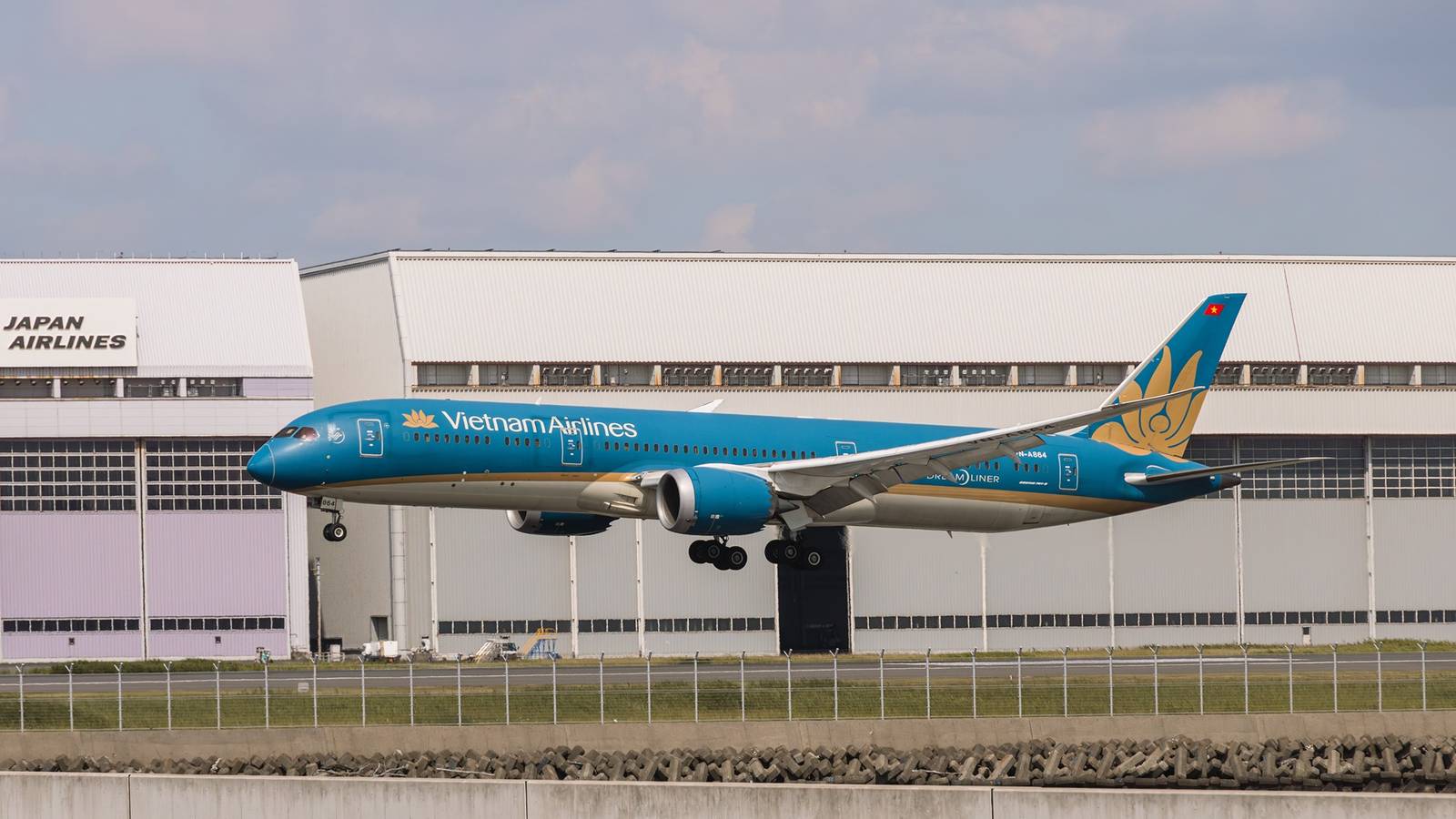
Published Sep 28, 2026, 6:17 PM EDT Journalist – Aaron is an aviation and travel journalist with 14 years of experience in the travel and tourism industry. His background spans airport operations, aviation infrastructure, and travel consulting, having worked with global organizations across New Zealand, Europe, and North America. Combining industry expertise with firsthand travel experience across more than 52 countries and five continents, Aaron covers airlines, airports, aviation policy, and the wider travel sector. He is based in Canterbury, New Zealand. His work has been published in Simple Flying and featured by MSN, SAM CHUI Aviation & Travel, EIN News, Pakistan Defence, and Climate Depot. An interim report into the Vietnam Airlines overrun at Munich Airport (MUC) has identified that the Boeing 787-9 brakes were activated twice during takeoff. This ultimately led to a late takeoff and the plane's tail striking the ground, resulting in substantial aircraft damage. It is alleged that two left brake pedal inputs were recorded by the captain, who had more than 27,000 hours of flying under his belt. As posted by Turbine Traveller on X, the preliminary investigation undertaken by the Federal Bureau of Aircraft Accident Investigation (BFU) has found that there were repeated brake pedal inputs during the aircraft's takeoff roll. This saw the Hanoi-bound flight VN34, operated by a 787-9, strike the ground, and then forced the plane to complete a go-around to return to Munich to inspect the damage, and ultimately cancel the flight. Vietnam Airlines Aircraft Was Accelerating, But Braking Activity Occurred Credit: dentorson | Shutterstock The Vietnam Airlines Boeing 787-9 was departing from Germany's second-busiest airport on August 15 for a nonstop flight to Noi Bai International Airport (Hanoi) (HAN). Onboard were 271 passengers and 16 crew. As the aircraft taxied onto the runway, the Takeoff/Go-Around (TOGA) thrust was activated as the plane began to accelerate down the runway. Recordings from the Enhanced Airborne Flight Recorder (EAFR) identified that there was rudder pedal movement from the left-seat brake pedals, despite the plane attempting to depart. The plane continued to accelerate down the runway when a maximum brake command of 27% was recorded from the left, and 17% from the right braking and steering control unit (BSCU). Overall, the maximum recorded brake pedal position sat at 7.2° out of a possible 12.5°, before the pilot monitoring increased thrust on the widebody jet from 100% to 101%. The plane was carrying a total of 136,687 pounds (62 tonnes) of fuel, making the overall total weight of the aircraft around 529,109 pounds (240 tonnes). The Moments Following Were Critical Credit: KITTIKUN YOKSAP | Shutterstock Seconds after the brake command, rotation of around 163 kt was calculated out of a total of 175 kt, abeam the runway threshold, runway threshold, which marks the beginning of the portion of a runway usable and safe for landing. As the 787-9 began to lift off the runway, the grass beyond runway 08R had the main landing gear, and the tail strike approach lighting equipment, damaging a total of 20 lamps. The crew onboard had identified a number of issues following the aircraft's departure, with four tires on the left main landing gear being damaged. The plane subsequently returned to Munich and landed with 62 tonnes of fuel. The airplane had sustained fuselage damage, with the tail having made contact with the ground and runway lighting. As the aircraft returned to Munich, passengers were deplaned, fortunately with no recorded injuries onboard. The flight was subsequently cancelled, and passengers were rebooked onto alternative flights. The Investigation Into The Vietnam Airlines Runway Overrun Is Ongoing Credit: Thanhliemnguyen | Shutterstock A thorough investigation into the incident is ongoing; however, these latest report findings identify that the brake inputs played a critical part in the failure of this aircraft's safe departure. Braking commands were recorded by the BSCU, and as the aircraft rotated below the calculated VR, the plane sustained substantial damage to its fuselage and landing gear as it came into contact with the ground and runway lights. According to flight data, the aircraft at the centre of the incident, which bears registration VN-A867 (serial number 39287), remains grounded at Munich airport as repairs are undertaken. The jet has been operating for ten years, and prior to the incident, it had operated a nonstop flight from Hanoi to Munich on August 14 without incident. Vietnam Airlines operates a total fleet of 89 aircraft, including the Boeing 787-9, 787-10 and Airbus A350-900 widebodies, alongside the A320 and A321 variants for short-haul narrowbody operations. The airline is a member of the SkyTeam Alliance and has domestic operations throughout Vietnam and international services across Asia, Oceania, and Europe.
Brakes Activated During Takeoff: Investigators Reveal New Details In Vietnam Airlines 787 Munich Overrun
Full Article
Original Source
Read the full article at Simpleflying →KhanList aggregates and links to publicly available news content. We do not host full articles from third-party sources. Always verify important information with original sources.