
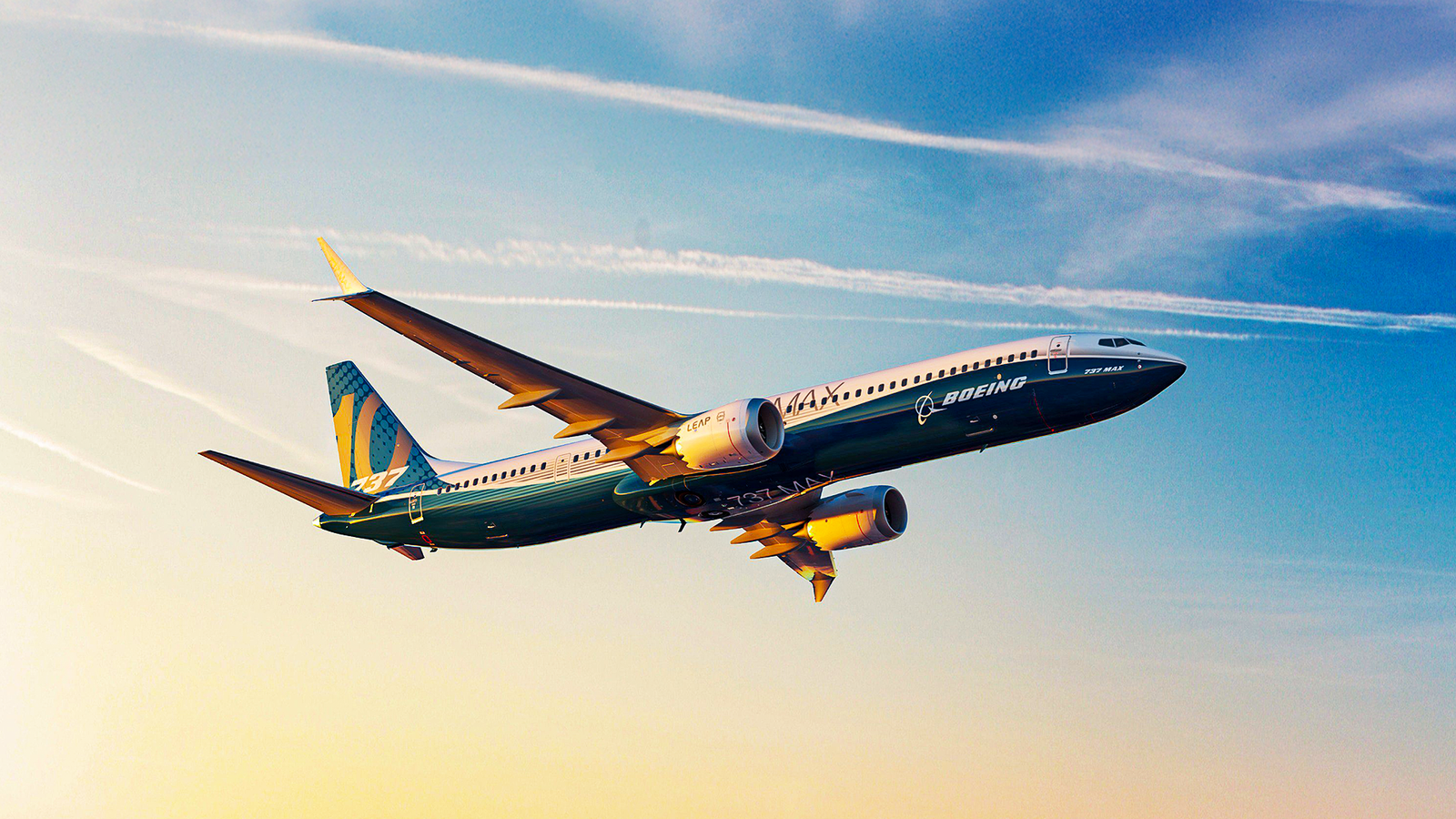
Boeing rolled the first 737 MAX 10 out of its new North Line at the Everett facility on October 26, and media attention naturally focused on the historic location shift. Destined for launch customer WestJet, this is the first time a 737 variant has been assembled outside of Boeing’s historic Renton plant since 1970. This change in build location makes sense because the longest variant in the 737 family has outgrown the layout of the factory that birthed it. The motivation for establishing the North Line isn't simply to increase monthly hull count. The 143 feet, 8 inches (43.8 meters) fuselage of the 737 MAX 10 is not best suited to fit inside Renton’s compact assembly bays. To build the MAX 10 in Renton, Boeing had to stagger the elongated airframe between smaller variants like the MAX 8 to prevent structural overlap between adjacent stations. Now, by repurposing space in Everett’s massive widebody plant, Boeing has finally provided its largest narrowbody with an assembly line tailored to its length. Making Do With The Space Available Credit: Boeing Boeing’s Renton factory has been the manufacturing heart of the 737 program for decades, but its boundaries were drawn around significantly shorter airframes. Covering roughly 1.1 million sq feet (102,000 m²) of total floor space, Renton’s three active assembly lines operate within tight architectural confines bounded by Lake Washington and local rail lines. When managing standard 737 MAX 8 aircraft, measuring 129 feet, 6 inches (39.5 meters) long, the moving assembly lines operate with minimal spatial clearance between stations. The introduction of the 737 MAX 10 disrupted this tightly calibrated footprint. Stretched 14 feet, 2 inches (4.3 m) longer than the baseline MAX 8, the MAX 10’s nose and tail sections intrude into overhead crane pathways and the working envelopes of adjacent stations when positioned directly in sequence. To avoid costly structural collisions during station transitions, Renton line managers must manually stagger the build sequence so a longer MAX 10 is always preceded and followed by shorter MAX 7 or MAX 8 airframes. This requirement creates scheduling friction across Renton’s 12,000-person workforce. Staggering limits production flexibility, as line operators cannot build MAX 10s based solely on order-book priority. According to Boeing, there are 1,555 firm orders for the MAX 10, about 31% of the total 737 MAX backlog, so Renton’s layout threatened to become a permanent operational bottleneck for Boeing’s most important commercial variant. Moving The Line Along Much Faster Credit: Boeing Something had to be done about Renton’s layout constraints, so Boeing began a $1 billion capital project to establish the 737 MAX North Line inside its flagship Everett facility. Occupying high-bay space in Building 40-22, vacated following the consolidation of 787 Dreamliner assembly to South Carolina, the new line provides approximately 20% more usable floor area per station compared to Renton. This means the 737 MAX 10 can move continuously in a true nose-to-tail orientation and does not need those staggered buffers. Supported by an initial workforce of roughly 1,000 employees, about half of whom were reassigned directly from Renton to transfer specialized narrowbody assembly expertise, the North Line operates with modernized tooling, according to Barron's. The added clearance permits automated overhead crane systems and mobile scaffolding rigs to work around the MAX 10’s extended fuselage without interfering with adjacent work centers. Crucially, the dedicated layout increases total 737 manufacturing capacity by 25% across Boeing's Puget Sound industrial network, Lynwood Times reported. However, uncoupling the MAX 10 from Renton's spatial constraints is not the end of the story for Boeing. Of course, the North Line provides the needed floor space for smooth assembly, but bringing these aircraft to market is a completely different reality for Boeing, and just adding floor space does not guarantee success in this area. Gaining Certification Is Just The Beginning Credit: Boeing Achieving rollout on October 26 was a major milestone, but it does not mean customer deliveries are imminent. The Federal Aviation Administration (FAA) granted amended type certification for the 737 MAX 10 flight platform just a few days earlier on October 20, 2026. It was excellent news for Boeing, confirming that the MAX 10’s aerodynamic design, flight controls, and safety systems meet airworthiness standards, though it is only the first stage of regulatory clearance and many more stages remain. Before WestJet or any subsequent customer can take delivery of an Everett-built MAX 10, Boeing must secure a separate amendment to its FAA Production Certificate. Everett is an entirely new production line for the 737 program, so FAA inspectors must audit every station, tool calibration log, and quality management process inside the North Line. The agency will need to independently verify that the Everett facility builds aircraft with the same structural consistency as Renton, which is a huge undertaking for Boeing. During this initial low-rate production phase, the North Line moved the first airframes through assembly stations at a deliberately slow pace, according to Assembly Magazine. The extended flow time allows quality engineers to validate assembly steps alongside FAA observers. Consequently, initial WestJet deliveries will remain paused until the production certificate amendment is formally issued, making the short-term backlog relief more of a future expectation than an immediate result. Revising The Schedule Everett solves Boeing's internal floor space limitations, but the pace of total 737 production remains tied to Tier-1 supplier health. As Boeing leadership confirmed, the main constraint on narrowbody output is an ongoing shortage of wing subassemblies. The complex wing structures, featuring advanced-technology winglets and dedicated trailing-edge flap mechanisms designed to handle the MAX 10’s higher takeoff weight, are arriving at assembly plants well behind schedule. Even with a vastly improved production environment, an airframe cannot progress past early structural joining stations without its wing sets, so wing availability sets the pacing clock for both Renton and Everett. In response, Boeing revised its master production ramp. The target rate of 47 aircraft per month has been revised slightly, and Boeing now expects to reach and hold the 47-per-month milestone in 2027, before attempting a further push toward 52 jets per month later that year, according to Fortune. The controlled ramp rate is designed to prevent traveled work, or moving unfinished airframes to downstream stations without completing preliminary assemblies. Holding the North Line at a steady, measured pace means Boeing is protecting manufacturing stability while supplier factories bring wing deliveries back into alignment. Orders From Even The Most Unexpected Of Operators The strategic commitment to build a $1 billion dedicated line in Everett is backed directly by market demand. At the top of the 737 MAX family, the MAX 10 carries 185 to 210 passengers in a standard two-class layout, with a maximum capacity of 230 seats. With a range of 3,100 nautical miles (5,740 km), the variant competes directly with Airbus’ dominant A321neo, offering airlines low seat-mile costs on high-density domestic and transcontinental trunk routes. With 1,555 firm orders logged from global operators including United Airlines, Delta Air Lines, WestJet, and Ryanair, the MAX 10 is seeing a wave of popularity worldwide. Even Lufthansa has opted for the type, bringing the 737 back into the fleet after 10 years of pure Airbus narrowbody focus in the mainline fleet. Airlines have structured long-term fleet renewals around the high-capacity variant to replace aging 757-200s and older 737-900ERs. Failing to deliver the MAX 10 efficiently risked pushing these key customer accounts to convert options into competing European narrowbodies. With Everett’s North Line dedicated to the MAX 10 alongside high-density MAX 8 runs, Boeing has clearly divided industrial labor. Renton can focus its three moving lines on high-volume MAX 8 and MAX 9 builds, while Everett takes on the complex, elongated MAX 10 airframes. As a result, Boeing has the industrial headroom needed to fulfill its multi-year backlog and finally get its production lines moving at record speed once again. The Beginning Of Much More For Boeing? Credit: Boeing The rollout of the first 737 MAX 10 from Everett is really a significant milestone for more reasons than just the beginning of a new era for the 737 family. It also ushers in a permanent structural transformation in Boeing’s manufacturing footprint. What began in 1970 as a single-factory narrowbody setup in Renton has evolved into a multi-facility production network spanning Puget Sound. Boeing recognized that floor space, rather than worker effort, was limiting MAX 10 efficiency, so it positioned its commercial airplane division to push higher manufacturing rates with greater structural precision. Over the coming years, the co-existence of Renton and Everett will redefine Boeing’s production dynamics. Renton remains the high-volume engine of the 737 program, while Everett provides the spatial flex capacity needed for specialized, high-capacity airframes. Once the FAA approves Everett’s production certificate and supplier wing deliveries stabilize, Boeing will possess an industrial system capable of supporting its long-term target of 52 aircraft per month. Ultimately, the Everett North Line shows that modern aircraft manufacturing is as much about factory geometry as it is about aerodynamics. Giving the 737 MAX 10 the floor space it needs to move nose-to-tail, Boeing has cleared a path to deliver its largest narrowbody variant to global customers.
Boeing's Renton Factory Must Stagger The 737 MAX 10 With Smaller Jets, But Everett Can Run Nose-To-Tail
Full Article
Original Source
Read the full article at Simpleflying →KhanList aggregates and links to publicly available news content. We do not host full articles from third-party sources. Always verify important information with original sources.