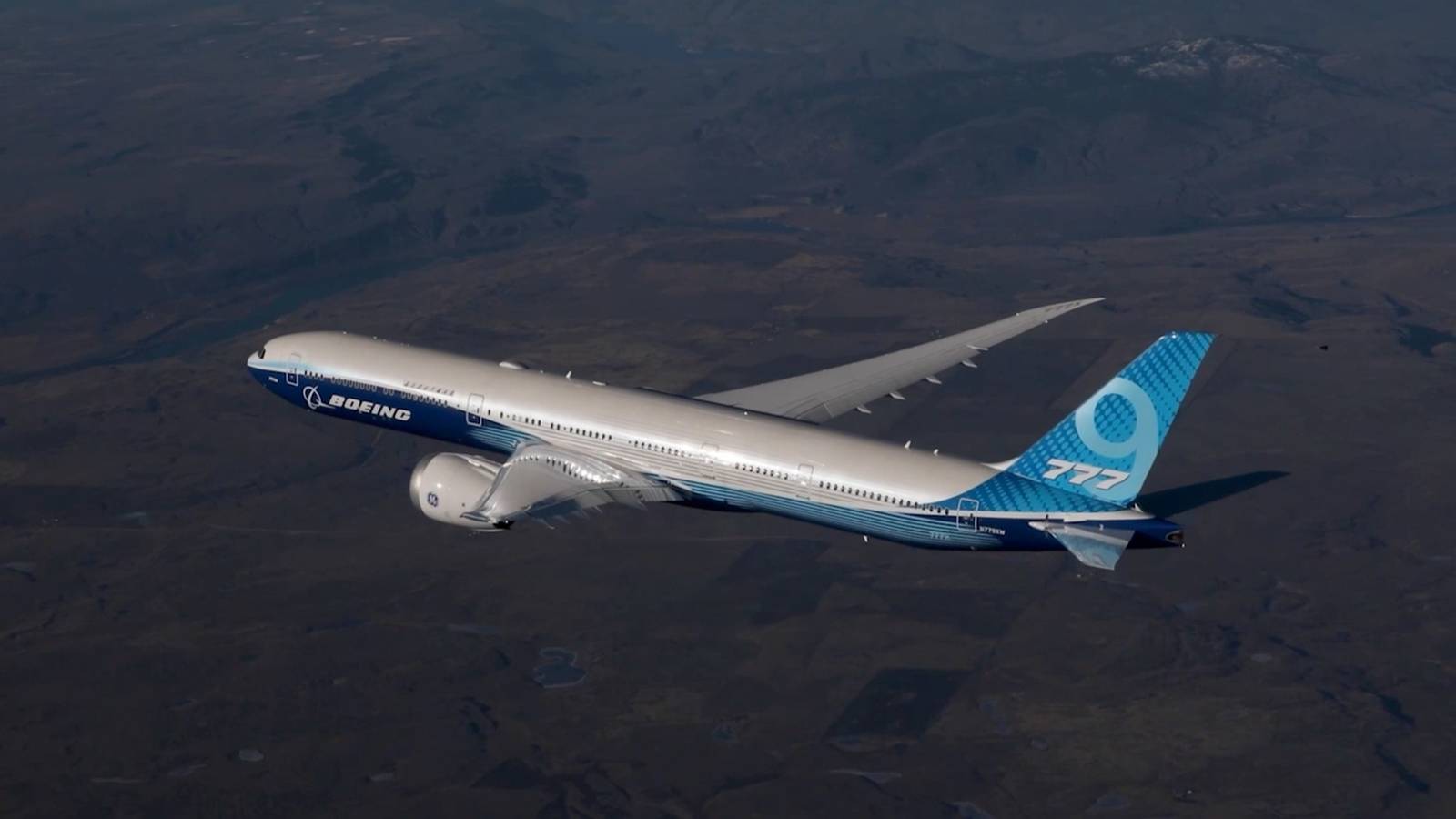
Published Jul 30, 2026, 2:51 AM EDT Luke Diaz is a freelance military writer with experience with active duty experience in the US Navy as well as defense and industrial engineering. He is a former Naval Flight Officer who performed tactical air control on the carrier-based E-2 Hawkeye. On July 29, the seventh Boeing 777-9 next-gen airliner took flight and marked the 4,800th hour of the 777X program as it finally nears the completion of certification six years after the originally anticipated launch. The newest addition to the growing fleet is bound for Extended-range Twin-engine Operational Performance Standards, or ETOPS, testing. The landmark test flight marks a major milestone that shows the cutting-edge wide-body jetliners with their folding wingtips will soon be serving customers around the world. The debut of the new airplane coincides with the first discussions in the program's history of a US carrier potentially purchasing 777X aircraft. Although early indications from the report by Leeham News are tentative, United Airlines may become the first carrier in America to induct one of the revolutionary new twin aisles into its fleet. The Long Road To Lift-off For Boeing's 777X Credit: Shutterstock The Boeing 777-9 was slated to enter service in 2020 with launch customer Lufthansa. The notorious crashes of two 737 MAX single-aisle jets completely derailed that plan when nearly 350 people lost their lives and sparked an unprecedented industrial crisis in commercial aviation history. Since then, the company has regained the trust of the Federal Aviation Administration and its production lines are beginning to ramp up to the capacity of a decade ago. Boeing dedicated most of its resources to the 737 MAX series during the past several years, and as a result, the early 777X prototypes are starting to show their age even though the program is making great headway now. The latest aircraft incorporates all of the latest commercial flying technology and fully current FAA requirements. They also currently meet the economic specifications that older airframes do not, as required by major customers like Lufthansa and Emirates, which have been impatiently waiting. Like the early Boeing 787 Dreamliners, infamously dubbed the 'Terrible Teens,' early-build test and production frames are heavily modified, structurally patched, and routinely suffer from being overweight. Boeing has suffered approximately $15 billion in costs due to the delays of the 777-9 entry into service, and now, as the plane nears certification, customers are refusing delivery already. Headwinds All The Way To The Finish Line For The 777-9 Credit: Shutterstock Emirates has officially refused to take delivery of the first 10 to 11 early-build Boeing 777-9 aircraft originally manufactured for them. Because the 777X program is delayed by more than seven years, the airframe and internal components have evolved significantly since these early planes rolled off the line in 2019. At the Farnborough International Airshow, Emirates President Sir Tim Clark stated bluntly that the airline would not accept the oldest batch of 777X aircraft. As reported by The Telegraph, Clark said that the jets are "only fit to be turned into baked bean cans." These airframes have been sitting in storage since 2019, and because of the massive delays and regulatory changes over the last seven years, they require an overwhelming amount of rework to meet modern certification standards. The cost of change incorporation rework to update the myriad of systems within the oldest 777-9 jets is the basis of these problems. The rejection of its intended operator led to the surprising decision by Boeing to scrap Airframe WH007, Line Number 1611, which never flew in six years but was adorned with Emirates colors on the folding wingtips, according to The Air Current. A New Opportunity Rises From Boeing's Adversity Credit: Shutterstock There will be more than 30 777-9 airframes that require a large amount of rework in order to enter revenue service with any airline once the type receives its certification and enters full-rate production. As some of the most invested customers are choosing to reject the first deliveries of older airframes next year and wait for new jets, United Airlines now has the opportunity to buy as many as 20 of the test bed 777-9s. As the operator of the world's largest commercial aircraft fleet, United has a vast apparatus of maintenance and Boeing infrastructure to support imperfect airframes that slot into the existing supply chain. Additionally, because the network is so large and varied, they do not need to push these jets to the absolute maximum performance envelope on every itinerary as Emirates or Lufthansa would. United is aggressively looking to retire its aging fleets of Boeing 767s and older 777-200s. Picking up deeply discounted 777-9s allows them to expand capacity rapidly at a fraction of the list price. It would earn United a place in history as the first American carrier to fly the 777X, as no other us-based carrier has ordered one. This would also help Boeing recoup some of its losses on the beleaguered airplanes and keep the momentum moving forward for the program as a whole.
Boeing 777-9 Fleet Reaches 4,800 Test Hours As 7th Airframe Will Conduct ETOPS Certification
Full Article
Original Source
Read the full article at Simpleflying →KhanList aggregates and links to publicly available news content. We do not host full articles from third-party sources. Always verify important information with original sources.