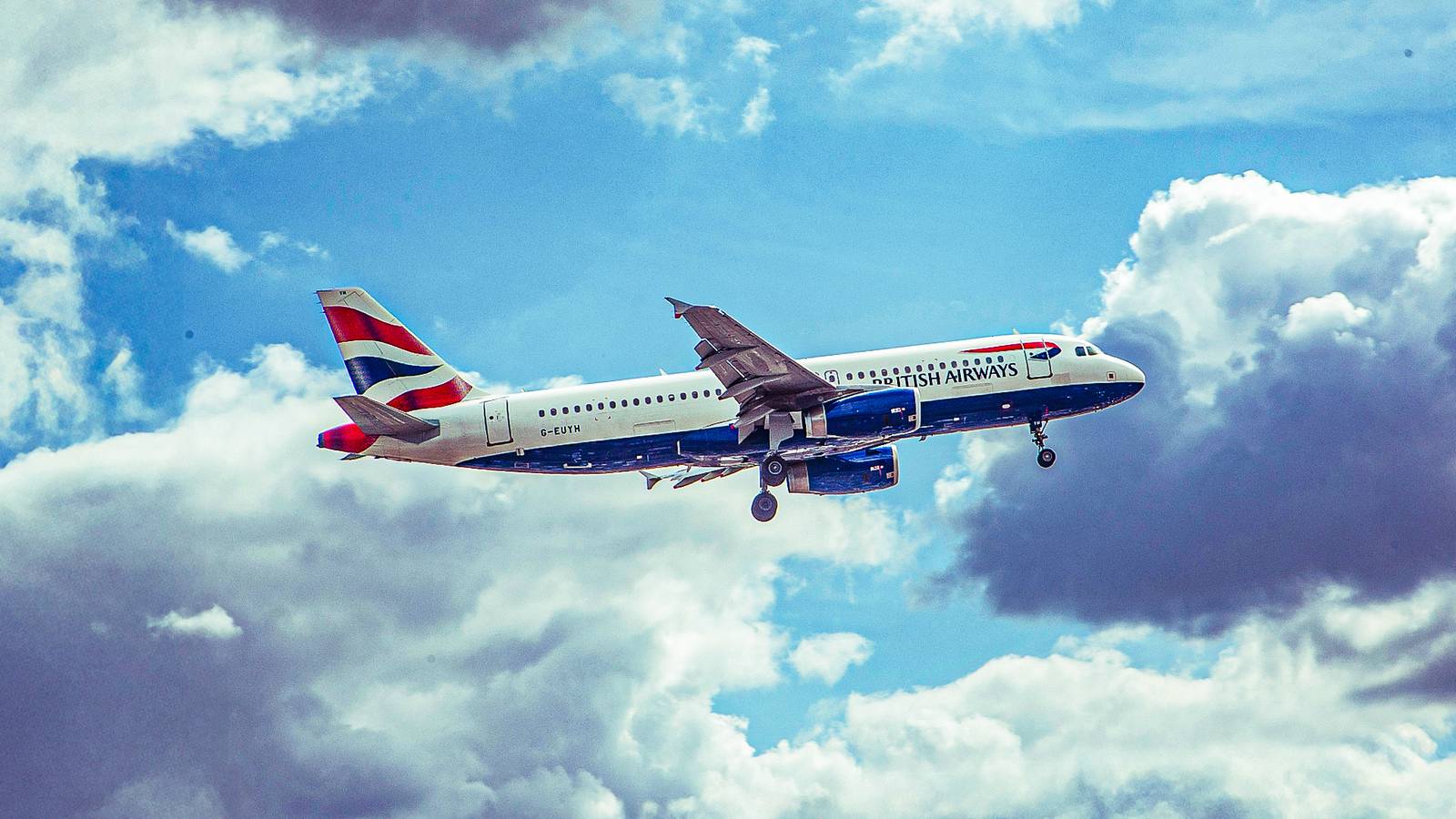
Published Jul 30, 2026, 4:48 AM EDT Josh is an Aviation Journalist and lifelong aviation enthusiast who's now turning that passion into a career. From watching planes and playing flight simulators at a young age to now sitting in the cockpit, Josh has always been drawn to the world of flight. Currently training to become a commercial pilot, Josh aims to make aviation interesting and accessible to everyone, whether you're in the industry or simply passionate about aviation. Now actively building a career in Aviation, Josh is focused on telling stories from inside the aviation world, stories shaped by firsthand experience, curiosity, and a genuine love of all things that fly. A British Airways flight crew has become the subject of an investigation after one of its Airbus A320s declared a MAYDAY while approaching London Heathrow Airport (LHR). The aircraft experienced an Air Data Reference (ADR) failure during its initial approach, triggering stall warnings and causing the flight control system to revert from Normal Law to Alternate Law. Although the crew landed the aircraft safely and there were no reported injuries, the UK Air Accidents Investigation Branch (AAIB) has classified the event as a serious incident. The incident occurred on July 6, 2026, on British Airways BA919 from Düsseldorf Airport (DUS). Preliminary information released by the AAIB outlines the sequence of events but does not identify a cause or assign responsibility. With the investigation still in its early stages, the focus remains on understanding why the aircraft's air data systems failed and how the flight crew responded to the resulting warnings. British Airways Crew Declared PAN PAN Before Upgrading To MAYDAY Credit: Flickr According to The Aviation Herald, the aircraft involved was an Airbus A320-232, registered G-EUUN. During the first approach to Heathrow's Runway 27L, an Air Data Reference (ADR) failure occurred. As a result, the aircraft's flight control system reverted from Normal Law to Alternate Law, and a stall warning was triggered. Following the warning, the crew declared a PAN PAN, informing air traffic control that they were experiencing an urgent situation requiring priority handling. The approach was discontinued, and the aircraft entered a holding pattern while the crew assessed the situation and prepared for another approach. The AAIB states that during the subsequent approach, another stall warning occurred when the aircraft was at approximately 3,000 feet (915 meters). The crew carried out what investigators described as a "potentially abrupt recovery maneuver," during which the aircraft descended to around 2,200 feet (670 meters) before regaining the instrument approach. At that point, the crew upgraded the emergency call from PAN PAN to MAYDAY before continuing to a safe landing. "During the approach phase, an ADR failure triggered a stall warning; the crew flew the aircraft under alternate law and declared a PAN. A further stall warning occurred at 3,000 feet, accompanied by a potentially abrupt recovery maneuver." What Does Alternate Law Mean? Credit: Shutterstock Airbus aircraft use a fly-by-wire flight control system that operates in different "laws," or control modes, depending on the status of the aircraft and its systems. During normal operations, the aircraft flies in Normal Law, which provides pilots with a full suite of flight envelope protections designed to help prevent excessive pitch, bank angle, overspeed, and aerodynamic stalls. The AAIB reported that following the ADR failure, the aircraft reverted to Alternate Law. In this mode, the aircraft remains fully flyable, but some of the protections available in Normal Law are either reduced or no longer available. Pilots must therefore rely more heavily on manual aircraft handling and abnormal operating procedures while continuing to fly the aircraft safely. An Air Data Reference is one of the aircraft's key systems for calculating information such as airspeed, altitude, and other flight parameters using inputs from sensors including the pitot probes and static ports. The flight deck displays, flight management systems and flight control computers use that information. The AAIB has not disclosed whether the failure affected a single ADR or multiple air data sources, and the underlying cause remains undetermined. Investigation Continues As Key Questions Remain Unanswered The AAIB has opened a formal investigation into the incident, which it has categorized as a serious incident rather than an accident. Such investigations are conducted to establish what happened and identify any potential safety lessons, rather than apportion blame. One important point is that the AAIB's preliminary notification does not state that the aircraft entered an aerodynamic stall. Instead, it confirms that stall warnings were generated following the ADR failure. Investigators have not yet determined whether those warnings accurately reflected the aircraft's aerodynamic state or whether they were influenced by erroneous air data resulting from the system failure. Following the incident, The Sun reported that unnamed sources alleged the captain physically intervened after an alleged "blunder" by the first officer during the approach. The newspaper also cited unnamed senior figures who described the event as having come close to a "hull loss," a term used when an aircraft is destroyed or damaged beyond economic repair. At the time of writing, neither claim has been corroborated by the AAIB or British Airways. While the aircraft landed safely without injuries or reported damage, the sequence of events makes the incident noteworthy. As the investigation proceeds, a final report is expected to provide a fuller understanding of the technical failure, the crew's response, and whether any safety recommendations emerge from the investigation within British Airways or the aviation industry as a whole.
Near 'Hull Loss': British Airways Captain Intervened After First Officer's 3,000ft Blunder
Full Article
Original Source
Read the full article at Simpleflying →KhanList aggregates and links to publicly available news content. We do not host full articles from third-party sources. Always verify important information with original sources.