
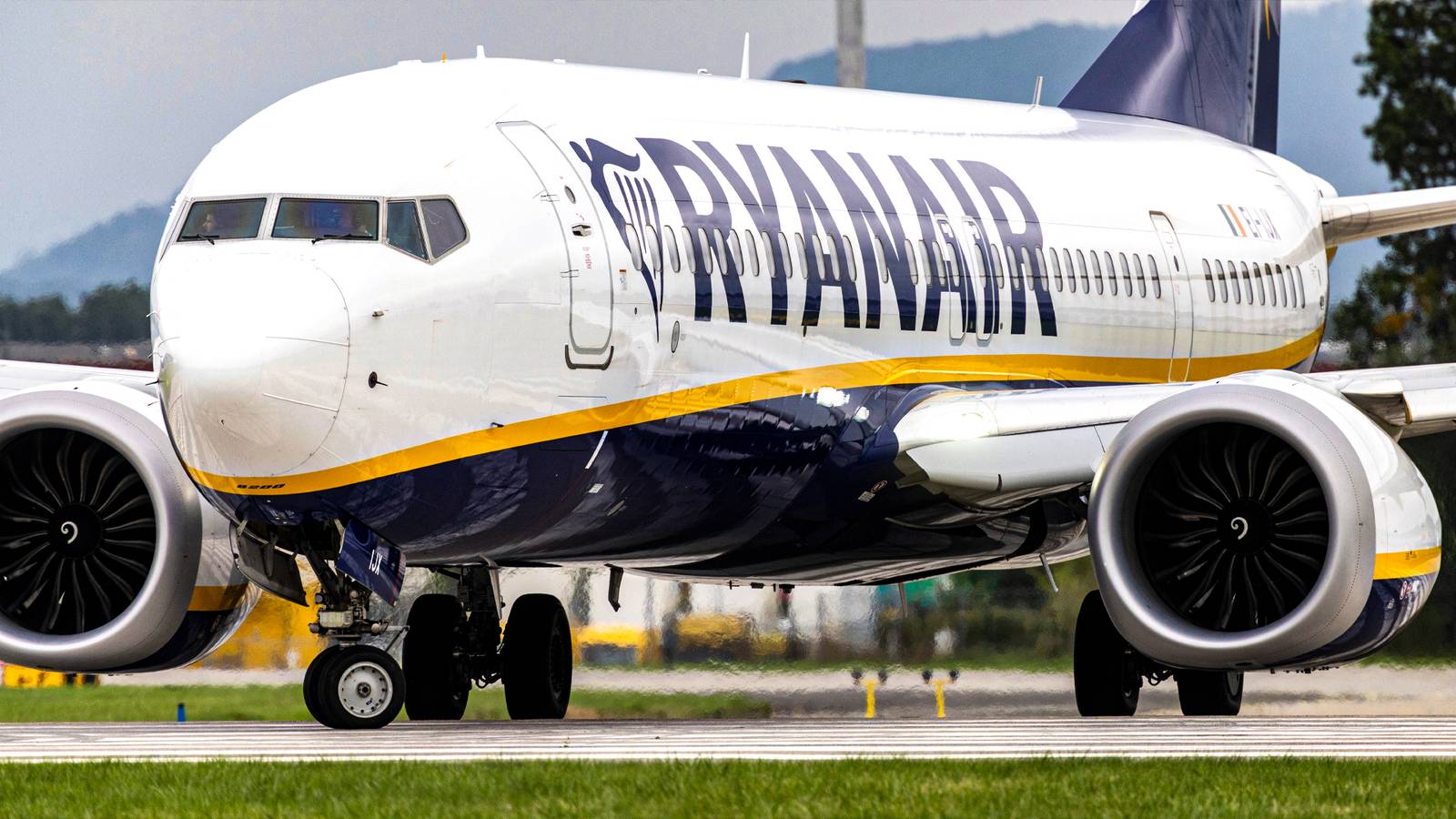
Published Oct 19, 2026, 12:00 PM EDT Journalist - Steven has a varied background in communications, and it was this passion for writing combined with his in-depth knowledge of the aviation industry that led him to Simple Flying. A keen linguist, he also has experience in translation and interpreting. Based in Palma, Spain The Boeing 737 has remained one of the most recognizable passenger aircraft in commercial aviation for decades, evolving through several generations while retaining the basic design that made it successful. From the 737 Classic to the Next Generation (NG) and the latest 737 MAX, Boeing has introduced more efficient engines, improved wings, and increasingly sophisticated cockpit technology without abandoning the aircraft's familiar low-wing configuration and narrow-body layout. Although the three generations share a common design philosophy, their differences are significant up close. Engine performance, fuel consumption, aerodynamics, cockpit displays, and flight control systems have all developed considerably over time. Understanding these changes helps explain how Boeing adapted the 737 to changing airline requirements while maintaining substantial commonality between generations. The 737 Classic: A Major Engine Upgrade Credit: David M. Albrecht | Shutterstock The 737 Classic family, comprising the 737-300, 737-400, and 737-500, entered service during the 1980s as the successor to the original 737 models. Its most important improvement was the CFM56-3 turbofan, a high-bypass engine that offered substantially better fuel efficiency and lower noise levels than earlier engines. This change allowed the aircraft to remain competitive as airlines increasingly prioritized operating costs and environmental performance. Installing the larger CFM56-3 engines presented an engineering challenge because the 737's short landing gear and low-mounted wing limited the available ground clearance. Boeing addressed this problem with a distinctive nacelle design featuring a flattened lower section, giving the 737 Classic its recognizable engine shape. The arrangement let the aircraft use a more modern turbofan without requiring a completely new landing gear configuration or a major redesign. The 737 Classic generation also improved the flight deck, with many aircraft receiving electronic flight instrument systems that replaced some traditional mechanical instruments with electronic displays. However, the extent of these upgrades varied by aircraft and operator, so not every 737 Classic had an identical cockpit. The three variants also met different capacity needs: the 737-300 as the central offering, the 737-400 with an extended fuselage for more passengers, and the 737-500 as a shorter option for lower-demand routes. The Next Generation: A Redesigned Wing Credit: Markus Mainka | Shutterstock Boeing introduced the 737 Next Generation family in the 1990s, with the 737-600, 737-700, 737-800, and 737-900 forming the principal variants, followed later by the longer-range 737-900ER. Rather than replacing the established design entirely, Boeing focused on improvements that would make the aircraft more efficient over longer distances and better suited to changing airline networks. The 737 NG retained the familiar fuselage concept but incorporated substantial aerodynamic refinements and updated systems. One of the most important changes was the redesigned wing, which featured a larger area, a longer span, and revised aerodynamic characteristics. These modifications improved cruise efficiency and helped the aircraft perform more effectively across a broader range of operating conditions. Airlines could also specify blended winglets, which reduced induced drag by moderating the airflow around the wingtips, while later split-scimitar winglets offered another improvement for compatible aircraft. These developments helped reduce fuel consumption without requiring a completely new aircraft structure. Today, the 737-800 remains one of the most common aircraft in the sky around the world. The latest data from ch-aviation shows that American Airlines is currently the type's largest operator in North America. Ranking Airline Boeing 737-800 1 American Airlines 303 2 Southwest Airlines 198 3 United Airlines 141 4 Delta Air Lines 77 5 Alaska Airlines 59 The 737 NG also received the CFM56-7B engine, featuring a 61-inch titanium fan and full authority digital engine control. Compared with the CFM56-3, the newer engine offered about 8% better fuel efficiency and about 15% lower maintenance costs, along with improved temperature margins. These gains reflected improvements in engine design, materials, and electronic control. Combined with the redesigned wing, these improvements made the 737 NG particularly attractive to airlines operating frequent short- and medium-haul services, where small efficiency gains could add up across thousands of flights. The 737 MAX: Introducing the LEAP-1B The 737 MAX represented another major step in the aircraft's development, primarily through the replacement of the NG's CFM 56-7B with the CFM International LEAP-1B engine. The new engine was designed to deliver greater fuel efficiency, lower noise, and improved environmental performance. Its higher bypass ratio and advanced internal components let it move more air around the engine core, reducing the fuel needed to produce a given level of thrust under comparable conditions. The CFM International LEAP-1B incorporates advanced materials and a more sophisticated engine architecture, with an overall pressure ratio of approximately 41:1 compared with roughly 28:1 for the CFM56-7B. Its fuel efficiency improvement is commonly cited at around 15 percent relative to the Boeing 737 NG engine, although actual results depend on aircraft configuration, operating conditions, and the mission flown. These gains mattered to airlines facing fuel price volatility and pressure to cut emissions, especially on high-utilization routes where fuel makes up a substantial share of operating costs. Once again looking solely at North America, the largest operator of the Boeing 737 MAX family is Southwest Airlines. Ranking Airline Boeing 737 MAX 8 Boeing 737 MAX 9 Total 1 Southwest Airlines 300 - 300 2 United Airlines 123 120 243 3 American Airlines 89 - 89 4 Alaska Airlines 14 80 94 5 Aeroméxico 45 29 74 Fitting the larger-diameter engine beneath the existing low wing required further adjustments to the aircraft's geometry. Boeing positioned the engines higher and farther forward than on the 737 NG, helping maintain adequate ground clearance while accommodating the larger fan. This arrangement changed the aircraft's aerodynamic characteristics and contributed to the need for additional flight control refinements. The 737 MAX therefore illustrates the challenges of modernizing an established airframe: a more efficient engine can deliver substantial benefits, but its size and placement can affect the surrounding design. Winglets & Aerodynamic Improvements Credit: dorengo5 I Shutterstock Wingtip design provides another visible distinction between the three generations, although the 737 Classic family generally retained simpler wingtip arrangements than those associated with later models. The 737 NG introduced blended winglets as an option, creating a curved transition between the wing and the upward-extending wingtip. By reducing the strength of wingtip vortices and associated induced drag, these devices improved aerodynamic efficiency, particularly during cruise, when airlines spend much of their time seeking to minimize fuel consumption. Later Boeing 737 NG aircraft could receive split-scimitar winglets, which added an upward-pointing tip and a smaller downward-facing element to the basic winglet design. These modifications further refined the airflow around the wingtip and offered additional fuel-saving potential. However, winglet availability depends on the specific aircraft and retrofit configuration, so not every 737 NG looks the same externally. Their benefits also vary by flight distance, aircraft weight, and operating profile, so they don't produce identical savings on every journey. The Boeing 737 MAX uses split-tip Advanced Technology winglets mounted on a strengthened 737 NG wing. These winglets combine upward and downward extensions to improve aerodynamic performance while preserving the previous generation's general wing architecture. Although the 737 MAX wing is not an entirely new design, its structural reinforcement and integration with the updated engines contribute to the aircraft's overall efficiency. The progression from conventional wingtip arrangements to increasingly sophisticated winglets demonstrates how incremental aerodynamic changes can improve performance without requiring a wholly new airframe, allowing the aircraft to operate flights up to eight hours long. Cockpit Technology and Flight Controls Credit: Markus Mainka | Shutterstock Cockpit modernization has also been an important part of the 737's development, although the changes have occurred gradually rather than through a complete replacement of the aircraft's operating philosophy. Early Classic aircraft generally retained a traditional instrument layout, while many received EFIS displays that brought more flight information onto electronic screens. The 737 NG introduced a more extensively updated flight deck, improving the presentation of navigation and flight information while retaining familiar controls and procedures that helped preserve continuity for pilots transitioning from earlier models. The 737 NG typically uses six smaller display units, whereas the 737 MAX features four larger cockpit displays that consolidate information into a different arrangement. The updated flight deck offers improved screen presentation and incorporates newer avionics technology while retaining the 737 cockpit's familiar overall layout. These differences matter for pilot training and airline operations, but the 737 MAX was designed to maintain considerable commonality with the 737 NG. Nevertheless, differences in aircraft systems and operating procedures mean that commonality does not eliminate the need for appropriate training and qualification. Flight control architecture also shows both continuity and change across the three generations. The Boeing 737 continues to rely primarily on hydraulic-mechanical controls, with mechanical connections and hydraulic assistance operating the principal flight control surfaces. The 737 MAX introduces partial fly-by-wire control for the spoilers, replacing certain mechanical functions with electronic control, but it does not adopt a fully fly-by-wire architecture. Manual backup provisions remain for the main flight controls, reflecting Boeing's longstanding approach to retaining direct mechanical control paths where required. This combination of traditional architecture and selective modernization distinguishes the 737 from aircraft designed around more extensive electronic flight control systems. Passenger Capacity & Airline Operations Credit: Ian Dewar Photography | Shutterstock Passenger capacity varies across the 737 Classic, NG, and MAX families because Boeing developed multiple fuselage lengths to suit different airline requirements. The Classic 737-300 and 737-400 offered different capacities, while the shorter 737-500 served routes where a smaller aircraft was more appropriate. Seating numbers depend on cabin layout, seat pitch, and the number of service areas, so operators should not treat maximum-capacity figures as the standard configuration for every operator. The 737 NG family broadened the available options, with the 737-700 offering a shorter fuselage and the 737-800 becoming a particularly widely used aircraft for medium-haul services. The longer 737-900 and 737-900ER expanded capacity further, allowing airlines to carry more passengers while retaining the operating characteristics of a narrowbody aircraft. This range gave carriers greater flexibility in matching aircraft size to passenger demand, from thinner routes to busy domestic and international services that didn't require a widebody jet. The 737 MAX continues this approach through variants such as the 737 MAX 7, 737 MAX 8, 737 MAX 9, and 737 MAX 10, each designed around different capacity and range requirements. The MAX 8 sits at the center of the family, while the MAX 9 and MAX 10 offer longer fuselages for airlines seeking more seating capacity. Across all three generations, the basic 737 concept has remained recognizable, but improvements in engines, wings, avionics, and systems have changed how effectively the aircraft serves modern airline networks. The result is an evolving family that preserves its original design principles while adapting to commercial aviation's operational and economic needs.
Boeing 737 Classic Vs. NG Vs. MAX: What Changes Across 3 Generations
Full Article
Original Source
Read the full article at Simpleflying →KhanList aggregates and links to publicly available news content. We do not host full articles from third-party sources. Always verify important information with original sources.