
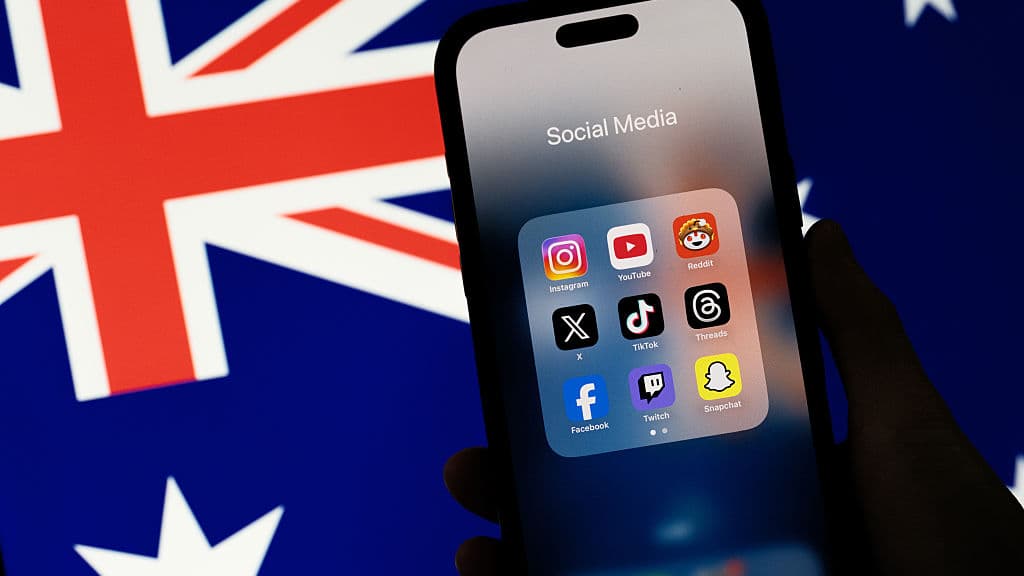
Tech giants could face penalties of up to 5% of their global revenue if found in violation of new online safety rules in Australia.The country’s Parliament passed the Digital Duty of Care bill Wednesday, Communications Minister Anika Wells said, after the center-left Labor Party government of Prime Minister Anthony Albanese reached a deal with the left-wing Greens party.To Albanese, the Digital Duty of Care law is the next step. “It’s about Australia taking action on the side of parents and children, not foreign-owned tech companies,” he told Parliament on Tuesday.Tech firms like Meta and Apple, many of which are headquartered in the U.S., have said that they want to improve child protection and curb harm on their platforms, though they have pushed back against how broad they say Australia’s laws are. Critics of the Digital Duty of Care law particularly question who gets to decide what counts as harmful content.David Brat, the U.S. Ambassador to Australia, said he had conveyed the Trump Administration’s objections to the law amendments to Wells on Tuesday.“Vaguely defined ‘harms,’ backed by penalties of up to 5% of global revenue, will push platforms to censor lawful speech,” Brat posted on social media. “As Australia’s largest foreign investor, the U.S. is concerned with regulations that impose disproportionate compliance burdens on American companies relative to competitors.”Last month, Wells told the National Press Club that the new law would apply to U.S. President Donald Trump’s Truth Social platform. On Tuesday, she said her ministry was ironing out differences with their American counterparts.What does the Digital Duty of Care law do?The law amends a collection of internet-related legislation, including Australia’s 2021 Online Safety Act, which set 17 online safety codes and standards to combat unlawful and age-restricted material. Amendments have been pursued for years amid criticisms that previous safeguards were inadequate. Wells said in October that those prior codes “were drafted by big tech for big tech.” The Digital Duty of Care law, which was introduced in Parliament in October, repeals those prior codes in favor of a broader “duty of care” requirement for tech firms, following a 12-month transition period. The duty mimics how Australia regulates other sectors, including aged care and child supervision, commercial vessel and rail safety, and workplace safety, in which businesses and providers are expected to manage risks to health and safety “as much as is reasonably practicable.” Under the Digital Duty of Care law, platforms must provide risk assessments to regulators at least once a year, and they must notify regulators before they introduce significant changes to their platforms that could allow for new risks of harm, such as “addictive” design features.The amendments also make it easier for Australian citizens to hold tech companies to account. Previously, one needed to rely on complex legal avenues concerning company negligence and consumer protection. The new law grants Australians the “private right of action,” which means they can directly sue digital platforms for breaching their duty of care. The new law also implements stronger privacy protections for users, expanded regulatory powers to remove “nudifying” services, and a clarified definition of “hostile attitudes to women”—which now refers to material depicting hatred or the inferiority of women or promoting violence, abuse, exclusion, or the denial of women’s rights.The bill would also require tech firms to allow users in Australia to opt out of a platform’s algorithm and instead choose to see only content from accounts they follow. It also introduces steeper fines for violations, which Wells said the Australian public demanded. Initially, the proposed maximum penalty was 109 million Australian dollars ($72 million), but it was raised to up to 5% of the violator’s global revenue. The steep fines mirror those in other jurisdictions, including Canada’s proposed 3% penalty in a bill that would require Big Tech to reduce the risk of harmful content and the European Union’s draft 6% fine against companies that push for unfair trade practices.How have critics responded?The Tech Council of Australia, an industry body whose membership includes companies like Google, Microsoft, and LinkedIn, told the Guardian in a statement that it supported the legislation but was concerned over its impact on businesses, particularly in its empowering of individuals to sue.“A private right of action is a complex undertaking with significant consequences,” a spokesperson said. “How this is implemented is critical, and we need proper consultation to ensure that businesses are not hindered from investing in Australia. If we get this wrong, it will be counterproductive to encouraging innovation in Australia.”The conservative opposition coalition has called the law “a blank cheque for political censorship.” Senator Sarah Henderson said on Tuesday that the bill compromised current legislation, gave “extensive” powers to the government, and would hurt smaller tech businesses.“The fact is the digital duty of care should never have seen the light of day,” Henderson said. “This is policy on the run, driven by an insidious agenda to shut down lawful speech and control political debate.”Wells rejected this. “This is not about what you say online,” she said Wednesday. “It’s about what the platforms do or fail to do online.”
Big Tech Companies May Face Billion-Dollar Fines After Australia Passes ‘Digital Duty of Care’ Law
Full Article
Original Source
Read the full article at Time →KhanList aggregates and links to publicly available news content. We do not host full articles from third-party sources. Always verify important information with original sources.