
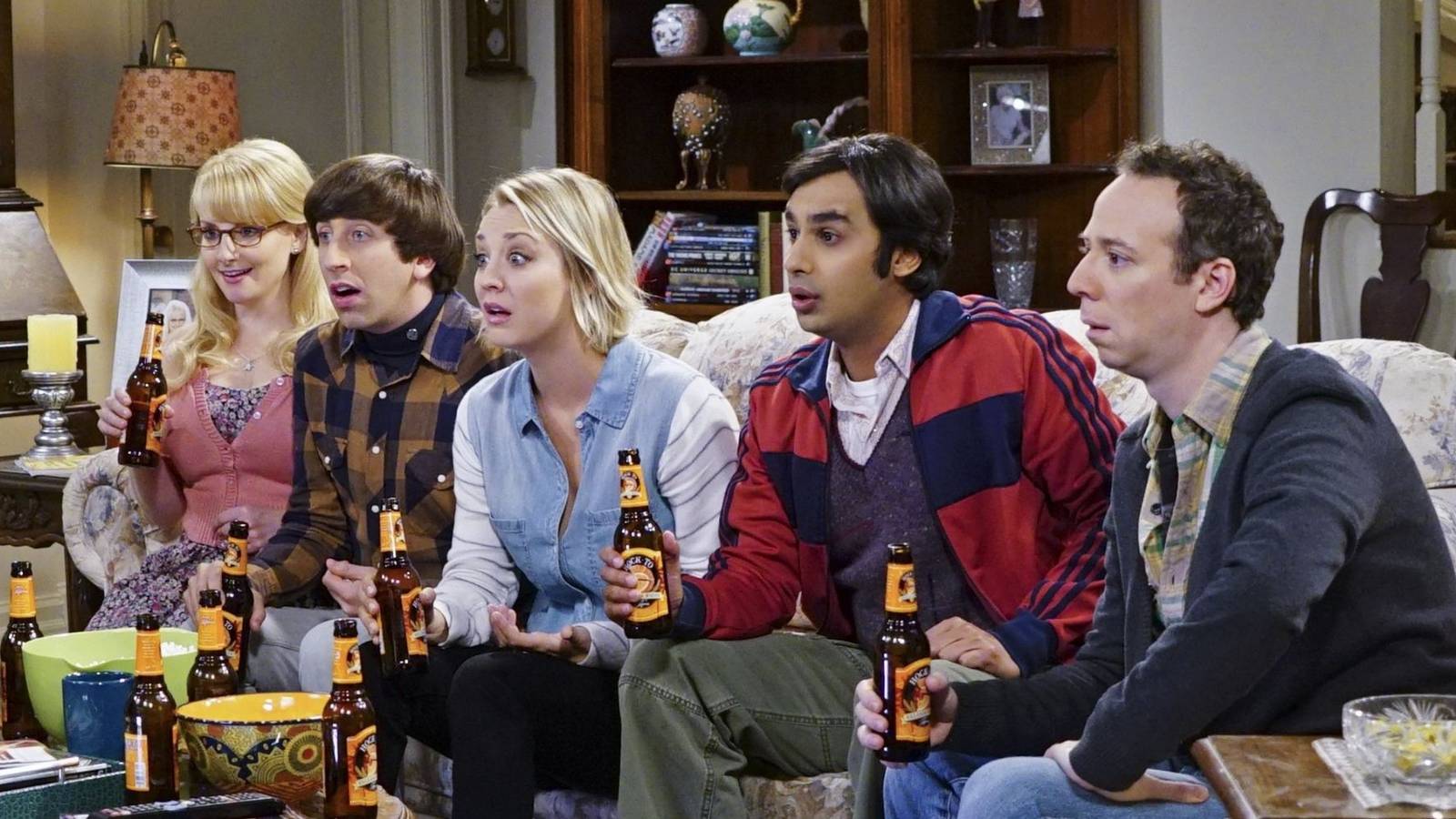
Image via Monty Brinton / ©CBS / courtesy Everett Collection Published Sep 13, 2026, 5:14 PM EDT Sebastian is a pop culture writer with a passion for research, especially when it comes to movies, anime, and games. He holds a Bachelor's degree in History and has written features, movie reviews, and video game reviews for Popzara and Anime News Network, and has appeared in Popzara's yearly Best, Worst, and Everything Else podcast episode for anime films, as well as other gaming related episodes. While he loves anime - his favorites being Tiger & Bunny, Berserk, Durarara!!, and Silver Spoon - he's a huge fan of anything horror. He loves the works of Junji Ito, films like Trick 'r Treat, Ravenous, Train to Busan, and The Lullaby, and digging around to find horror movies from all over the world to gain a better understanding of the genre.If he had to choose a highlight of his writing career so far, it would be seeing someone on Tumblr agree with his article about the portrayal of bullying in My Hero Academia. Sometimes, it's the little victories. He also may or may not be a stack of tarantulas disguised as a human man...but that's classified information. Sign in to your Collider account Not long ago, you couldn’t go anywhere without seeing or hearing something about The Big Bang Theory. People wore “Bazinga!” and “I’m not crazy, my mother had me tested” t-shirts, the Soft Kitty song was known by almost everyone; people played Rock, Paper, Scissors, Lizard, Spock, and there were even board games and trivia based on the series. For a while, the show was something of a cultural juggernaut. Most people had seen at least an episode or two, and millions were tuning in every week to see the next batch of antics from their favorite nerd herd. So, it begs the question: why is The Big Bang Theory so insufferable now? The pop culture period The Big Bang Theory came into was a little different from what we know now. The first major Marvel movie, Iron Man, wouldn’t come out until the next year. Dungeons and Dragons was still something people thought was played in basements by losers. Very few anime movies were shown in theaters. In short, when the series premiered in 2007, it wasn’t “cool” to be a nerd yet. So, it was easy to have a good laugh at this group of awkward guys who seemed unable to get a date and just did generally “weird” things, like playing interdimensional chess and cosplaying. However, as time passed, The Big Bang Theory became less funny and more annoying. 'The Big Bang Theory' Makes Fun of "Nerds" — But It Doesn't Work A big draw of The Big Bang Theory in its early seasons was the over-the-top geekery of the main characters. It was entertaining to watch Leonard (Johnny Galecki), Sheldon (Jim Parsons), Raj (Kunal Nayyar), and Howard (Simon Helberg) be the odd men out, while at the same time being the majority of the main cast. However, as time went on, that joke became tired. There are a number of scenes drowning in laugh tracks that don’t even contain any jokes; they just involve the characters saying vaguely nerdy things. A great example of this is the Season 4 episode “The Engagement Reaction,” where the group is playing a card game called Mystic Warlords of Ka’a. They say the name of each card as they put it down while the laugh track goes on and on. However, there’s no joke in the scene until the end, when Sheldon puts down a card of his own creation. We’re meant to laugh simply at the "nerdiness" of it all, even though it’s just a card game without a real punch line. Collider Exclusive · Sci-Fi Personality Quiz Which Sci-Fi Hero Are You Most Like? Paul Atreides · Captain Kirk · Princess Leia · Ellen Ripley · Max Rockatansky Five iconic heroes. Five completely different ways of facing an impossible universe. One of them shares your instincts, your values, and your particular way of refusing to back down. Eight questions will tell you which one. 🏜️Paul Atreides 🖖Capt. Kirk ✊Princess Leia 🔦Ellen Ripley 🔥Max Rockatansky FIND YOUR HERO → 01 How do you lead when the stakes couldn't be higher? The way you lead under pressure is the most honest thing about you. AI absorb everything — every variable, every pattern — and move only when I know the path forward. BI read the room, make the call, and own the consequences. Hesitation costs more than mistakes. CI rally people. A cause needs a voice, and I refuse to let fear be louder than conviction. DI assess the threat, establish what needs doing, and get it done without waiting for permission. EI don't lead. I act. Others can follow or not — I'm already moving. NEXT QUESTION → 02 What is your greatest strength in a crisis? The quality that keeps you alive when everything else fails. APrescience — the ability to see further ahead than anyone else and plan accordingly. BImprovisation — I'm at my best when the plan falls apart and I have to invent a new one. CConviction — I know what I'm fighting for, and that certainty doesn't waver under fire. DComposure — I stay functional when everyone around me is falling apart. Panic is a luxury. EEndurance — I outlast things. I take the hit and keep moving long after others have stopped. NEXT QUESTION → 03 What is the thing you'd sacrifice everything else for? Your deepest motivation is your truest compass. AThe survival and dignity of my people — even if I have to become something frightening to ensure it. BThe safety of my crew — every single one of them. No one gets left behind. CFreedom — for my people, for every world still crushed under the weight of an empire. DThe truth — what actually happened, what's actually out there, whether anyone believes me or not. EThe one person — or the one memory — that still makes any of this worth surviving for. NEXT QUESTION → 04 How do you relate to the people around you? Who you are to others under pressure is who you really are. AWith intensity and distance — I care deeply, but the weight I carry makes closeness complicated. BWith warmth and irreverence — I take the mission seriously, not myself. CWith directness and trust — I say what I mean, and I expect the people I work with to rise to it. DWith professional care but clear limits — I'll protect you, but I won't pretend we're family. EWith wariness that slowly becomes loyalty — I don't trust easily, but when I do, it holds. NEXT QUESTION → 05 You're facing a threat that no one else believes is real. What do you do? How you respond when you're the only one who sees it defines everything. APrepare in silence. If they won't listen, I'll be ready when they finally have to. BKeep pushing until someone listens — and if no one does, handle it myself. CBuild the case, find the allies, and make the threat impossible to ignore. DDocument everything. The truth matters even if no one believes it yet. EStop trying to convince anyone. Survive it. That's the only argument that counts. NEXT QUESTION → 06 What has your heroism cost you personally? Every hero pays. The question is what — and whether they'd pay it again. AMy innocence — I've seen what I'm capable of, and I can't unsee it. BPeople I loved — the command chair has a view, but it's a lonely one. CA normal life — I gave up everything ordinary the moment I chose the cause. DMy sense of safety — I know exactly what's out there now, and I can't pretend otherwise. EAlmost everything — and I'm still not sure what I'm carrying it all for. But I keep going. NEXT QUESTION → 07 How do you feel about the rules of the world you're in? Every hero has a relationship with the system. What's yours? AI understand them deeply — and I know exactly which ones must be broken, and why. BI respect the spirit of them and bend the letter when the situation demands it. CThe system is the problem. I'm not here to work within it — I'm here to dismantle it. DI follow protocol until protocol stops being useful. Then I make the call myself. EThe rules collapsed a long time ago. What's left is instinct, and mine are reliable. NEXT QUESTION → 08 When everything is on the line, what keeps you going? The answer is the most honest thing about you. ADestiny — or something that feels so much like it that the difference no longer matters. BThe people on my ship — their faces, their trust, the fact that they're counting on me. CThe belief that what we're fighting for is worth every sacrifice, including this one. DSheer refusal to let it win — whatever it is. I don't stop. That's just who I am. EI'm not sure anymore. But the road is still there, and I'm still on it. REVEAL MY HERO → Your Hero Has Been Identified Your Sci-Fi Hero Is…Your answers point to the iconic sci-fi hero who shares your instincts, your values, and your particular way of facing the impossible. Paul AtreidesYou carry a weight most people would crumble under — the knowledge of what you're capable of, and the burden of what you might have to become. You see further ahead than others and you plan accordingly, even when the vision frightens you. You are driven by loyalty to your people and a sense of destiny you didn't ask for but can't escape. Paul Atreides is not simply a hero — he is someone who understands the cost of power and chooses to bear it anyway. That gravity, that willingness to carry what others won't, is exactly you. Captain KirkYou lead with instinct, warmth, and an absolute refusal to accept a no-win scenario — because you've always believed there's a third option nobody else has thought of yet. You take the mission seriously without ever taking yourself too seriously. Your crew would follow you anywhere, not because you demand it, but because you've earned it. Kirk's genius isn't tactical — it's human. He reads people, bends rules with purpose, and wills outcomes into existence through sheer conviction. That combination of warmth, audacity, and relentless optimism is unmistakably yours. Princess LeiaYou are the kind of person who holds the line when everyone else is losing faith — not because you're fearless, but because giving up simply isn't something you're capable of. You lead through conviction. Your voice carries because your belief is unshakeable. You gave up everything ordinary the moment you chose the cause, and you've never looked back. Leia is not a supporting character in her own story — she is the moral centre of the entire rebellion. That same fierce, principled, unbreakable core is what defines you. Ellen RipleyYou are not reckless, not grandiose, and not particularly interested in being anyone's hero — you just refuse to stop when it matters. You see threats clearly, you document the truth even when no one listens, and when the time comes you handle it yourself. Ripley's heroism is earned, not performed. She doesn't have a speech — she has a flamethrower and a plan. You share her composure under the worst possible pressure, and her refusal to pretend the monster isn't there. When it counts, you don't flinch. That's everything. Max RockatanskyYou have been through fire that would break most people — and what came out the other side is something the world underestimates at its peril. You don't ask for help, don't need validation, and don't wait for anyone to tell you the rules no longer apply. Your loyalty, when it finally arrives, is absolute — but it's earned in silence and tested in action, not in words. Max is not a nihilist. He is someone who lost everything and found, against his will, that he still has something worth protecting. That bruised, stubborn, ultimately human core is exactly yours. ↻ RETAKE THE QUIZ Throughout the run of The Big Bang Theory, the pop culture landscape changed at an incredible rate. Comic book films became mainstream; video game and tabletop game streamers found a niche and grew exponentially, and so did the games they covered; YouTubers like Joey Bizinger, Connor Colquhoun, and Garnt Maneetapho gained millions of followers who wanted to hear all about Manga and anime… basically, nerdy became mainstream. This shift wore on The Big Bang Theory more and more as it continued. People grew tired of nerds being shown as people who had no understanding of pop culture outside high fantasy and science fiction, and more importantly, the trope of the intellectually superior nerd became insufferable. It was no longer entertaining to see Sheldon consider himself the smartest person in the room, or for Leonard to take down Penny’s (Kaley Cuoco) partners by making "obscure" references and using science as a tool to confuse and belittle. More and more people understood these pop-cultural references and were engaging in the same activities as the characters in the show. It didn't feel like we were laughing at something obscure and foreign, it was something familiar now. Sexism, Racism, and Homophobia Run Rampant in 'The Big Bang Theory' Beyond its outdated portrayal of nerd culture, The Big Bang Theory has a myriad of other issues. One of the most notable is its misogyny, especially when it comes to the series’ female leads: Penny, Bernadette (Melissa Rauch), and Amy (Mayim Bialik). However, it extends to most of the female characters on the show, particularly in the early seasons. Howard is, by far, the main perpetrator of the show’s misogynistic tone. He is often shown committing acts of sexual harassment, such as making gadgets to spy on women, reinforcing gender roles by expecting his partner Bernadette to do the majority of the domestic duties, becoming incredibly jealous and insecure about Bernadette earning more than him, and generally objectifying and demeaning women. However, all the male characters have moments where they objectify women, or generally appear clueless about the fact that women are people at all. Penny is at the center of most of the misogyny in The Big Bang Theory. She is meant to fill the “dumb blonde” trope, and the other characters often insult her intelligence, her job, and her career goals. For most of the series, she is shown to be someone who knows that she’s pretty and uses that to get what she wants. On several occasions, she is even called offensive names such as "slut." However, there are many times when she herself contributed to the show’s misogyny. This happens primarily during the period when Leonard is dating Priya (Aarti Mann). Penny, Bernadette, and Amy often engage in “Priya bashing,” where they say bad things about Priya’s clothes, looks, and general personality simply because she’s dating Penny’s ex-boyfriend. There’s also the problem of casual racism in The Big Bang Theory. Raj is usually at the center of this issue, as the only main character who is a person of color. There are multiple instances of Howard imitating Raj’s accent in an exaggerated way, and mocking the dancing found in Hindi cinema. Insensitive comments about culture and race are common in the series in general, especially from Sheldon, though this is usually brushed off due to him being from East Texas. This is also common in the show’s prequel series, Young Sheldon, though the comments are usually directed toward Tam (Ryan Phuong). In addition, Howard is subject to a number of Jewish stereotypes, one of which — his overbearing relationship with his mother — is at the core of his character. He is portrayed as a weak, timid "mama’s boy," and most mentions of his religion are meant to be a punchline for a joke. In addition, he’s the only character who has his religion as a focal point of his personality. Homophobia is also frequent in The Big Bang Theory, particularly towards Howard and Raj, and Amy and Penny. Howard and Raj are really close friends, often doing things some might consider “romantic” and bickering like a couple. This prompts people to ask about their “latent homosexual tendencies,” and in Raj’s case, many people comment on his comfort with femininity and use this as proof that he’s actually gay. Similarly, Amy and Penny come to have a very close friendship, and we often see Amy being uncomfortably intimate with Penny, once kissing her without permission and following her to the bathroom. Sheldon Cooper Fails at Representing Neurodivergent People This one is hotly debated, as Sheldon is never specifically stated to be on the autism spectrum. However, he exhibits many of the common neurodivergent traits that people recognize, such as the need for routine, having hyperfixations and special interests, repetitive behaviors and rituals, touch aversion, sensory difficulties (especially with smells), and difficulty relating to others. While this in and of itself isn’t necessarily an issue — even though there are plenty of issues with neurodivergent representation being predominantly white, male, and exclusive to super-geniuses — there is an issue with how Sheldon is treated and how he treats others. Firstly, the way Sheldon is treated by others makes his mannerisms the butt of the joke. People consistently point out the pointlessness of the running gag of him knocking nine times, in groups of three each time. No explanation is given as to why Sheldon does this, and we shouldn’t need one; it’s a harmless action that makes him more comfortable. Similarly, he’s often made fun of for needing to have a specific seat in his apartment, and people take joy in doing things that interfere with the seat — and with his routines and rituals in general — thus making him upset. It’s common for other characters to be unsympathetic to issues that Sheldon faces due to disruptions in his routine or struggles with being in social situations, though many of these behaviors are harmless, albeit a bit inconvenient. This lack of sympathy normalizes prejudice towards neurodivergent people, even if the character is never stated to be neurodivergent. Secondly, there is a serious issue with Sheldon being infantilized by other characters, particularly Penny and Leonard. For example, his interest in model trains is typically addressed by other characters as “childish” or “immature,” and his need for certain things during vulnerable moments, such as having the Soft Kitty song sung to him, is always played for laughs. In addition, there are far too many moments where Penny and Leonard act like parents to Sheldon. The best example of this is the episode after Leonard and Penny’s breakup, where Sheldon is obviously distressed by the change and tries to spend time with both of them without making the other one upset. Leonard and Penny treat him like a child, telling him when to go to bed, reminding him to use his manners, and telling him what he should and shouldn’t eat. This is an extremely harmful stereotype that paints neurodivergent adults as unable to care for themselves. On the other hand, though, Sheldon is also often shown to be condescending, rude, cold, and lacking empathy. His friends’ annoyance with him is usually in response to him belittling them or being uncaring about their issues. He often doesn’t care when they tell him he’s hurt their feelings, and there are many times when he’s outright manipulative towards his friends to get his way. This feeds into a stereotype about neurodivergent people being completely without empathy, and unable to distinguish between right and wrong and change their behavior when confronted. While this does get better in later seasons, it’s still all too often that we see Sheldon as being mean or condescending and getting away with it because he’s “weird” or “just like that” — another poor stereotype that robs neurodivergent people of their autonomy and ability to be held accountable for their actions. Ultimately, The Big Bang Theory is hard to watch today because it aged poorly. There are so many jokes about women and marginalized groups that range from cringe-worthy to rage-inducing, and while no characters are confirmed to be neurodivergent, at least two of them show very common symptoms and are often infantilized and treated as a joke. It’s hard to go back and look at a show that you once found funny and realize it’s simply not.
'Big Bang Theory' Is Impossible To Watch Today
Full Article
Original Source
Read the full article at Collider →KhanList aggregates and links to publicly available news content. We do not host full articles from third-party sources. Always verify important information with original sources.