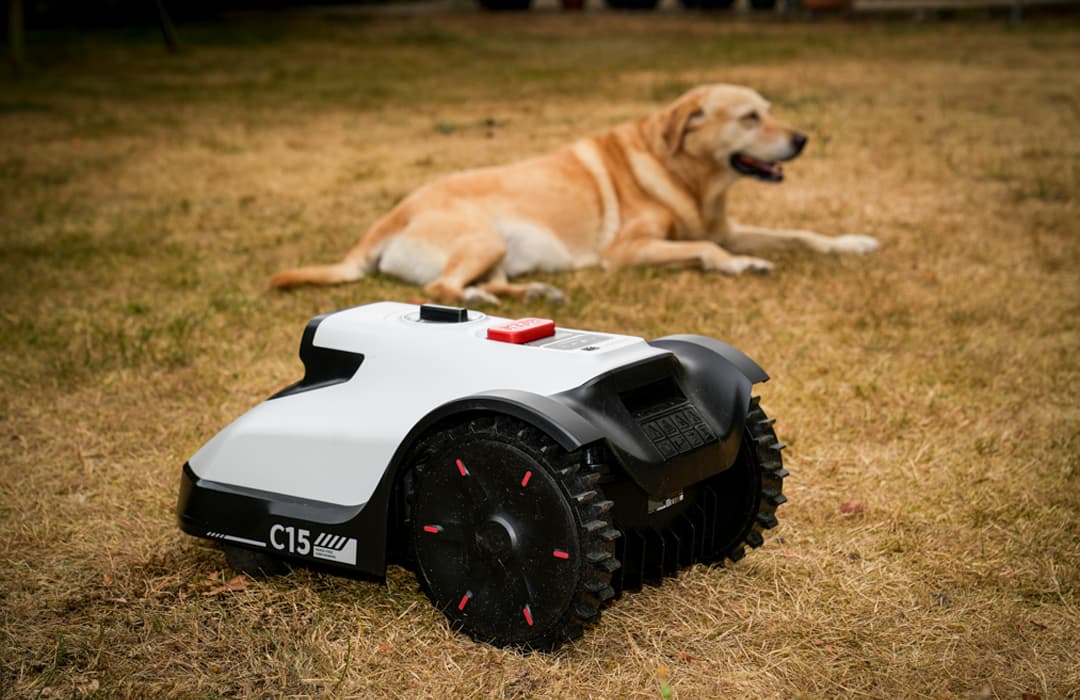
What is the best robot lawnmower?Ultimately, the best robot lawn mower is the one that suits your lawn, budget and willingness to spend time on setup. The Segway Navimow i2 delivered the strongest overall combination of design, mapping and cutting quality, while the Mammotion LUBA mini 2 and Worx handled uneven ground with ease, and the Ecovacs Goat O1200, eufy C15 and Dreame A2 were all solid performers.Simpler models, such as the LawnMaster OcuMow 16, also showed that useful automation doesn't always require the highest price, especially if you’re in a small, confined space. These mowers can save time and improve lawn condition; the most important tips are to spend time on setup, be mindful of their use, and use them responsibly. Most importantly, leaving some areas uncut and considering hedgehogs and other wildlife should be an important part of every mowing routine.Experts explain lawn care and robot mowersMeet the experts: Worx (Joe Chuter, Positec), eufy (Mariam Shahid, Anker) and Segway Navimow (Zhang)What is the best time of day to mow?Late morning, once the dew has burned off, is recommended by Mariam from eufy: "dry grass cuts more cleanly and is less likely to clog the mower." Joe at Worx highlights "late morning to early evening, once any overnight dew has dried but before the sun begins to set to help avoid insufficient light errors", a real issue for camera-guided machines. In a heatwave, eufy suggests shifting later, to "the late afternoon once temperatures have eased." From talking with local gardeners and owners, it was apparent that keeping an eye on conditions is the best idea: set the mower for late morning to early evening, but if it rains, stop, and if it’s full midday sun, wait until the temperature has cooled.Does it matter if it runs overnight?Worx and eufy both raised wildlife as a definite no-mow at night point, echoing the work of Dr Rasmussen. Worx specifically commented, "Many hedgehogs and other small mammals are most active from dusk through dawn, so it's generally recommended to schedule mowing during daylight hours rather than overnight." It lists night running among common owner mistakes, for "increasing the chance of encounters with nocturnal wildlife." eufy: "try not to mow at dawn, dusk or night, when wildlife is most active." How often should it run, and how does that change with the seasons?Little and often, depending on the size of your lawn. Mariam at eufy suggests two to four cuts a week in spring and early autumn, "four to seven times a week" at the May–June peak, three to six times a week in high summer, and that winter "can usually be paused altogether." Worx sizes it to the machine: "for a lawn of 300m2 it is recommended to operate the mower three times per week. Navimow goes further than either, advising owners to "run it for 3-6 hours a day, 7 days a week for light, frequent cuts", scaling back "by 20-30 per cent in heatwaves and 40-50 per cent in drought." All warn against a fixed schedule that never alters; eufy calls "sticking to a fixed mowing routine regardless of the weather" the single biggest mistake, and Navimow flags that the factory settings "might not be best for your lawn, time of year or grass type."During autumn, Navimow offers the most practical steer: "Let the mower handle sparse leaves, blow or rake moderate patches, and pause mowing during heavy leaf drop."Cutting height?Worx and eufy agree that "around 40–50 mm provides a good balance between appearance and resilience" (Worx), rising to "50–60 mm during drought or very hot weather." eufy adds the old rule of thumb, "avoid removing more than one-third of the grass blade in a single cut." Navimow recommends considerably longer grass, and ties it to grass type: "for cool-season grasses like fescue and bluegrass, aim for 3-3.5 inches and raise to 4 in peak summer", or 76–89mm rising to 100mm, with warm-season grasses cut shorter at 1.5–2.5 inches. In summer, it suggests raising the height "to 7-8cm". If growth is outpacing the mower, Worx says run it more rather than cut lower: "it's generally better to increase operating time rather than lowering the cutting height."How much lawn should I leave uncut for wildlife?Somewhere between a tenth and a fifth. Worx: "many conservation organisations recommend leaving 10–20 per cent of the garden unmown where space allows", boundary strips, patches under trees, "corners allowed to grow naturally." eufy goes to the top of that range, citing Butterfly Conservation: "leaving around 20 per ceny of your lawn uncut throughout the year can make a real difference," providing habitat "for butterflies, moths and caterpillars." Navimow makes the same case without a percentage: "deliberately leave a corner of the lawn unmown" because "taller growth shelters useful insects", and points out the practical route: "with a robotic mower, you can easily set up a no-go zone for this in the app." All stress a small patch still counts, which again reflects some of the comments from Dr Rasmussen.Where should the base station go?A level site, with power, well-drained, and a clear run to the lawn. Worx: leave "adequate straight clearance in front of the charging station," and avoid "areas prone to flooding or where sprinklers regularly soak the charger." eufy highlights what to steer clear of: "tight corners, steep slopes, loose gravel or waterlogged ground, as these can make docking less reliable." Navimow comments were very apt for now with the present heat wave: "under partial shade in hot climates to protect the battery from extreme heat", and letting a new machine "settle for 30 minutes to a few hours before mapping."What do owners most commonly get wrong?Cutting too low, too late; this was one of my early mistakes. eufy: "One of the most common mistakes can be to set the cutting height too low or leave the mower too long between cuts." Worx's list runs longer, and includes "expecting the mower to clear long or overgrown grass, it's designed to maintain an already-cut lawn", along with not cleaning grass from around the cutting disc and wheels, and "forgetting to update software when improvements become available." Navimow points to over-fussy mapping: "One common mistake is marking out each and every no-go zone. The mowers are smart enough to navigate round trees on their own, but it's best to mark out bigger areas like pools and vegetable gardens." This advice actually makes sense as I ran through the mapping process with all bar one of the robot mowers. Does the mulching really feed the lawn?At the start of the test, this was one of my biggest questions: what happens to the cuttings and is it good for the lawn? All say yes. Worx: "Overall, the horticultural evidence supports the benefits of frequent robotic mowing"; clippings break down fast; "nutrients are returned to the soil, soil moisture is better conserved," and over time it "can reduce the need for nitrogen fertiliser." eufy: "the fine clippings quickly break down and return nutrients to the soil, naturally feeding the lawn." Navimow puts numbers to it, claiming mulching "reduces the need for fertiliser by 25-30 per cent" and lets you "reduce weekly watering by 10-20 per cent." All note it only works if the mower is trimming small amounts regularly, not tackling long grass.Doesn't all that mulching cause thatch and moss?This is a question that was highlighted by some of the gardeners I spoke to. Worx: "Under normal conditions, robotic mowers do not usually create excessive thatch," since thatch comes "mainly from slowly decomposing stems and roots rather than fine grass clippings." eufy: "Despite popular belief, mulching with a robot mower shouldn't cause thatch." Navimow agrees that "regular mulching of small clippings shouldn't cause excessive thatch, as they decompose quickly", adding that where problems do appear "it helps to aerate the lawn annually." Same on moss, Worx says it's "usually associated with shade, poor drainage, compacted soil and low fertility"; eufy blames "shade, waterlogged soil, acidic conditions or cutting the lawn too short"; Navimow simply advises ensuring "proper lawn drainage and sunlight." Essentially, get the foundations of your lawn right; the robot mowers can’t fix everything.Will it deal with weeds?With plenty of weeds across the lawn, this question was filled with hope. Worx: "frequent mowing can weaken many upright broadleaf weeds by preventing flowering and repeated leaf production. However, it is not a complete weed control method"; anything flat survives, "such as clover, daisies or plantain." eufy agrees that "low-growing weeds that sit below the cutting height can still persist." Navimow is the most optimistic, saying the "little and often" approach "weakens weeds by constant cutting", though it too highlights you'll need help, recommending you "pair this with pre-emergent treatment twice a year plus weekly spot-treatment for the best results." The real benefit is indirect: Worx: "a consistently mown lawn maintained at an appropriate height is usually denser and more competitive against weeds."Can a robot mower spread lawn disease?Yes, like any mower. eufy: "A robot mower can spread fungal spores or diseased plant material if it's used on an infected lawn." Worx says the same and adds a mitigation: "keeping blades sharp and avoiding mowing when grass is heavily waterlogged helps reduce risk", plus the observation that light, frequent cutting "generally causes less plant stress than infrequent, severe mowing." Navimow makes the case that robots are actually the safer option here, "cutting cleanly, reducing the tear-and-bruise damage that can spread disease in traditional mowing", while still advising you "avoid mowing overly wet grass to minimise any risk." It also argues frequent light mowing "builds denser turf that's more resistant to pests, disease, and environmental stress." All recommend cleaning the underside, wheels and blades, and all manufacturers highlight this in the instructions.How often do blades need replacing?Advice varies, but eufy says to “replace blades after around 240 hours of operation." Worx gives calendar time: "typically every 1–3 months during the growing season, although sandy soils, twigs and stones can shorten blade life considerably," and says to "replace all blades together to maintain balance." Navimow simply says "blades should be replaced when they become dull or damaged", and points to the culprit: "items like larger pinecones or sticks can chip or dull blades over time, so it's best to clear large debris regularly." All say change them sooner if bent, chipped or blunt, and eufy gives us a tip as to when to spot that the blades need a change: "ragged, pale or brown tips on the grass after mowing."Does anything need oiling or greasing?No, and all three warn against it. Worx: "there are no routine oiling or greasing requirements for the mower's drive system. The wheel motors, cutting motor and bearings are sealed," and lubricant near the disc or wheels only "attracts dirt and debris." eufy: owners "shouldn't apply lubricants unless specifically advised to do so by eufy support." Navimow says the i208 LiDAR "doesn't require any specific greasing or oiling", but suggests one job in its place: "always keep an eye out for any loose nuts or bolts."How do I put it away for winter?As all manufacturers state that the lawn should be left in the winter months, I asked about best practice for storage. Clean it, check the blades, charge it, bring it indoors. Worx: thoroughly clean, replace worn blades, "fully charge the battery before storage," and keep it "in a dry, frost-free location," topping the battery up "every few months during winter." eufy specifies a number: charge "to at least 85 per cent before switching it off", and store the charging station indoors too. Navimow ties the decision to the weather rather than the calendar, stop "when overnight temperatures consistently drop below freezing and grass stops growing”, and is blunt about the limits: "the mowers aren't intended to be used on frosted grass, snow, or ice." eufy's spring restart: check for new obstacles, clean the contacts, update the firmware, and "start with a slightly higher cutting height for the first few mows.”Why trust me?I’ve been reviewing photography and tech gear for over 20 years, checking to see if the manufacturer's claims reflect the real-world performance. Through this test, I've sought out experts in lawn care, including local landscape gardeners and the manufacturers of the robot mowers on test, who have shared their insights on these machines and how best to place and use them. I’ve also spoken to Dr Sophie Lund Rasmussen, also known as Dr Hedgehog, about the impact on wildlife. Her advice is refreshingly simple: "Only let it run during daylight hours, and if you can avoid it, stop it from running at all" while juvenile hedgehogs are about. And asked what happens when a robot mower approaches a hedgehog, "The majority stayed in an upright position facing the approaching mower with their heads folded inwards, or ran away."Researching and using this selection of robot lawn mowers has been fascinating, and when used properly, they can improve the quality of your lawns. Just be considerate of the wildlife that shares your space.
Best robot lawn mowers, tried and tested for effortless garden maintenance
Full Article
Original Source
Read the full article at Standard →KhanList aggregates and links to publicly available news content. We do not host full articles from third-party sources. Always verify important information with original sources.