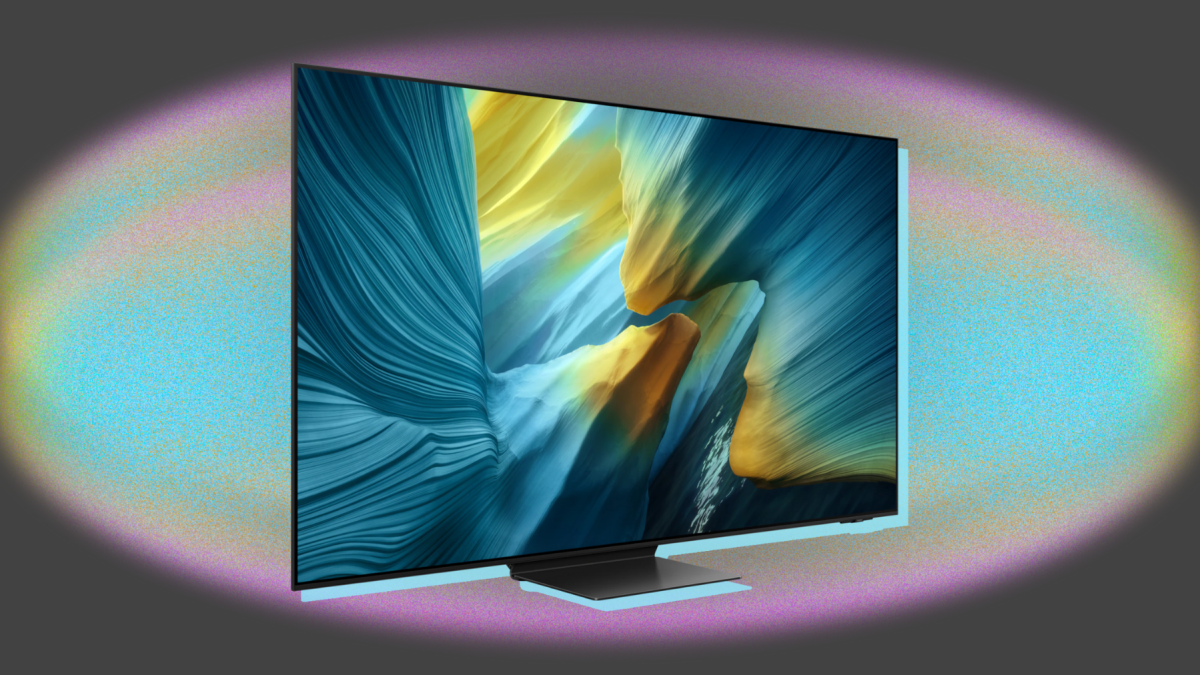
So you've decided that you hate your current TV. We'll help you decide how to upgrade. By Leah Stodart Leah Stodart Senior Shopping Reporter Leah Stodart is a Philadelphia-based Senior Shopping Reporter at Mashable where she covers and tests essential home tech like vacuums, TVs, beauty devices, and eco-friendly hacks. Her ever-evolving experience in these categories helps her make thoughtful recommendations for how to spend your money during shopping holidays like Black Friday, which Leah has been covering for Mashable since 2017. Read Full Bio on July 31, 2026 Share on Facebook Share on Twitter Share on Flipboard All products featured here are independently selected by our editors and writers. If you buy something through links on our site, Mashable may earn an affiliate commission. Credit: Samsung ; Mashable composite Compared to choosing a new robot vacuum or deciding between Ninja appliances, the journey to buy a new TV is arguably the most complex of the staple household electronics. You can technically go to a store to assess brightness, contrast, or size in person. But is seeing 15 TVs playing the same loop actually more helpful than it is disorienting? If you're overwhelmed with options, you've come to the right 2026 TV buying guide. To preface, we've dubbed 65 inches as the sweet spot for most people — a 65-inch screen is large enough to provide an immersive viewing experience yet practical enough to work on a TV stand or the wall. Here's our consolidated list of the best 65-inch TVs for every situation: Overview These are the tech, tools, and products — from laptops to e-readers, from earbuds to robovacs, and more — that Mashable ranks best in class. Table of Contents Recent TV news: TCL and Sony are going halvesies nowSony has long been revered as one of the best TV brands, and its Bravia TVs have been no strangers to lists of the best TVs across the internet. But Sony as a TV brand is about to look a lot different. As of January 2026, TCL is in charge of Sony's home entertainment business, which spans TVs and home audio. The "Bravia" family of TVs isn't going anywhere, at least as far as branding and picture processing — but TCL will be behind much of the manufacturing and pricing. Sony TVs often toe the line of being so premium that they're too expensive for the average person to consider. But paired with TCL's budget-friendly expertise, they could make a wicked pairing come 2027. The Good & The Bad Very bright and very good at handling glare Full-array local dimming is superb, especially at this price Great contrast and shadow quality for a QLED Anti-halo effect actually works well in dark rooms Almost looks bezel-less You don't find a 98-inch option often Doesn't come smaller than 65 inches A solid gaming TV, but not OLED-level solid Only two HDMI 2.1 ports At a glance With superb peak brightness, detailed picture quality, and fantastic glare handling, the QM8L would be best for people who know they'll be doing a good amount of their TV watching in the daytime (especially if it's sports).The TCL QM8L offers great contrast and blooming mitigation in dark rooms for a non-OLED TV. And its non-OLED pricetag will be enticing to shoppers who are more than casual movie watchers but not exactly strict cinephiles with no budget cap. Each size of the TCL QM8L can often be found on sale for $1,000+ off, bringing both the 65-inch and 75-inch models under $2,000 — not the absolute cheapest you can go by any means, but certainly on the affordable side compared to flagship OLEDs from LG, Samsung, and Sony. Why we like it "What is the best QLED TV?" is a loaded question if no other prerequisites are provided, given the sheer variety of TVs under the QLED umbrella nowadays. But if we must generalize, the TCL QM8L's value is pretty hard to beat, period. The peak brightness achieved here is sublime, clocking up to 6,000 nits. That easily makes the QM8L one of the brightest TVs you can buy. That's also two times the brightness of the base-tier QM7L, which would only save you around $200 if both models are on sale. It's not uncommon to find the 65-inch QM8L for $1,499.99 — a full $1,000 off its debut price.Compared to the 2025 QM8K, the QM8L has a completely revamped backlight system: Super Quantum Dots. The nanocrystals in SQD TVs are a fraction of the size of traditional quantum dots: five nanometers compared to 60. Their microscopic size narrows each crystal's spectral response, making each significantly more precise in the color it reflects. The concept of SQD may hurt your brain in a "comparing the size of Earth to a massive star" way. But the result in both bright and dark rooms is unambiguous. When you're getting this nitty-gritty, lifelike contrast in any room lighting looks easy. And the chances of haloing are slim to none. Details The Good & The Bad Frequently on sale for less than $2,000 Comes in a ton of other sizes Incredible contrast ratio in dark rooms Brilliant color performance Blooming is essentially nonexistent Better audio than the C5 65-inch model (and smaller) missed out on the biggest panel upgrades Still not the best choice for bright rooms At a glance Budget OLED TVs aren't really a thing, but the LG C6 is the best affordable OLED TV given its competitors' prices. From inky black levels to a wide viewing angle, the C6 delivers an exceptional theater experience in dark rooms — even to folks sitting on the end of the couch. Compared to the LG C5, the C6 is slightly brighter and better for gaming. Why we like it LG's C series OLEDs are the darling of the TV-obsessed corner of the internet, and the 2026 C6 might just be the most accessible one yet. The 65-inch model can often be found on sale for just $1,999.99 — $1,300 less than the sale price of the 2026 Samsung S95H OLED. But the LG C6 is still premium in so many ways. As we've grown to expect from the C series, the C6's wheelhouse is made up of stark contrast, crisp deep blacks, and generally impeccable image quality. It builds on the 2025 C5 with higher peak brightness, a more vibrant yet more natural color palette, and a refresh rate boost from 144Hz to 165Hz. If you already have a 65-inch C5, it's probably not worthwhile to bump to the C6. Only the 77- and 83-inch C6H models received the mega panel upgrade that includes LG's Hyper Radiant Color Tech and up to three times the brightness of the B Series. Details The Good & The Bad Just 1 to 1.2 inches thick Generally brighter than the Hisense Canvas Samsung Art Store gallery is unparalleled Anti-glare matte coating is phenomenal in bright rooms Lies VERY flat against the wall Lots of HDMI ports All frames but the black one are $200 extra Dull contrast with blooming tendencies Art Store subscription costs $5 per month At a glance Samsung's The Frame has a pretty specific target audience: folks who want a realistic digital picture frame or cohesive piece of wall art first and a decent TV second. The Frame is the slimmest art TV out there, measuring just a hair over an inch thick. The Frame may not be as bright as The Frame Pro, but it's definitely a better value overall. The 2025 65-inch model can regularly be found on sale for less than $1,000. Why we like it Well, I have to mention the classic art TV in this list — its massive popularity says a lot about how well Samsung has perfected the design over the years.Cinephiles aren't going to be thrilled with The Frame's limited contrast. But mega TV heads probably aren't the main market for a premium art TV that takes the movie displaying part less seriously, anyway. We can save the art of making a filmed movie look like you're witnessing it IRL to OLEDs. The Frame is much better at making you feel like you're looking at a legitimate piece of framed artwork, museum style. When trying to decide between The Frame and The Frame Pro, we can't blindly base the decision on backlighting. The Frame Pro may be brighter, but its mini LED lighting isn't full-array local dimming. That means it's not achieving the same precise contrast created by dimming zones, where clusters of individually-controlled LEDs are arranged across the entire screen. In terms of art TVs, the cheaper non-Pro version of The Frame makes better use of your money. And if you really want the full vibrant mini LED experience, there are other slim mini LEDs out there that'll actually dazzle you. Compared to the 2024 and 2026 versions, The Frame from 2025 is the best bang for your buck. The 2026 model (LS03HE) has a faster processor, an even more matte display, and richer color accuracy through Pantone Validation. But there's a huge $800 difference between the average sale prices of the 65-inch 2026 and 2025 The Frame, and the newest model's tweaks aren't major enough to justify that. Details The Good & The Bad Very thin 1.8-inch build RGB backlight color palette is glorious Great contrast with solid halo control Rare DisplayPort offers super fast refresh rate Excellent HDR Can see some reflections in natural lighting Other RGB TVs and OLEDs have better viewing angles At a glance RGB TVs approach backlighting in an entirely different way than any of the other types of TV. They're phenomenal when watching in a sunlit space or dark room, bringing a whole new meaning to "mixed usage TV." The Hisense UR9 is the best way for most people to bring the newest TV technology home. It's bright and saturated with commendable contrast for a non-OLED model, but is still a bit more affordable than the most premium options from other brands. The UR9 also sets itself apart with an ultra-slim build and DisplayPort, an advanced gaming input typically found on monitors. Why we like it Samsung, Sony, LG, and Hisense have all taken part in the RGB TV boom of 2026. Nearly 10 totally new models hit the market in the span of just a few months, but the Hisense UR9 manages to stand out in a few ways — and not just because it's the slimmest of them all.First and foremost, RGB TVs are known for their color palettes. RGB backlights source light directly from thousands of tiny red, green, and blue LEDs, rather than the traditional method of reflecting white or blue LEDs through an LCD panel. These true light sources supply highly saturated hues with extreme precision. They can fluoresce 100 percent coverage of the color gamut, or the full possible spectrum of colors visible to humans.On top of its ethereal color performance, the UR9's local dimming feature achieves deep black levels that aren't too far off from what you'd get from an OLED TV. But the UR9 isn't as limited in a bright room as most OLEDs. The 65-inch model can reach a peak brightness of up to 5,000 nits. It's a solid pick for taking advantage of HDR.For serious PC gamers, the UR9 is a rare premium TV with full DisplayPort Alt Mode functionality. This boosts the display's maximum refresh rate to 180Hz at 4K (or up to 330Hz at lower resolutions). Details The Good & The Bad Can be found on sale for less than $650 Affordable full-array local dimming Colors and sports really pop during the day Very slim for this price range Shadow detail is great for dark scenes in dark rooms Solid gaming features, including HDMI 2.1 Reflection handling could be better Mediocre HDR if you're strict about specs Our review Read my full review of the TCL QM6K. At a glance The TCL QM6K is the quintessential beginner fancy TV between the absolute cheapest and most expensive QLEDs out there. Compared to regular LED TVs, the QM6K is brighter and sharper — better for daytime viewing and watching sports. Compared to more premium mini LED TVs, the QM6K stays comfortably under the $1,000 mark. Low input lag and an impressive suite of gaming features make it a great choice for gamers who want something in between, too. Why we like it It's always mind-blowing that the TCL QM6K doesn't cost more than it does. You won't find a more fluid picture or better black levels in a 65-inch at $649.99 (the QM6K's frequent sale price). Measuring just over two inches thick, the QM6K is also impressively thin for this price range.I recently upgraded to this model in my own apartment after letting myself complain about my old TV's inability to pop for years too long. My living room gets a ton of natural light, so I needed something that was comfortably bright enough for early afternoon football games or getting the full colorful The Price Is Right experience at 11 a.m., just like my grandma taught me. Huge news: Football fields are actually green rather than having a sepia tint. Groundbreaking.The QM6K also has great dark room performance for the price. I watch a new scary movie at least one night per week and am very serious about Game of Thrones and its spinoffs (all notoriously dark and shadowy). It's been awesome to not have to guess what's going on in a low-light nighttime scene.The QM6K is able to hit those marks because it doesn't bank on an edge-lit display like many cheap mini LED TVs do. Its Precise Dimming feature alters the lighting of 500 zones of tiny LED bulbs across the entire screen, updating by the second as the content shifts. Details The Good & The Bad Extraordinary peak brightness for an OLED TV Best-in-class anti-glare matte screen Floating wall mount and silver bezel Wickedly fast response times 165Hz refresh rate is optimal for serious gaming Wireless One Connect box reduces cord clutter Sale price is much more expensive than L6 C6's sale price Doesn't support Dolby Vision Feels like an art TV, but OLED risks burn-in if left on 24/7 At a glance It's hard to find a situation where the Samsung S95H won't excel, but its elite contrast really dazzles in dark rooms. Its native 165Hz refresh rate can keep up with high-speed gaming better than most. The S95H has the best bright room performance of any OLED TV in 2026. That's partially thanks to Samsung's anti-glare coating. With a unique silver bezel and special mount that lies flush with the wall, the S95H speaks to shoppers who want an art TV that can actually double as a home theater TV or gaming TV.The steep price tag is the main disadvantage of the S95H, cementing this model as a pick for seasoned OLED owners who are willing to pay for the most advanced picture quality. Even on sale, it's still over $1,000 steeper than the LG C6 on sale. Why we like it Let's say your TV time is truly evenly split between daytime sports, graphics-heavy gaming, and nighttime movies with a strict focus on cinematography. Finding a TV that can legitimately keep up with all three is a tall order, but the 2026 Samsung S95H OLED nails it. PCMag can't help but rank this as the very best TV you can buy in 2026.The S95H's contrast ratio is as close to infinite as you could ask for. The black levels are deep and the shadows are intricate to the point of feeling lifelike. In lit rooms, the S95H's peak brightness of up to 2,500 nits is a new benchmark breakthrough, according to PCMag's Will Greenwald.While the S95H isn't officially an art TV, it has major art TV energy — it beats Samsung's own The Frame Pro in just about every category. Samsung's flagship OLED TVs are esteemed reflection handlers, using a best-in-class anti-glare coating to appear matte rather than glossy. But the physical design upgrade here is the most outwardly art TV-like upgrade of all. The S95H ditches the classic black bezel for a silver frame and comes with a floating wall mount that can lie flat against the wall. With access to the Samsung Art Store thrown in, the S95H checks the three main art TV boxes. Details The Good & The Bad Almost always on sale, as much as 48% off Two HDMI 2.1 ports and higher refresh rate than The Frame Great matte reflection handling Free access to 1,000 pieces of art Comes with teak frame (The Frame only comes with black frame) Edge-lit backlight instead of local dimming (but so does The Frame) Awkward port placement Relatively low peak brightness At a glance Gamers who also want a TV that blends in with their gallery wall should heavily consider the Hisense CanvasTV over either of Samsung's options. The Canvas has a 144Hz refresh rate compared to The Frame's 120Hz, and has proven to have noticeably less input lag than The Frame. Though The Frame Pro has a slight edge over the Canvas specs-wise, the Canvas is easily the better value for any shoppers who have some semblance of a budget cap. Why we like it The OG Samsung Frame is the obvious less expensive alternative to its Pro sibling. We probably didn't need to tell you that. But the regular Frame shouldn't automatically be your go-to if you want an art TV on the cheaper side. Despite often being minimized to a Frame dupe, the Hisense Canvas is actually a better value than The Frame in a lot of ways: Notably, it has a 144Hz refresh rate over the Frame's 120Hz and two HDMI 2.1 ports over the Frame's lone 2.1 port, both of which make it the better budget art TV for gaming by far.The array of more-advanced features makes the Canvas's price point even more surprising, especially on sale. The 65-inch Hisense CanvasTV has been spotted as low as $699.99 — the exact same sale price as the 55-inch version of the same TV. The 65-inch The Frame has never dropped that low.Deputy Shopping Editor Miller Kern has a Hisense CanvasTV hanging in a gallery wall of actual framed art, and this thing is chic. "The CanvasTV has a matte finish that makes it look less like a TV and more like a giant picture frame. It's not totally glare-proof, but it does look really nice whether the TV is on or off. The TV itself looks stupid good in a gallery wall and really does blend in with other artwork and wall hangings, especially in art mode," she said.If you do want to display real paintings instead of your own photos, Hisense lets you access its digital art library for free, whereas a Samsung Art Store subscription costs $4.99 per month. Use the VIDAA Art App to choose from over 1,000 pieces from genres like abstract, Renaissance, and modern. Details Most of us will stumble across the same fork in the road on the quest to find the best 4K TV for our personal watching, gaming, and lighting situation. The options: Falling into a Reddit rabbit hole about the best TV to buy in 2026 or just seeing what an expert has to say. TV specs are notoriously confusing to people who don't test them for a living. Luckily, we happen to know some people who actually do test TVs for a living: Ty Pendlebury, CNET's TV and home video editor, and Will Greenwald, PCMag's home theater and AR/VR expert. CNET and PCMag are both owned by Mashable's publisher, Ziff Davis, and both have dedicated labs for testing TVs. Leah Stodart is a Philadelphia-based Senior Shopping Reporter at Mashable where she covers and tests essential home tech like vacuums, TVs, beauty devices, and eco-friendly hacks. Her ever-evolving experience in these categories helps her make thoughtful recommendations for how to spend your money during shopping holidays like Black Friday, which Leah has been covering for Mashable since 2017. These newsletters may contain advertising, deals, or affiliate links. By clicking Subscribe, you confirm you are 16+ and agree to our Terms of Use and Privacy Policy.
Best 65-inch+ TVs for watching in dark and bright rooms
Full Article
Original Source
Read the full article at Mashable →KhanList aggregates and links to publicly available news content. We do not host full articles from third-party sources. Always verify important information with original sources.