
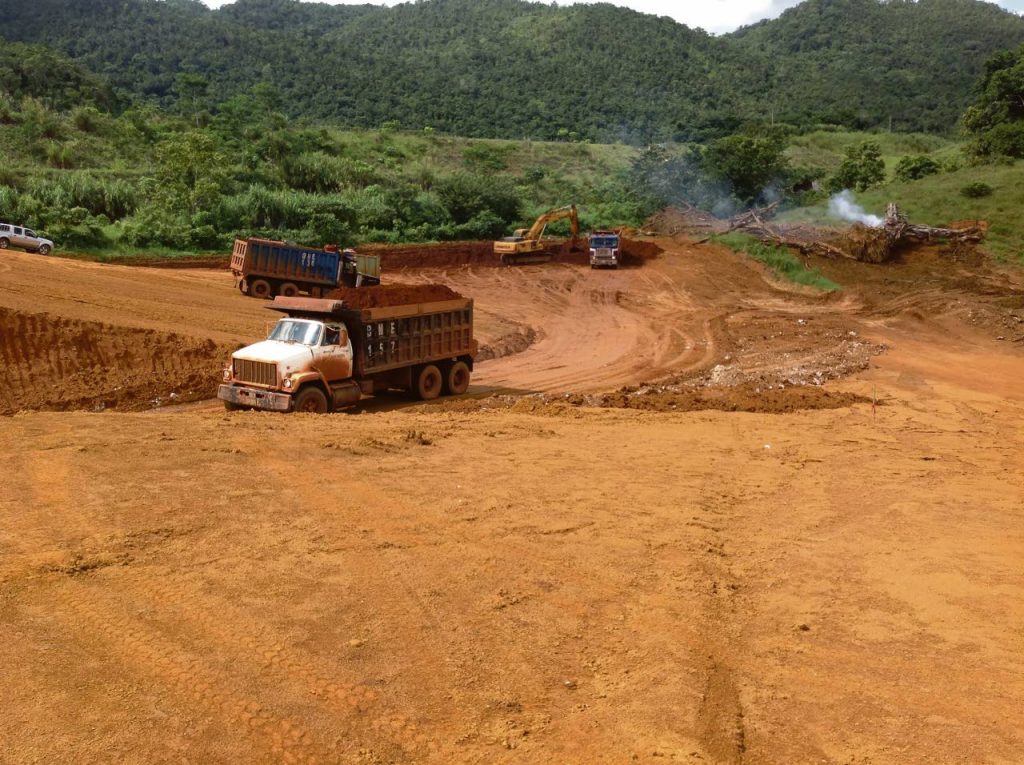
As the Government moves to reduce energy costs for bauxite and alumina producers, Opposition Senator Donna Scott-Mottley is urging the Administration to do more to collect what the industry owes, arguing that the sector can contribute far more to the national economy. The Senate passed the Bauxite and Alumina Industries (Encouragement) (Amendment) Act, 2026 last Friday, which will allow recognised bauxite and alumina producers to import liquefied natural gas (LNG) without paying Customs duties, provided the fuel is used for specified activities in their operations. The Government says the measure is intended to lower production costs, improve the industry’s ability to compete internationally and encourage the use of a cleaner fuel. But during Friday’s debate, Scott-Mottley, who is also Leader of Opposition Business in the Senate, argued that reducing costs for the companies should not overshadow the need to ensure Jamaica receives the full financial and other benefits due from the sector. “I want to remind you that although… the bauxite industry contributes so much to the economy of Jamaica, it can contribute much much more, and it is incumbent on the Government to pursue what is owed in the same way as they would pursue a taxpayer,” Scott-Mottley told the Senate. She said the money collected could be directed towards specific national programmes, including education, so that its impact could be measured. Scott-Mottley also raised concerns about the rehabilitation of mined-out lands, saying 264.40 hectares had not been restored. She referred to mining regulations amended in 2004 which, she said, required reclamation work to be completed within two years and imposed a penalty of $25,000 per hectare where this was not done within the required period. She argued that restored lands could support agricultural activity, citing crops such as yam, peanut, cassava, and other produce which, she said, had grown successfully on reclaimed areas in Manchester and St Elizabeth. However, Government Senator and Leader of Government Business Kamina Johnson Smith later clarified that the outstanding penalties raised by Scott-Mottley related to the quarrying subsector, not the bauxite subsector, and that the matter was before Parliament’s Public Accounts Committee. On the separate issue of money owed under profit-sharing arrangements, Johnson Smith said US$15 million had been collected between December 2024 and October 1, 2026, and efforts were continuing to recover the outstanding balance. The debate also brought attention to families who have been waiting for years to receive titles for land connected to bauxite mining and resettlement arrangements. Scott-Mottley said some families were struggling to complete the required documentation, particularly where relatives had died and applicants were being asked to produce grants of probate before matters could be settled. Responding, Johnson Smith said just over 2,000 titles remained outstanding as at September 2026, while 2,160 had been delivered between 2012 and 2026. She later provided an updated figure, saying 1,078 titles had been issued between January 2020 and September 2026, including 211 during 2026. She acknowledged that the cases could be complicated by family disagreements and the documents required to establish who was entitled to the land. Johnson Smith also said a Bauxite Land Rehabilitation Programme was under way, with projects including health facility improvements, solar street lighting, and agricultural initiatives. She said greenhouse farming was being pursued on mined-out lands because many crops did not grow well in the soil. However, the amendment changes a law dating back to 1950, when Jamaica’s bauxite industry was being developed. Under the existing provision, recognised producers were exempt from Customs duties on certain petroleum fuels, but LNG was not included in the list of fuels covered by the concession. The new provision extends the exemption to LNG imported for use in mining and extracting bauxite, treating, transporting and shipping the mineral, as well as manufacturing, transporting, and shipping alumina produced from Jamaican bauxite. Opening the debate, Johnson Smith said the industry faced high energy costs, which affected its ability to compete with producers in other countries. She said Jamaica’s share of global bauxite production had fallen from about 18 per cent in the 1970s to 1.4 per cent in 2024. Johnson Smith said LNG offered a cleaner alternative to bunker C, a heavy fuel oil widely used in the industry, and could reduce emissions and equipment maintenance costs. Government Senator Kavan Gayle supported the measure but argued that the companies should be expected to make improvements in return for the concession, including upgrading equipment, maintaining operations and improving workers’ skills. “So it’s not just giving the concession, there has to be a responsibility on the part of the companies to infuse and make changes. That is what is going to promote sustainability, and so… at a point in time we must be able to evaluate whether or not these concessions are working,” Gayle said. He suggested that the impact of the concessions should be assessed after five years to determine whether they had improved the industry’s competitiveness.
Bauxite sector can contribute more to economy, says Scott Mottley
Full Article
Original Source
Read the full article at Jamaicaobserver →KhanList aggregates and links to publicly available news content. We do not host full articles from third-party sources. Always verify important information with original sources.