
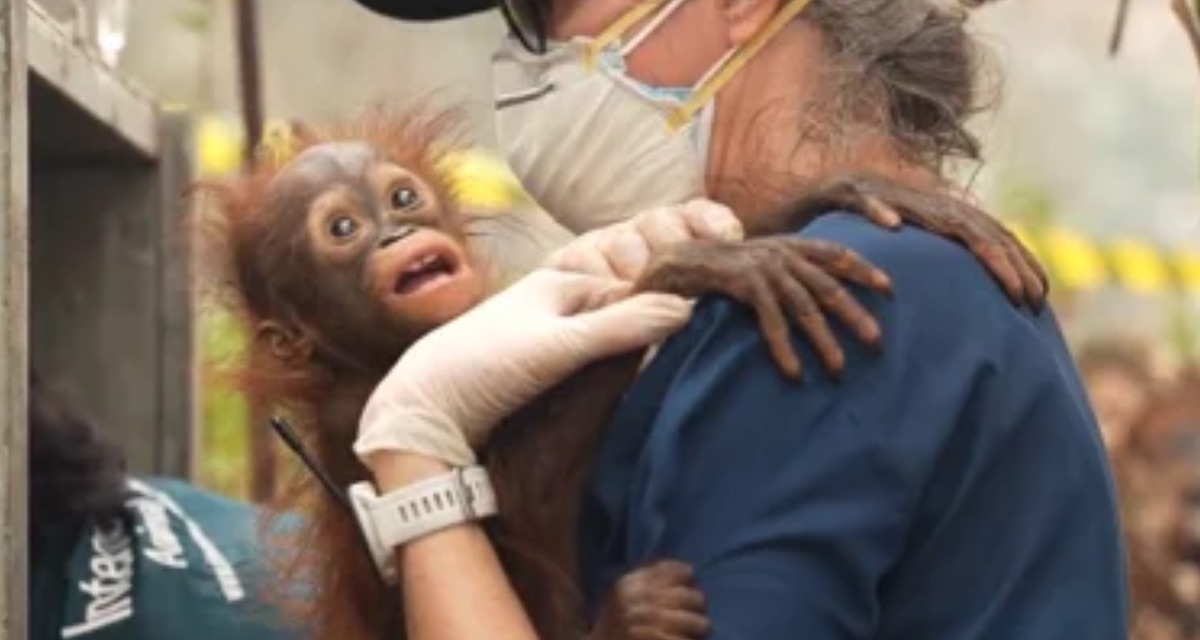
A baby orangutan rescued in a Borneo forest is winning hearts and raising awareness of the devastating wildfires that have been plaguing Indonesia for months. The baby, Irene, “looked extremely stressed and very thin,” says wildlife veterinarian Dr. Karmele Llano Sanchez. “She may have gone for days without finding any food in this devastated forest.” Dr. Karmele is the CEO of YIARI, an organization partnering with International Animal Rescue in response to the fires. Irene and her mother were brought to YIARI’s rehabilitation center for medical attention, care, and safety. Fires add more danger for the already endangered orangutans Orangutans live exclusively in the tropical rainforests of Borneo and Sumatra, islands in Southeast Asia that make up parts of Indonesia, Malaysia, and Brunei. All three species of orangutan, Bornean, Sumatran, and Tapanuli, meet the criteria for endangered status. Borneo is no stranger to fires in the dry season, but this year’s Super El Niño has created less-than-ideal conditions. Fires have been burning nonstop for months, and both humans and wildlife are struggling. “As fires continue to destroy vital orangutan habitat, these endangered animals are being left without food, shelter or anywhere safe to go,” shares International Animal Rescue. “Among those rescued are mothers desperately trying to protect their young, and frightened juveniles found alone, with no sign of their mothers. Many have been found suffering from severe dehydration, malnutrition, burns and painful injuries.” Orangutans’ connection with humans “Dr. Karmele and the team at International Animal Rescue’s partner in Indonesia, YIARI, have spent many years working with orangutans,” said Gavin Bruce, CEO of International Animal Rescue. “In recent months, they have worked around the clock and have saved at least 51 orangutans from the fires across West Kalimantan. Baby Irene is just one tiny example of their hard work.” An orangutan peering through the Borneo rainforest. Photo by Jorge Franganillo on Unsplash Bruce also pointed out that seeing Irene with Dr. Karmele demonstrates how closely connected we are to this species: “We can see how similar we are to orangutans when you see their movements and facial expressions.” Orangutans are one of the great apes most closely related to humans, sharing approximately 97% of the same DNA. They have culture, passing down behaviors such as nest-building techniques, tool use, and methods of staying dry through mother-child interactions. Such cultural traits differ by region, much like human cultural diversity. The human toll of the Indonesia fires Irene’s sweet face is certainly a reminder of how vulnerable wildlife is during natural disasters. It also reminds us that people are suffering from these fires, too. The fires in Indonesia have forced thousands of schools to close, parks to shut down, and asthma and other respiratory illnesses to soar. Toxic smoke has spread across the region, making it hard to breathe and posing health risks to vulnerable populations. This year’s fires resemble the 2015 Super El Niño, which caused destruction the size of Massachusetts. “The magnitude of the 2026 fire season is currently very similar to that of 2015,” Nisa Novita, a peatlands researcher at conservation non-profit YKAN, told CNN in September. As threats to health, homes, and habitats continue, the needs in the region will grow. International Animal Rescue’s fire crisis fund helps procure firefighting equipment, personnel, and veterinary support to help fight these fires and rescue the helpless wildlife affected by them.
Baby orangutan ‘Irene’ becomes the face of wildlife rescue efforts in months-long Borneo fires
Full Article
Original Source
Read the full article at Upworthy →KhanList aggregates and links to publicly available news content. We do not host full articles from third-party sources. Always verify important information with original sources.