
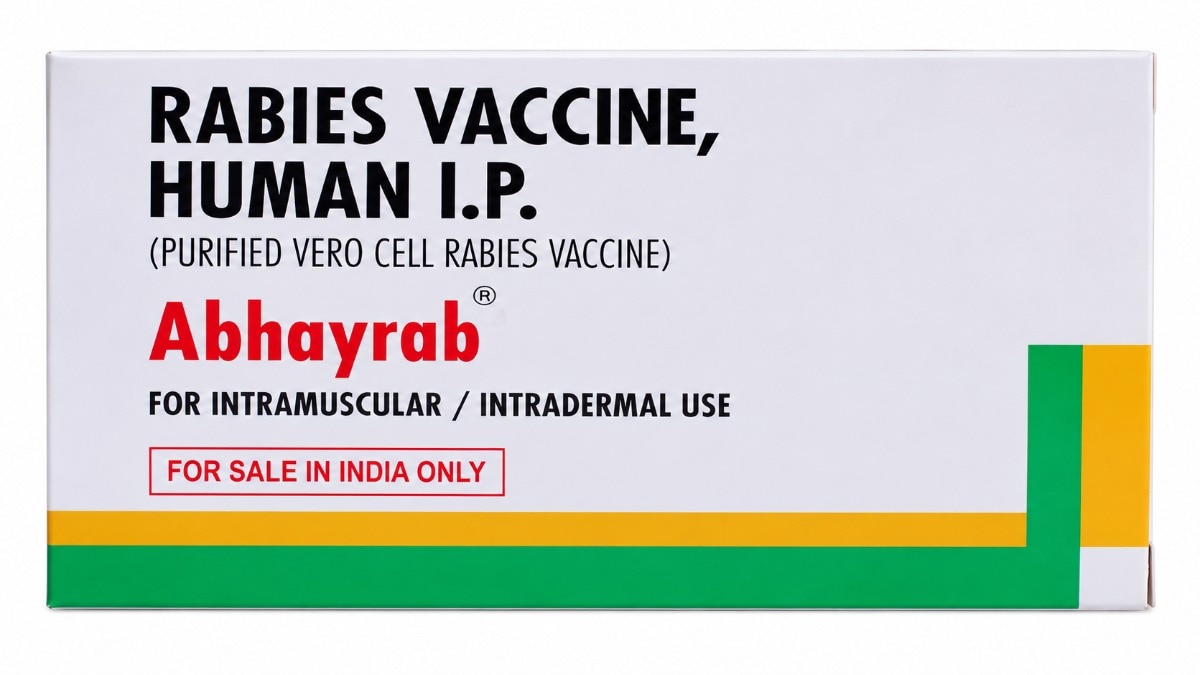
Indian regulators have flagged suspected counterfeit Abhayrab vials seized from an unlicensed premise in Delhi, months after Australia warned of a fake batch circulating in India. The two cases involving different batch numbers have raised renewed questions over vaccine supply chains and patient safety in rabies treatment.Indian Immunological Ltd supplies 40 % of all rabies vaccine, under the brand Abhayrab, used in India annuallyIndia’s latest alert over a suspected counterfeit batch of the widely used anti-rabies vaccine Abhayrab has revived questions about how fake doses entered the supply chain – and why concerns around the vaccine had already travelled beyond India months earlier.In December 2025, Australia’s immunisation advisory body issued a precautionary warning to travellers and healthcare providers over a counterfeit version of Abhayrab, manufactured by Indian Immunological Ltd, a fully owned subsidiary of the Centre's National Dairy development Board, circulating in India.Now, nine months later, Indian drug regulators have again flagged vials carrying the same vaccine brand after samples seized from an unlicensed premise in Delhi were found to be misbranded and not of standard quality.The two episodes involve different batch numbers. But together, they underline a troubling vulnerability: counterfeit versions of a vaccine used after potentially fatal animal bites can enter circulation and be difficult to distinguish from genuine products. Rabies is almost invariably fatal once symptoms develop. That makes the integrity of post-exposure vaccination particularly critical, especially in a country which registers a whopping 90 lakh animal bites annually – two thirds of which are dog bites.The country which records more than 5,700 rabies deaths annually also has the highest burden of deaths due to the condition globally. “Unlike many routine vaccines, rabies shots are often administered after a person has already been exposed to a potentially infected animal, leaving little room for uncertainty about whether the product and the treatment protocol are reliable,” said a rabies researcher associated with the University College of Medical Sciences, Delhi University.PREVIOUS WARNINGThe Australian Technical Advisory Group on Immunisation (ATAGI) issued its advisory in December 2025, warning that a counterfeit batch of Abhayrab had been reported in India.The advisory identified batch KA24014 and said counterfeit doses differed from the registered vaccine in areas including formulation, packaging, labelling and manufacturing. Because it could be difficult for recipients to establish whether the vaccine they had received was genuine,Australian authorities advised a precautionary approach for some travellers who had received a rabies vaccination in India.People who had received Abhayrab from November 2023 onwards and could not confirm the batch number – or whose records showed batch KA24014 – were advised to consult healthcare providers about replacement doses with a vaccine registered in Australia.The Australian guidance stressed that the likelihood of travellers developing rabies remained low, but said the potentially catastrophic consequences of inadequate post-exposure protection justified a cautious response.IIL, the manufacturer of Abhayrab, disputed the broader interpretation of the Australian warning. The company said the issue was confined to one identified counterfeit batch, which it said had been detected in January 2025 and reported to authorities and enforcement agencies.The Delhi Drugs Control Department subsequently issued an advisory in March 2025 against the same batch, saying counterfeit doses had been reported in several major Indian cities.IIL also pointed to visible differences between authentic and suspected counterfeit packs, including variations in vial seals, printed prices, dates and print quality.The December warning therefore did not arise from a theoretical concern about vaccine quality. It was based on an identified counterfeit episode that had already reached the attention of Indian authorities.ANOTHER FAKE BATCH EMERGESThe latest episode has unfolded differently.In April 2026, Delhi Police’s Crime Branch and drug control officials searched an unlicensed residential premise in Mukherjee Nagar and seized vials labelled as Abhayrab, carrying batch number KE25012. Four people were arrested following the operation.Samples were subsequently sent to the Central Drugs Laboratory (CDL) in Kasauli for testing. The laboratory reported the seized product as misbranded and “Not of Standard Quality”. The field sample also failed the potency requirement – a particularly serious finding for a vaccine whose effectiveness depends on its ability to trigger an adequate immune response.IIL has maintained that the seized vials were not manufactured by the company. According to the manufacturer, the government laboratory identified 17 differences between the seized vials and retention samples of the genuine batch. These included discrepancies in labelling, artwork, QR-code verification, cap colour, licence details and packaging.The company said the genuine KE25012 batch had independently cleared government testing and was released through its authorised distribution system. It also said it had received no market complaints concerning the genuine batch and had asked authorities to trace the source of the seized products.While a batch number printed on a vial does not necessarily mean the vial was manufactured as part of that genuine batch. Counterfeiters can reproduce a real product’s name and batch details to make a fake product appear legitimate.That appears to be one of the central concerns in the latest case.WHY IS THIS DIFFERENTThe counterfeit alerts have also emerged against a backdrop of public anxiety about reports of rabies occurring after vaccination. But recent Indian research suggests these two issues should not be conflated.A detailed study by researchers at the National Institute of Mental Health and Neurosciences (NIMHANS) examined 89 laboratory-confirmed rabies deaths among people who had sought medical care and received at least one vaccine dose after an animal bite.Only three appeared to be genuine failures despite correct post-exposure prophylaxis. In the overwhelming majority of cases, investigators found lapses in treatment – such as inadequate wound washing, errors in vaccine administration or incorrect use of rabies immunoglobulin.That finding is reassuring about the effectiveness of properly manufactured and correctly administered rabies vaccines. But it also makes counterfeit products especially worrying.Post-exposure prophylaxis is a carefully designed chain of protection. It includes immediate wound washing, vaccination according to the recommended schedule and, for severe Category III exposures, infiltration of rabies immunoglobulin into and around the wound. A fake or substandard vaccine could potentially introduce another weak link into a process where timing and accuracy are already critical.India continues to carry the world's highest rabies burden. An estimated 9.1 million animal bites occur in the country every year, with more than three-fourths caused by dogs, according to estimates cited by the NIMHANS researchers. Around 5,726 human rabies deaths are estimated annually.The latest Abhayrab alert, therefore, is not simply a question of one suspicious batch. Coming months after Australia had warned its travellers about an earlier counterfeit batch, it raises broader questions about how fake vaccines are being manufactured or introduced into distribution networks, how long they may remain undetected, and whether patients can reliably verify the products they receive.“A practical advice I would have for people with dog bites or any other animal bite who need a rabies vaccine is to get the vaccination done at a hospital under the National Rabies Control Programme,” said the rabies researcher cited earlier.- EndsPublished On: Sep 7, 2026 13:09 IST
Australia flagged fake rabies vaccine months before India's latest alert
Full Article
Original Source
Read the full article at Indiatoday →KhanList aggregates and links to publicly available news content. We do not host full articles from third-party sources. Always verify important information with original sources.