
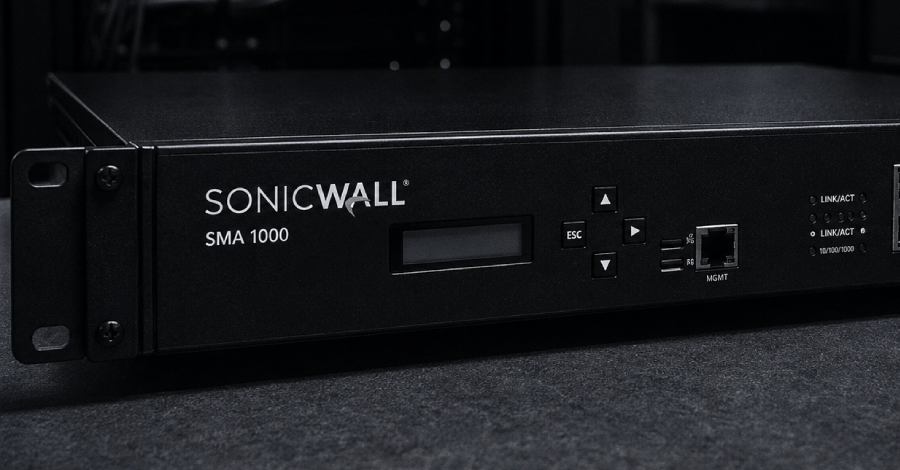
Vulnerability / Network Security SonicWall has released security updates to address two security flaws impacting its Secure Mobile Access (SMA) 1000 series VPN appliances that have been exploited in zero-day attacks. The vulnerabilities, discovered internally by SonicWall's William Perry and Adam Babis, are listed below - CVE-2026-83548 (CVSS score: 10.0) - A pre-authentication SSRF vulnerability in the Appliance Work Place interface that could allow a remote unauthenticated attacker to gain unauthorized access to sensitive functionality and perform unauthorized operations. CVE-2026-83549 (CVSS score: 7.8) - A post-authentication operating system command injection vulnerability in the Appliance Management Console (AMC) that could allow a remote authenticated attacker as administrator to execute arbitrary commands under specific conditions, leading to remote code execution. SonicWall said it has "investigated a case indicating the active exploitation of the vulnerabilities," suggesting that threat actors are chaining together both the bugs to execute arbitrary code on susceptible devices. The flaws impact the SMA 1000 models 6210, 7210, and 8200v in the following versions - 12.4.3-03453 (platform-hotfix) and older versions 12.5.0-02835 (platform-hotfix) and older versions Fixes have been released in versions 12.4.3-03526 (platform-hotfix) and 12.5.0-02952 (platform-hotfix). SonicWall is recommending that customers perform the actions outlined below - Upgrade to the latest hotfix version Review the system for indicators of compromise (IoCs) If IoCs are found, re-image or re-deploy the appliances, change all user and administrator passwords, and reset Time-based One-Time Password (TOTP) SonicWall has not shared any specifics about the nature of the exploitation activity or who is behind it. The development comes more than a month after it shipped fixes to address two other flaws in the same product – CVE-2026-15409 (CVSS score: 10.0) and CVE-2026-15410 (CVSS score: 7.2) – that were exploited by a threat actor dubbed UTA0533 to deploy KNUCKLEBALL malware. Found this article interesting? Follow us on Google News, Twitter and LinkedIn to read more exclusive content we post.
Attackers Exploit Two SonicWall SMA 1000 Zero-Days That May Form an Attack Chain
Full Article
Original Source
Read the full article at Thehackernews →KhanList aggregates and links to publicly available news content. We do not host full articles from third-party sources. Always verify important information with original sources.