
A few months ago, we launched our series in which we provided weekly summaries of the news from Hungary’s election campaign. The series continues so that we can report on developments following the historic election and on the steps taken by the new Tisza government. In this edition, we cover the following topics: András Baka is the new president of the republic. Orbán drinks rakija and strolls around with Oszkár Világi. Orbán’s exit plan. Our Homeland (Mi Hazánk) may build its strategy on anti-Roma sentiment. Not even the energy crisis or the extreme heat could slow down Hungarian prime minister Péter Magyar and his party’s, Tisza’s, transformation of the political system. Although not without missteps, the new prime minister followed through on the campaign he launched in April to replace the president of the republic, completing it by mid-August. Hungary’s new head of state is András Baka, a former chief justice who was among the first victims of the Viktor Orbán regime and who has now returned as the country’s highest-ranking public official. Can András Baka keep Péter Magyar in check? “Let us decide together; Hungary’s new president must not be chosen in smoke-filled back rooms,” Magyar vowed after Tamás Sulyok’s resignation. Yet he soon contradicted this pledge by announcing that he wanted chess grandmaster Judit Polgár to become head of state. The move backfired spectacularly: Polgár declined, while Tisza voters were forced to recognise that Magyar, too, may be inclined to feed the public his own pre-packaged ideas and then pretend they came from the people. One of Magyar’s political strengths, however, is his ability to correct his mistakes and turn them to his advantage. In this instance, he did not insist on turning the presidential election into yet another piece of “absolute cinema”. He did not try to resolve the situation by announcing a public casting call, but accepted that it was Tisza’s responsibility to find a new and credible president, even if the process inevitably carried a faint whiff of smoke-filled back-room politics. With András Baka’s election as president, an entirely different symbol came to the fore: Hungary’s new head of state is a distinguished professional who was treated disgracefully by the previous regime. Baka was president of the former Supreme Court when Orbán came to power. When he began criticising the government’s takeover of the country, however, Orbán and his allies swiftly removed him from office - using a constitutional manoeuvre very similar to the one employed by Magyar and his party to remove Tamás Sulyok from the presidency. This may raise the question of whether, after Tisza turned Baka into both president and political symbol, the new head of state will become the same kind of rubber stamp as the presidents who served under Fidesz governments. That, however, does not appear particularly likely. Baka’s standing as a lawyer and his professional integrity are plainly much stronger than those of his predecessors. He has already demonstrated that he does not retreat into convenient silence when circumstances call on him to speak out and voice criticism. And he could genuinely serve as a counterweight to the Tisza government should Magyar and his administration overreach. Baka has already expressed his opinion on one of the government’s measures: he strongly disapproves of the use of administrative means to limit the number of terms a person may serve as a member of parliament. In his inaugural address, the new president also took a position on an extremely important principle - one that every responsible politician should emphasise whenever events appear to herald a change of political system: we cannot build a new country on revenge. Ultimately, Baka could provide a strong and authoritative professional voice capable of counterbalancing the “absolute cinema”. Whether he will truly do so will become clear only once he enters into an actual conflict with the government - and he will have ample opportunity in the coming months, which will be devoted to rebuilding the rule of law in Hungary. Hopefully, he will not allow Magyar to grow too comfortable in the position once occupied by Orbán, with all power concentrated in his hands. Rakija against autocracy While Fidesz demonstrates day after day that it has no idea how to function in opposition, the former prime minister clearly has no desire to return and at least give the appearance of steering the party’s ship back on course — or even patching up its leaks. Orbán watched the removal of former president Sulyok and the election of Baka as head of state, while Fidesz and what remains of its media orbit confined themselves to protesting without offering any meaningful message. Although they consider Sulyok’s removal illegitimate, they have been unable to explain why. In Baka’s case, they produced a flimsy story alleging that, as a member of the Grand Chamber of the European Court of Human Rights, the new president had “acquitted” a murderer from 1956. But neither the individual elements nor the overall substance of the story were true, and it failed to cause much of a stir. Meanwhile, Orbán was strolling around a Serbian trumpet festival with his old friend, Oszkár Világi, posing for photographs with fans and drinking rakija. Fidesz proved incapable of trying to extract any political capital from the presidential election. Baka was the sole candidate, and Orbán’s party did not even attempt to nominate someone of its own. All it did was declare the entire process illegitimate and refuse to participate. Magyar and his allies were no doubt grateful: it meant one less thing for them to deal with. The Fidesz parliamentary group, meanwhile, also continues to change. Two new MPs took their seats in parliament this week, replacing former foreign affairs minister Péter Szijjártó, who departed on a mission to China. Orbán’s exit plan Orbán, however, remains silent and lately seems to communicate only with audiences abroad. No new content has appeared on his Facebook page, which has 1.7m followers, since the end of July — even though quite a few things have happened in the meantime, including an energy crisis, water shortages, and a presidential election. None of these events appears to have crossed the opposition leader’s threshold for a response. His only activity has been a handful of English-language posts on his X account aimed at an international audience. He supported the Spanish far-right in connection with the refugee crisis in Ceuta and wished French far-right leader Marine Le Pen a happy birthday. Investigative journalist Szabolcs Panyi drew attention to all this. Orbán is reputedly hopeless with modern technology and, naturally, did not manage his social media accounts himself. His silence may therefore have a great deal to do with the fact that the prime minister’s office has just filed a criminal complaint against an unknown perpetrator on suspicion of misappropriation and abuse of office in connection with contracts covering the former prime minister’s social media appearances. Orbán’s media presence was managed by a company called Triton Communications, headed by Fanny Kaminski, one of his closest propagandists. Over four years, the company received more than four billion forints [nearly €11m] for its work. Kaminski defended the arrangement by saying that their responsibilities extended beyond taking photographs and recording videos of the former prime minister: they had other duties as well and were required to be available around the clock. The round-the-clock service now appears to be over, and Kaminski’s team can finally get some rest. According to Panyi, however, Orbán’s silence and his focus on communicating abroad may have an entirely different explanation: Orbán may be working on his own exit plan, having concluded that Hungarian politics no longer has anything to offer him. The journalist said his sources had told him that Orbán was exploring job opportunities around FIFA, although the United Nations may also be an option. According to Panyi, Orbán held talks with FIFA’s leadership during the football World Cup. While it is not known exactly what position may have been discussed, given the practical possibilities and Orbán’s network of international relationships, even a FIFA vice-presidency may have been raised. One of the organisation’s eight vice-presidential posts is currently held by Sándor Csányi, one of Hungary’s wealthiest men, whose term expires in 2027. Of course, it is not simply a matter of Orbán announcing that he wants the position and receiving it. He would first have to become president or vice-president of the Hungarian Football Federation and could only then apply for the FIFA post. But with Gianni Infantino at the helm of FIFA, one can never know when the rules might be bent at the request of an influential politician. According to another piece of information obtained by Panyi, Orbán’s next destination could be the United Nations, where even a post at the level of under-secretary-general may be under consideration. MAGA circles in the United States are reportedly working on this, and Orbán may also be counting on the assistance of Argentine president Javier Milei. Such a position would grant him diplomatic privileges and immunity, while Magyar and his government would have no say in UN affairs. In any event, the Hungarian press asked Fidesz what, if anything, was true about the claims. Bertalan Havasi, the party’s spokesperson, offered only a brief response: the whole thing was a canard. We shall see. Our Homeland returns to its roots We have already discussed how readily Fidesz commits spectacular and easily exploitable blunders in opposition, but the other opposition party, far-right Our Homeland, is not far behind. The difference may be that while Fidesz is being driven into mistakes by its own desperation, Our Homeland’s conduct appears highly deliberate. László Toroczkai’s party is the successor to Jobbik’s original radical-right ideology. Hungary’s radical far right was pushed to the sidelines because Fidesz appropriated its rhetoric and ideas, incorporated them into government communications and squeezed out its original representatives. Now that Orbán and his party have fallen, however, a vast empty space has suddenly opened up for virulent extremism—and Our Homeland would be only too happy to fill it. Toroczkai’s party had already drawn attention to itself at parliament’s inaugural session, when all six of its MPs walked out as a delegation from the Sükösd tambura orchestra—made up primarily of disadvantaged Roma children - performed Green Is the Forest…, the Roma anthem. Our Homeland later claimed that its MPs had intended to walk out during the EU anthem, the Ode to Joy, but had been tricked because the programme order was changed. However, the wicked party seems to somehow always manage to lure the Our Homeland Movement into a trap. On 10 August, the Hungarian parliament commemorated the Roma Holocaust. A Tisza MP spoke about it in an address before the agenda and received a standing ovation from both Tisza and Fidesz. The representatives of Our Homeland, however, remained seated. They also remained seated during the minute of silence that followed. Dóra Dúró, one of the party’s MPs, occupied herself with her phone, and Toroczkai soon did the same. How did far-right Our Homeland respond to the ensuing outrage? Predictably, it once again played the “we were tricked” card. Toroczkai explained that they had remained seated because the parties had previously agreed that no MP could call for others to stand for a moment of silence during a speech without prior agreement. The request, he claimed, therefore constituted a breach of parliamentary rules. The public was plainly unconvinced by this distinctly empathy-free explanation. The Roma Holocaust was commemorated again the following day - and this time, the MPs of Our Homeland stood up as well. Still, it must also be recognised that there remains a demand in Hungary for Our Homeland’s anti-Roma politics and the old ideas of the far-right, and probably not an insignificant one, judging by the comment sections where people argued that the party had been right to remain seated. Toroczkai and his allies now face a choice: will their instincts pull them back towards the old radical far right, or will they try to target the more moderate remnants of Fidesz’s disintegrating voter base?
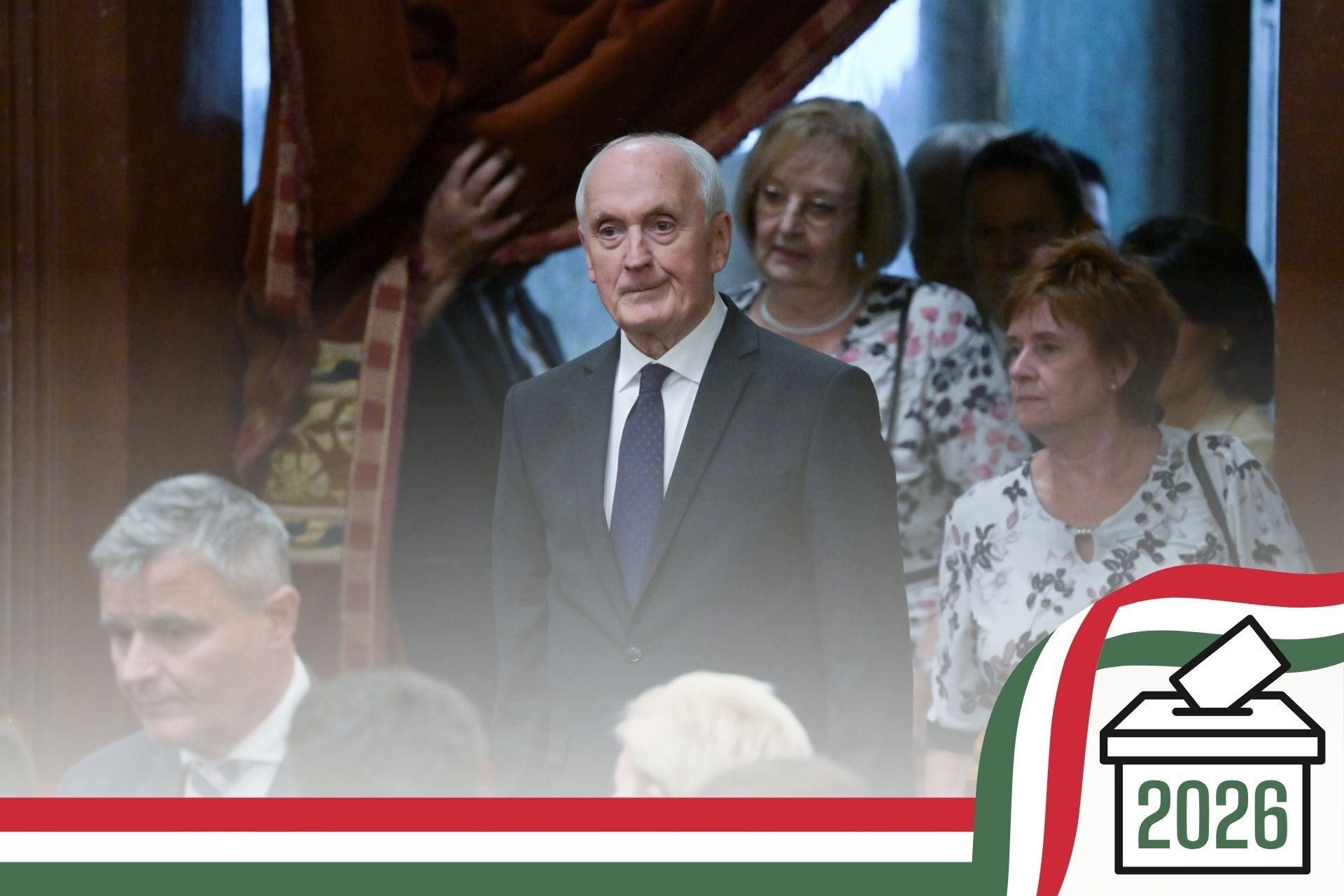
As new president András Baka arrives, is Orbán preparing to leave Hungary? (Day 94 of the Tisza government)
Full Article
Original Source
Read the full article at Euobserver →KhanList aggregates and links to publicly available news content. We do not host full articles from third-party sources. Always verify important information with original sources.