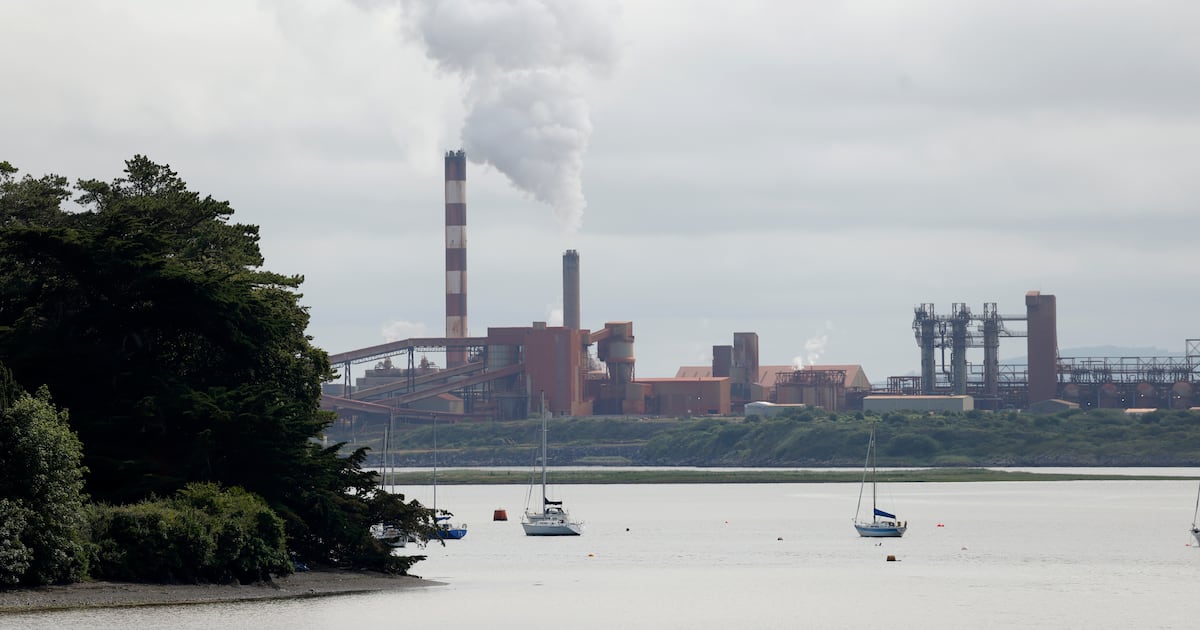
Groundwater beneath the Aughinish Alumina refinery in Co Limerick contains contaminants that are up to 4,700 times the thresholds permitted under law, an Irish Times investigation has found.Analysis of regular groundwater testing reports submitted by the plant to the Environmental Protection Agency (EPA) shows more than half of wells and streams on the site, which is located on the Shannon estuary, contain contaminated water in excess of thresholds laid out in Irish regulations.[ Read the full investigation: ‘A ticking environmental time bomb’ – what lies beneath Aughinish AluminaOpens in new window ]This figure has remained broadly similar going back to at least 2021. There has been a limited improvement in water conditions this year but some water sources on the 530-hectare industrial site have become significantly more contaminated since last year.Despite this, the EPA has taken no action against the company for environmental breaches.READ MOREThe Irish Times analysed quarterly groundwater reports sent by Aughinish to the EPA since 2021. These reports were compared with groundwater threshold values laid out in legislation adopted earlier this year. Independent experts reviewed the data and shared their findings.Much of the contaminated groundwater contains high levels of aluminium, which has, in the past, been blamed by local farmers for unusually high cattle deaths in the area.This has been strongly denied by the plant, which was cleared by an EPA investigation in the 1990s.At the start of this year one observation well contained aluminium levels that were 4,735 times the threshold for groundwater – double the figure recorded at the end of 2025.The same well contains arsenic levels 133 times the limits permitted under legislation.'The location of these kinds of industrial sites on karst is really problematic. That is usually something that people try to avoid,' says geophysicist Steven Emerman. Photograph Nick Bradshaw Other areas of groundwater contain extremely high levels of chloride, zinc and sulphate.Much of the water is also highly caustic, with alkaline levels capable of causing severe burns.The data shows that for years a “plume” of contaminated water has been spreading out from the centre of the plant towards the boundaries of the site.The groundwater sits in porous limestone rock, known as karst, which runs under most of the plant. The water is able to travel through the plant via fissures in this bedrock.Aughinish Alumina said monitoring undertaken “as part of the EPA-approved groundwater programme” shows the contaminated water is not leaving the facility. “The conclusion of the most recent annual groundwater review as submitted to the EPA (for 2025) found that overall groundwater quality across the site continued to improve as a result of the corrective action plan,” the Russian-owned company said in a statement.The company said the plan, agreed with the EPA, includes “monitoring, recovery and preventive engineer measures”.“Aughinish Alumina is committed to operating to the highest environmental standards while continuously investing in measures to improve environmental performance,” it said. Experts and environmental campaigners fear polluted water is escaping undetected through fissures in the bedrock beneath the plant.“If you have a plant that’s built on karst that is leaking contaminants ... you could just about guarantee those contaminants are leaving the site,” said Steven Emerman, a geophysicist who specialises in groundwater analysis.“The location of these kinds of mines or industrial sites on karst is really problematic. That is usually something that people try to avoid.”From the Shannon to Siberia: How alumina from a Limerick refinery enters Russia’s weapons supply chainAughinish Alumina in Co Limerick supplies vast amounts of raw materials to Russian aluminium smelters, according to an investigation by The Irish Times and the Organised Crime and Corruption Reporting Project (OCCRP).Read the full investigation here.In response to queries, the EPA acknowledged contamination at the site but said measures taken by Aughinish were successfully preventing this from leaving the refinery area.It said pollution levels remained “generally stable” and that there was no evidence that material from the plant has harmed humans or animals in the area.Analysis shows the most polluted water can be found under the plant itself, but contaminated monitoring wells are also present under the bauxite residue disposal area where 40 million tonnes of “red mud” – the main byproduct of alumina production – lies.Monitoring of streams intersecting the plant showed seven of the nine active streams tested were in breach of groundwater thresholds.Due to the scale of contamination at the site, the EPA previously agreed an action plan with Aughinish to reduce the size of the plume. This included digging new wells to monitor and recover contaminated water.Analysis of the water collected by these new wells shows this is having some success but also underlines the scale of the problem.In mid-2024, Groundwater Well 5 recorded aluminium levels that were 5,745 times the safe limits and a pH of nearly 13, meaning the water was highly corrosive. Late last year, Groundwater Well 1 recorded arsenic levels that were 253 times the EU limits.[ The Irish Times view on Aughinish Alumina report: evasion dressed up as due processOpens in new window ]
Arsenic 133 times above legal level found in Aughinish Alumina groundwater
Full Article
Original Source
Read the full article at Irishtimes →KhanList aggregates and links to publicly available news content. We do not host full articles from third-party sources. Always verify important information with original sources.