
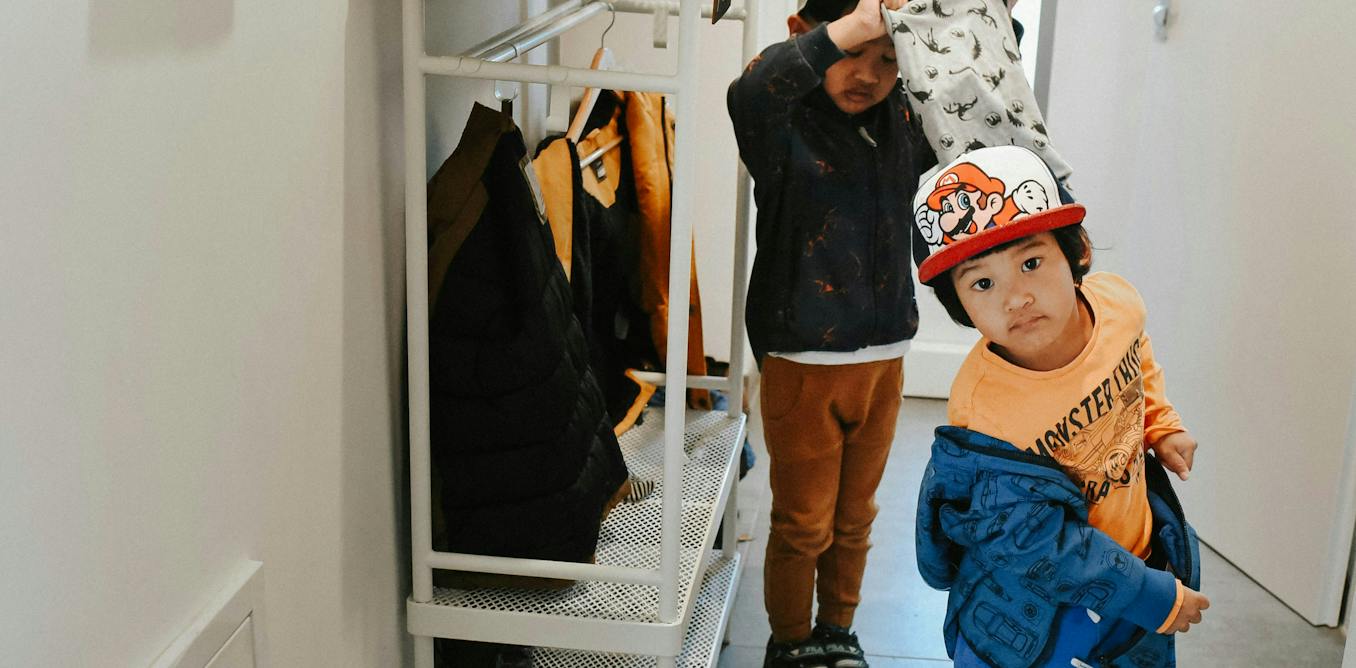
“Please go brush your teeth, get dressed and brush your hair.” These are familiar morning requests that parents make to preschool and school-aged children. Also familiar are the reminders that often follow to get your child to complete these tasks: “Are you getting dressed? Did you brush your teeth yet?” But fear not, parents. I have been studying the development of how young children think about the future for almost 20 years, and my research suggests that young children are forgetful and often delay necessary and important tasks. If morning routine behaviour is frustrating you, it may be helpful to know three-year-olds struggle with remembering what they had to do in the first place. Four-year-olds are much better at remembering what they have to do, but are not very good at carrying out their intentions at the right time. Even though four-year-olds can easily report what they had to do, they often forget to actually do it. How can parents support children’s ability to remember their intentions and create routines that are easier for children to follow? Modify the environment Research suggests it can help to modify children’s environment by making cues more noticeable and reducing the difficulty of ongoing activities. This could mean arranging where items are stored so children can notice and easily access them and not asking a child to do something when they’re occupied with another task. Visual reminders also seem to help, even if they are quite subtle. But verbal reminders don’t seem to be effective. Visual reminders can help children but verbal reminders don’t seem to be effective. (Getty images/Unsplash) In a study with children aged three to six, verbal reminders related to cues and actions did not improve children’s ability to carry out the intention compared to an unrelated reminder. In an earlier study, reminding young children to pay attention only helped those who had better self-control in the first place. When it comes to verbal reminders, it seems that the adage “in one ear and out the other” is fairly accurate. Based on this research, parents are better off strategically placing items (something right by your child’s schoolbag) or posting visual schedules rather than providing constant verbal reminders. Motivation also plays an important role. One study showed that even very young children were more likely to remind a parent about a highly motivating task like buying ice cream versus a boring task such as turning on a sprinkler. Focusing on increasing children’s motivation to carry out the task seems like a promising approach to promote remembering. Increasing task motivation Beyond forgetting, there is another reason that children might not accomplish tasks promptly: procrastination. Procrastination is when a necessary task is delayed despite knowing that there will be negative consequences to that delay. According to parents, children as young as three years old put off tasks especially completing household routines and cleaning up their messes. Older children aged five and six more often put off doing chores and schoolwork. So what can be done to boost children’s motivation to engage in morning routines in a timely manner? Theories of procrastination suggest increasing motivation and positive emotions associated with the task would both be effective strategies. Making something into a game might increase the chances that boring or unappealing tasks are completed without delay. Read more: Why parent-child playful interactions mean so much more than fun and games Encouraging future thinking More broadly, the research on children’s future thinking can inform these challenges. We know that young children have difficulty planning for the future and imagining their future states. Asking your child what their best friend or a super hero would wear or what they would put in their backpack might be a promising way to boost future thinking. (Getty images/Unsplash) Parents can play an important role in developing the ability to project themselves into the future by talking with their children and asking questions like “How will you feel later” or “Will you need your jacket if it gets cold?” Evidence suggests that taking the perspective of someone else such as a peer or an adult can improve the accuracy of future thinking. So asking your child what their best friend or a superhero would wear or what they would put in their backpack might be a promising way to boost future thinking. Children are developing future-thinking skills In sum, young children are still developing important planning and future thinking skills. It’s not surprising that getting ready in the morning presents some challenges. Parents should show patience and acknowledge that in most cases, challenges are normal and part of their own learning about how to support children in developmentally appropriate ways and are nothing to worry about. With following the above research-based suggestions about the home environment, increasing motivation and positive emotions associated with tasks, and talking with children about future thinking, morning routines likely still may be challenging. But with development, your child will become better at carrying out their goals at the right time and anticipating their future needs. When that day comes, many of us will miss the days when we had to help out and remind our children what to do next — even if it did make us want to pull our hair out.
Are you dressed yet? How parents can build child-friendly routines that kids can follow
Full Article
Original Source
Read the full article at Theconversation →KhanList aggregates and links to publicly available news content. We do not host full articles from third-party sources. Always verify important information with original sources.