
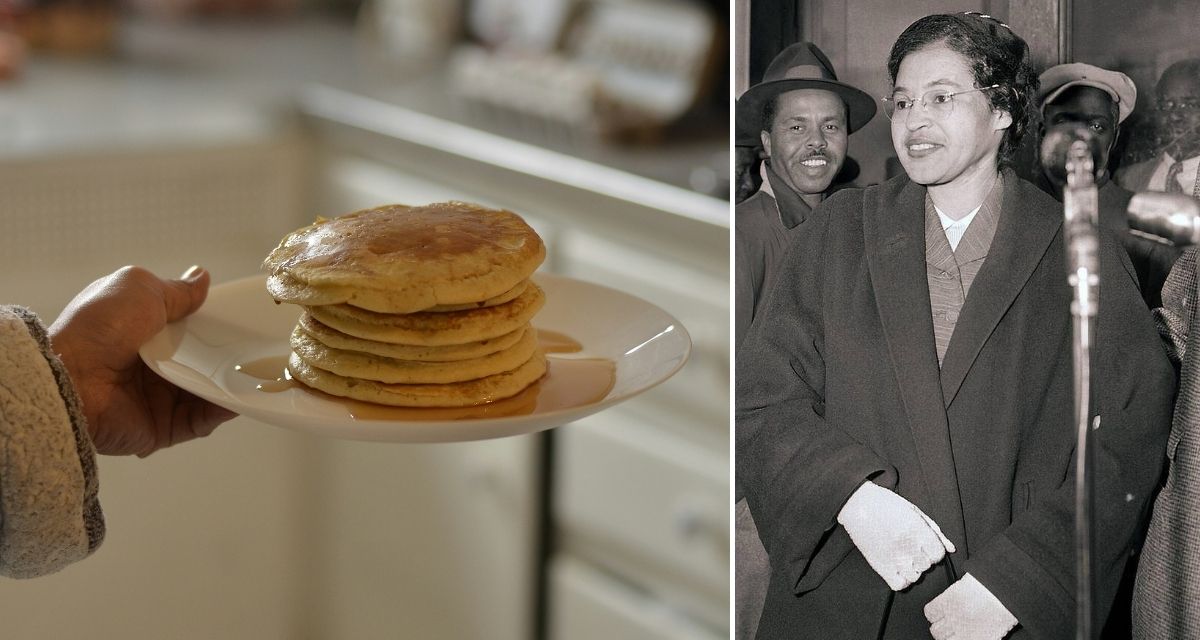
Rosa Parks is known for her civil rights activism, not her cooking. But her handwritten pancake recipe is worth a look, not just as a historical document, but to see why it calls for a hearty helping of melted peanut butter. Written on the back of a bank deposit envelope, the recipe lives in the Library of Congress. On TikTok, Carlena Davis, a cook, author, and the creator of the Spilling the Sweet Tea TikTok account, tried out the recipe here and raved about it: Rosa Parks’ ‘Featherlite Pancakes’ recipe The handwritten recipe reads [edited for clarity]: Featherlite Pancakes Sift together: 1 cup flour 2 Tbsp baking powder 1/2 tsp salt 2 Tbsp sugar Mix: 1 egg 1 1/4 cup milk 1/3 cup peanut butter, melted 1 Tbsp shortening or oil Combine with dry ingredients. Cook at 275° on griddle. All in all, it’s a pretty standard pancake recipe, except for that unexpected melted peanut butter. What adding peanut butter does to a pancake recipe Many people put peanut butter on their pancakes; it’s less common to see peanut butter in the batter. What does adding peanut butter do? For one, adding peanut butter to pancakes makes them more filling. That can be great for growing kids or people who do a lot of physical work. Regular pancakes don’t have much protein or fat, so adding peanut butter beefs them up. Peanut butter also adds a rich flavor to the pancakes. Is it the secret to being “featherlite”? Perhaps. According to The Spruce, pancake texture depends on a mix of chemical reactions influenced by gas bubbles, heat, and viscosity. The fat in peanut butter could increase the pancake’s density, making it less fluffy. But it could also increase the batter’s viscosity, making it fluffier. So, it really depends on the mix of other ingredients. A woman carrying a stack of pancakes. Photo by Joy Real on Unsplash Modern peanut butter pancakes are much simpler The keto/paleo/gluten-free diet trends of the past decade have resulted in all kinds of altered recipes, some of which remove grains altogether. You can actually make a single serving of flour-free pancakes by combining: 1 small or 1/2 large banana 1 egg 1 Tbsp peanut butter 1/2 tsp baking powder Blend and cook in a pan like a regular pancake. These pancakes aren’t light and fluffy; they’re denser and crepey, but if you don’t mind a little banana-and-peanut-butter flavor, they’re quite good. (And there are lots of variations on this recipe. Some people add yogurt or cottage cheese; some use a little ground oats—they’re actually quite forgiving, so fun to experiment.) History’s recipes are often worth revisiting Today, we can find any recipe in seconds simply by Googling. Sure, you have to wade through someone’s entire life story to get to the recipe, but it’s still faster than finding the right cookbook and searching for the recipe you want. Online recipes also offer user ratings and reviews, so you can gauge how good a recipe is before you try it. However, there is something to be said for the joy of reading a recipe from someone who liked it enough to write it down by hand. There’s a story behind every envelope with a recipe written on it, like Rosa Parks’ pancakes. Did she have them at a friend’s house and ask to copy down the recipe? Did she invent it herself and finally write it out for others to copy? We may never know, but there’s something nostalgic and sweet about seeing Parks’ handwritten recipe, and even what looks like a drop of food on the envelope. You know a recipe is well-loved when it’s messy with ingredients. That’s something no online recipe can offer, no matter how long the story that accompanies it.
Rosa Parks wrote a pancake recipe on the back of a bank envelope. One key ingredient stands out.
Full Article
Original Source
Read the full article at Upworthy →KhanList aggregates and links to publicly available news content. We do not host full articles from third-party sources. Always verify important information with original sources.