
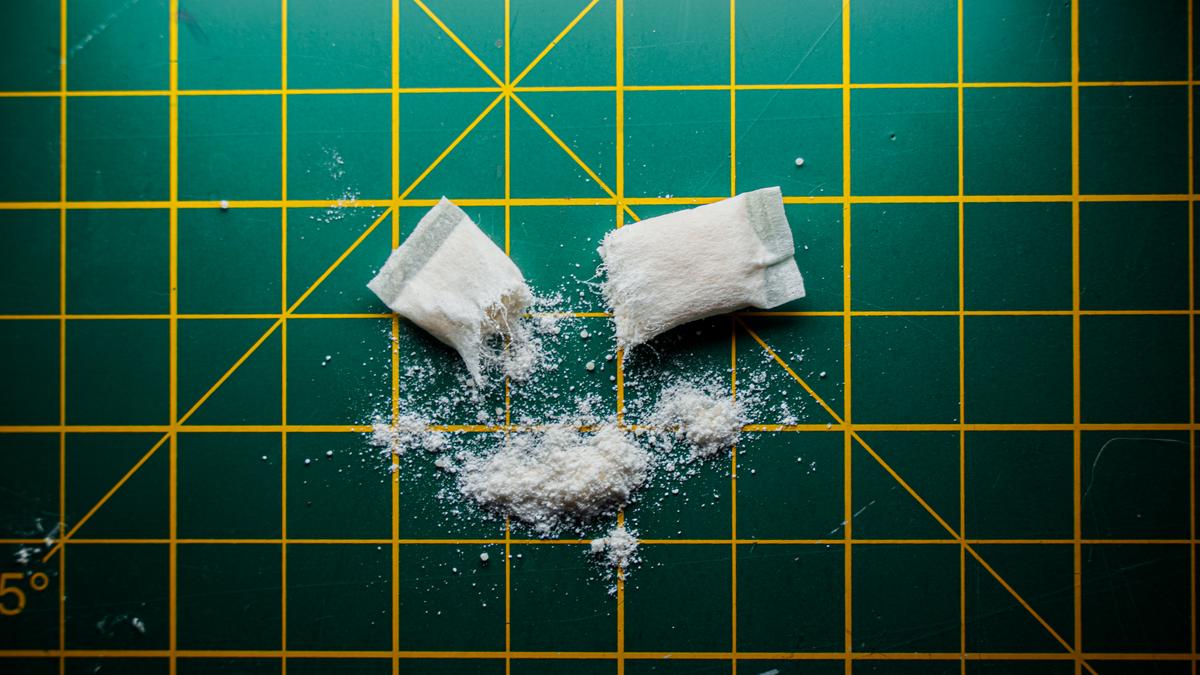
The story so far:A new study led by the ICMR-National Institute of Cancer Prevention and Research has found that nicotine pouches are reaching Indian cities through online platforms, hookah shops and gig delivery services. The study comes after a warning from the World Health Organization in May 2026 about the dangers these products pose. Yet it is far from settled which Indian law, if any, governs them.What are nicotine pouches?A nicotine pouch is a small, tobacco-free, tea-bag-like sack containing nicotine, flavorings, and plant-based fibers. Users tuck the pouch between their lip and gum for up to an hour, allowing nicotine to absorb directly into the bloodstream without smoke, vapour, or spitting. Unlike traditional smokeless tobacco like snuff or chewing tobacco, nicotine pouches do not contain tobacco leaf, dust, or stem. The nicotine used can be extracted from tobacco plants or created synthetically in a lab.Are nicotine pouches regulated in the same manner as cigarettes and other tobacco products?Marketing, advertising, and sales of cigarettes and other tobacco products are regulated by the Cigarettes and Other Tobacco Products Act, 2003 and the rules (COTPA).The definition of cigarettes and tobacco products is very specific and does not include “all products containing nicotine”. If the legislature intended to cover all substances containing nicotine, or “extracts of the tobacco plant”, it would have specifically said so. Restrictions on the freedom of trade and commerce must be strictly construed and since nicotine pouches are not among the products listed in the Cigarettes Act, they fall outside it. Are these regulated by the Drugs Act?Nicotine is not mentioned as a drug in any of the schedules of the Drugs & Cosmetics Act, 1940 (Drugs Act). Nicotine patches and gums have, however, been approved as drugs by the Drug Controller General of India for therapeutic use in treating nicotine addiction. Schedule K under the Drugs and Cosmetics Rules, 1945 lists gums and lozenges and exempts them from licensing and prescription requirements if they contain less than 2 mg of nicotine.If nicotine were not considered a drug at all, there would be no reason to exempt certain nicotine products in Schedule K. The very fact that only some nicotine products are exempted suggests that all others are meant to be regulated by the Drugs Act. A consequence of this is that a license is required to manufacture, import, distribute, or sell these products in India.On the other hand, it seems reasonable that nicotine pouches are not like nicotine patches or gums that purport to treat nicotine addiction; they are a substitute for cigarettes and other tobacco products. They make no therapeutic claim and do not purport to treat addiction. They are therefore not drugs as defined in the Drugs Act.Why are they not covered by the law banning vapes?The import and sale of vapes have been specifically banned by the Prohibition of Electronic Cigarettes Act, 2019 (PECA). If vapes were drugs, there was no need for specific legislation to ban them; vape manufacturers and importers would require a license for both the liquid and the device from the DCGI, and the government could ban or regulate them under the Drugs Act or refuse to issue licenses even if they weren’t specifically banned. One could therefore infer from this that the government found it necessary to have a specific law to ban vapes because the Drugs Act did not grant it adequate power to ban them. If the government did indeed intend to ban or regulate them in any manner, nicotine pouches would have been specifically mentioned, or as “other products containing nicotine” in the PECA, or other legislation. Since there is no specific legislation that bans nicotine pouches, is their import, manufacture, or sale freely permitted?Could nicotine pouches be treated as food?The Supreme Court relies on statutory definitions such as under the Prevention of Food Adulteration Act and the Food Safety and Standards Act defining food broadly to mean any processed, partially processed, or unprocessed substance intended for human consumption, including drink, chewing gum, and components used in preparation. The court interprets food to cover any article used as food or drink for humans, including items that enter into the composition or preparation of human food. Landmark rulings, such as on supari or chewing tobacco products, establish that the definition has a very wide amplitude, encompassing items chewed or consumed. It would be possible to argue that nicotine pouches are actually food products, and not drugs, for the purposes of Indian law. Can nicotine pouches be imported into India?In India, import bans are controlled by two main laws: the Foreign Trade (Development and Regulation) Act, 1992 and the Customs Act, 1962. Together, these allow the government to restrict or completely block certain goods from entering the country.The Foreign Trade Act, 1992 gives the Central government the power to prohibit, restrict, or regulate the import of goods. The Directorate General of Foreign Trade (DGFT) manages this and publishes the official rules (ITC-HS classification) that specifically list which items are free, restricted, or completely banned.Section 11 of the Customs Act, 1962 gives the government the power to issue notifications in the Official Gazette to completely or partially ban goods. The government can ban goods for many reasons, including: national security: protecting the country and public order; health and safety: protecting human, animal, or plant life; economic protection: saving foreign exchange or preventing injury to local businesses; environmental protection: conserving natural resources and preventing pollution; and law enforcement: preventing smuggling, counterfeit currency, or illegal drugs.After the World Customs Organization updated the Harmonized System, a sub-category was introduced for oral nicotine products that do not involve combustion: 2404 91 30 covers tobacco-free single-use pouches of the Zyn or Lyft type, and 2404 91 90 covers other oral nicotine products not meant for therapeutic uses. This replaced the earlier classification: 2403 99 90 covered “other manufactured tobacco substitutes”, while 3004 40 90 / 2404 91 10 applied only to nicotine pouches or lozenges strictly classified as medicaments or smoking-cessation aids, such as nicotine chewing gum, lozenges or patches intended to help people quit smoking.Under the Directorate General of Foreign Trade (DGFT) schedule and the Central Board of Indirect Taxes and Customs (CBIC) rules, items with the IHS Code 2404 91 30 (Tobacco-free oral nicotine pouches) are categorised as “restricted”. This means that unlike “free” items, they cannot be cleared simply by paying duties. Unlike “prohibited” electronic cigarettes (e-cigarettes), they are not completely banned on paper, but they require a specific import license or permission from the DGFT.How does the DGFT decide on granting a license to import?The DGFT cross-references with health and other ministries. If the Central Drugs Standard Control Organization (CDSCO) classifies recreational nicotine pouches as unapproved drugs, the DGFT will not issue an import license unless the importer possesses a valid pharma-grade No Objection Certificate (NOC) and manufacturing/import drug license. However, if nicotine pouches are considered as food, there should be no reason for an import license to be denied.What about duty-free shops?Nicotine pouches are currently available at a few duty-free stores at Indian airports. Such stores are licensed under Section 58 of the Customs Act and cannot claim to be entirely outside Indian law.Nothing in the license issued under the Customs Act exempts them from the application of all other Indian laws.Isn’t a duty free shop deemed to be outside the territory of India and it’s really the passengers who purchase from the shop who “imports” into India when they cross the customs control at the airport?In the case of Flemingo Duty Free Shop Pvt. Ltd. v. Shri Kaushik Bhattacharya (2024), the Calcutta High Court was of the view that a duty-free store didn’t “import” goods into India because it was deemed to located outside India for the purposes of the Customs Act and as a result, the legal metrology act requiring goods sold there to be labelled in a particularly Indian manner wouldn’t apply.That decision shouldn’t be read to support the view that no Indian law applies to duty-free shops. If no Indian law applied to duty-free shops, what happens if a murder occurred there or some group of passengers ransacked the shop? Could they claim that no crime has been committed because no Indian law applies to that space? Wouldn’t an Indian policeman have the power and duty to investigate and arrest the miscreants? Wouldn’t they be prosecuted in an Indian court?They are exempt from the application of the Customs Act only in relation to payment to the Indian government of customs duties, levies and other taxes on the items that are sold.What are the items that are permitted to be imported and sold in the duty free stores?Duty free stores are also restricted in the items they can import and sell. Since only passengers entering or leaving the country can purchase items from these shops, they can only sell items that passengers are allowed to carry on the aircraft or into the country. These are listed in the Baggage Rules. If the duty free shop had no restrictions on what it could sell, could it sell narcotics, arms and ammunition, all kinds of opioids? Surely no country would allow that. That would be absurd.Cigarettes, along with alcohol, jewellery, watches, food, and small electronic items, are specifically named in the list of items that are permitted to be sold in the duty free shops. Nicotine pouches aren’t specifically listed as items permitted to be sold in these shops. Given the specific classification under the Customs Act that categorises them as restricted, it is unlikely that a license has been issued for their import.What is the legal position?While it may seem that there are complex legal issues surrounding the import and sale of nicotine pouches, it really is quite a straightforward issue for the government to resolve; it will take no more than a few minutes for a notification to be issued under the Customs Act and the Foreign Trade Act banning, the import and sale of nicotine pouches in India on the basis of protecting health.If the government moves as slowly as it did with vapes, pouches will become fashionable, and demand will settle in. A ban notified after that point will only produce smuggling on the scale we now see with vapes and cause damage to health that will be hard to mitigate.(Murali Neelakantan is a lawyer)
Are nicotine pouches beyond the law? | Explained
Full Article
Original Source
Read the full article at Thehindu →KhanList aggregates and links to publicly available news content. We do not host full articles from third-party sources. Always verify important information with original sources.