
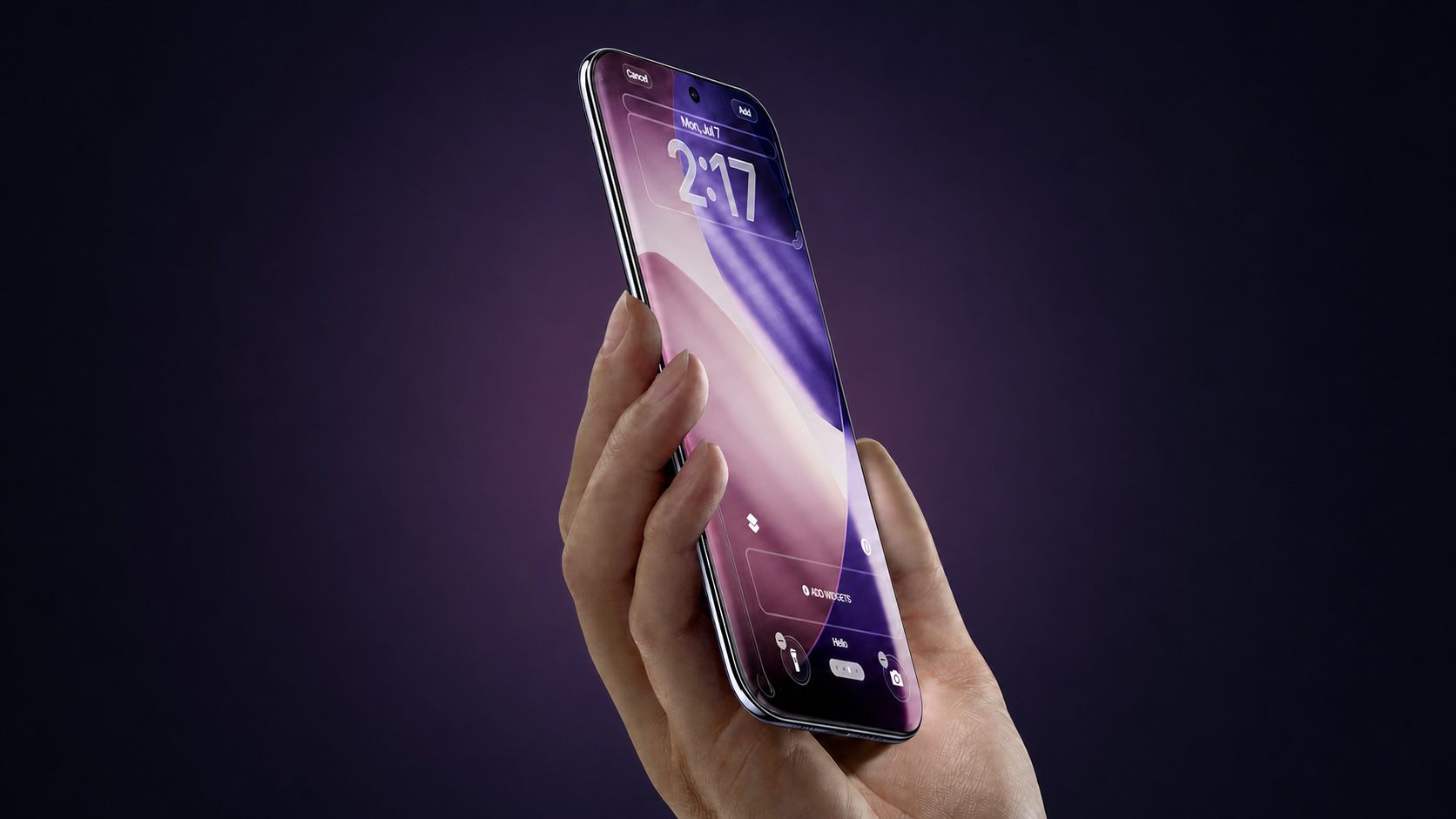
Apple's 2029 "Pro" iPhones could adopt thinner and more power-efficient OLED screens, according to UBI Research. The technology, known as Color Filter on Encapsulation (CoE), removes the conventional polarizer from the OLED panel and places a color filter directly on top of its encapsulation layer. A polarizer helps suppress reflections from ambient light, but it also absorbs a significant portion of the light produced by the display. Removing the polarizer allows more light to pass through, potentially enabling a display to reach greater brightness without consuming additional power, or use less power while maintaining the same brightness. Eliminating the separate layer can also make the display assembly thinner, freeing up internal space for components such as the battery, cameras, and more. Samsung first commercialized the technology, which it branded Eco² OLED, with the Galaxy Z Fold3. According to Samsung's internal testing, its original implementation improved light transmission by 33% and reduced power consumption by up to 25% compared with an OLED panel using a traditional polarizer. CoE technology presents some technical challenges. Without a polarizer, manufacturers have to control external reflections through a combination of color filters, black pixel-defining layers, low-reflection coatings, and other optical measures. UBI Research believes the difficulty of maintaining outdoor visibility, viewing angles, contrast, and color accuracy may explain why Apple is reportedly waiting until 2029 to bring the technology to its high-volume conventional iPhone models. Prior to the unveiling of the iPhone Duo, reports indicated that its Samsung-supplied folding OLED display would use CoE technology. Apple has not detailed the panel's internal construction, but UBI Research sees the foldable device as a potential first step toward using polarizer-free OLED displays across the iPhone "Pro" lineup. The research firm estimates that annual panel demand for the two Pro models could remain between 90 million and 100 million units, making the proposed transition significantly larger in scale than CoE's use in foldable devices. Samsung Display and LG Display are expected to lead the initial supply, while BOE could compete for orders if it can meet Apple's requirements. Popular StoriesApple Announces Foldable 'iPhone Duo'Apple today announced the "iPhone Duo," a new kind of iPhone featuring two screens and a foldable inner display. The two halves of the iPhone Duo connect into a single continuous frame with the same aspect ratio across both displays, and Apple said the transition between open and closed is designed to feel fluid. When fully open, Apple says it is the thinnest iPhone ever made, with an...Apple Event Live Blog: iPhone Duo, iPhone 18 Pro, and MoreWednesday September 9, 2026 9:10 am PDT by Jordan GolsonApple's "Surprise and Shine" event kicks off today at 10:00 a.m. Pacific Time, where we're expecting to see the foldable iPhone Duo, the iPhone 18 Pro and Pro Max, Apple Watch Series 12 and Ultra 4 models, new AirPods 5 earphones, and perhaps some other announcements. Apple is providing a live video stream on its website, on YouTube, and in the company's TV app across various platforms. We...iPhone 18 Pro Prices Estimated Ahead of September 9 Apple EventThursday September 3, 2026 3:41 am PDT by Tim HardwickLess than a week before Apple debuts new iPhone 18 Pro models, research firm TrendForce estimated the prices of the devices based on the latest hardware cost environment. TrendForce's price estimates compared to last year's models look like this: Model Starting Price Model Starting Price Change iPhone 17 Pro $1,099 iPhone 18 Pro $1,24...
Apple Planning to Bring iPhone Duo Display Tech to Pro in 2029
Full Article
Original Source
Read the full article at Macrumors →KhanList aggregates and links to publicly available news content. We do not host full articles from third-party sources. Always verify important information with original sources.