
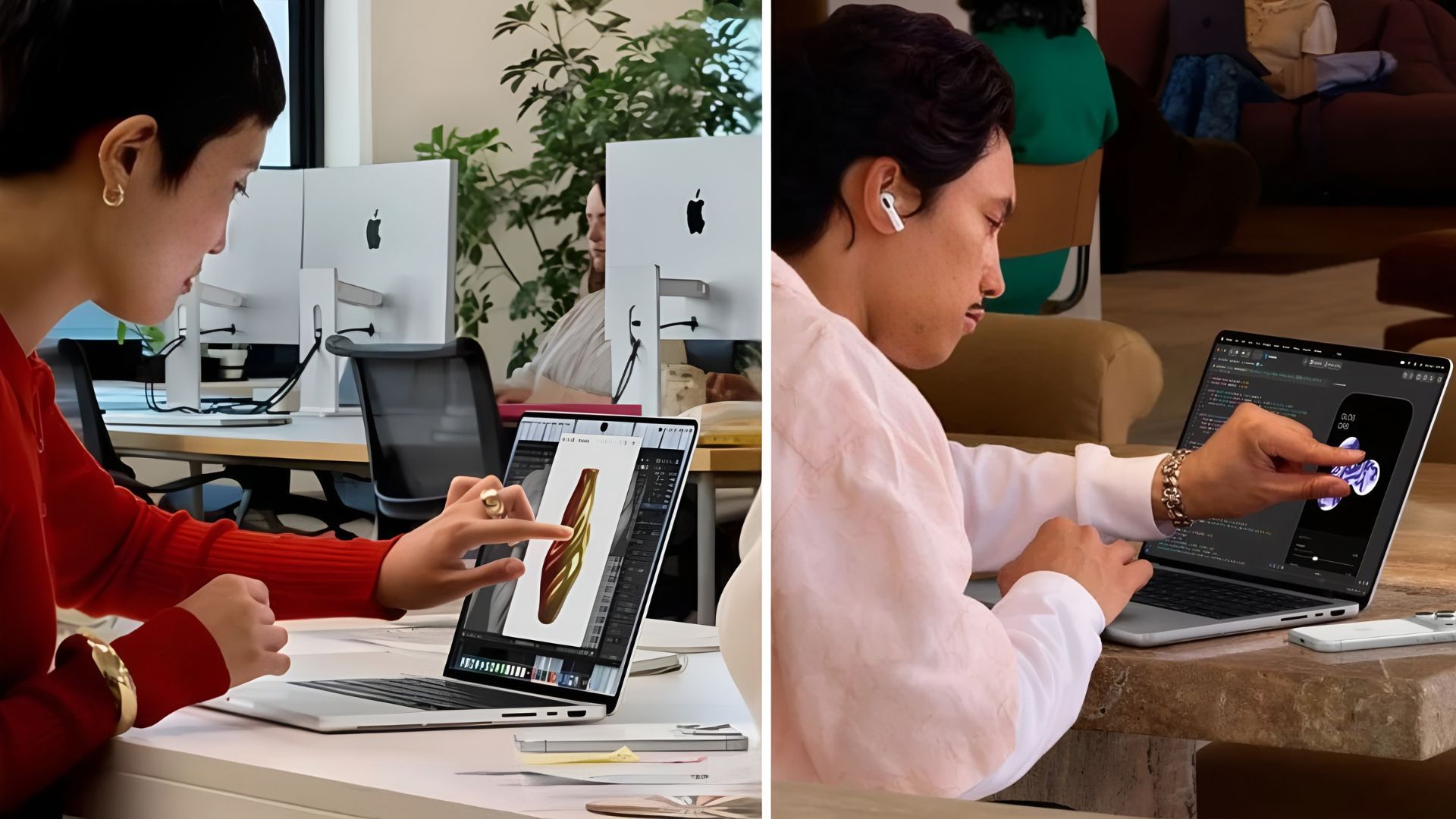
Apple has brought touchscreen controls to the MacBook Pro for the first time, pairing the long-awaited feature with a tandem OLED display and its new M5 Pro and M5 Max processors. The redesigned 14-inch and 16-inch laptops also weigh less than their predecessors and promise up to 24 hours of battery life. The redesigned MacBook Pro also brings back Apple’s glowing logo on the lid, reviving a signature design feature last seen on the MacBook Pro in 2016. The return comes a decade after Apple dropped the illuminated emblem during its shift to thinner laptop designs. The announcement marks Apple CEO John Ternus’ third major product launch this year, following the iPhone 18 Pro and iPhone Duo debut, then the OLED-equipped iPad mini. The MacBook Pro’s new display and touch interface represent a significant change for Apple’s professional laptop lineup. Preorders opened October 28, with deliveries and retail availability starting November 6. Prices begin at $2,899 for the 14-inch model with M5 Pro. Brighter OLED display Apple’s new PROLED XDR display uses tandem OLED technology to improve brightness, contrast, and image consistency. It reaches 2,000 nits of peak brightness and delivers a claimed 10,000,000:1 contrast ratio. A variable refresh rate of up to 120Hz also keeps motion smooth during editing and other demanding tasks. The panel supports P3 and Adobe RGB color spaces, making it suitable for photographers, designers, and video editors. Apple claims more than 80% coverage of the Rec. 2020 color gamut for HDR video work. An antireflective coating helps users work in bright environments, while an optional nano-texture finish reduces glare further. Apple also uses dedicated processing algorithms to regulate individual pixels and maintain consistent brightness. Factory calibration helps keep color accuracy aligned with professional standards. The company has added reference modes for specialized work, including nondiagnostic medical image review. Touch comes to Mac The touchscreen introduces another way to navigate macOS without replacing the keyboard or trackpad. Users can pinch to zoom, move presentation slides, and rearrange windows directly on the display. An integrated touch sensor reduces latency by placing the sensing technology within the panel. Creative professionals have more specialized options, too. Designers can draw directly across the screen, while musicians can play software instruments using onscreen controls. Developers can also test touch interactions in their iOS and iPadOS applications. Apple redesigned the hinge to provide greater stability during touchscreen use. Existing applications can recognize touch input through automatic translation into clicks. Developers can also use updated gesture APIs to build interfaces specifically for the new display. M5 chips power workloads The M5 Pro targets professionals handling software development, scientific computing and intensive video editing. M5 Max caters to heavier workloads, including 3D animation, visual effects and large language models running locally. Both processors feature GPU cores with dedicated neural accelerators and a third-generation ray-tracing engine. Apple says these improvements accelerate graphics rendering and demanding computational tasks. Configurations offer up to 128GB of unified memory and 16TB of storage. The redesigned laptops also shed weight without sacrificing sustained performance, according to Apple. The 14-inch model weighs 3 pounds, while the 16-inch version weighs 4 pounds. Both include Thunderbolt 5, HDMI, an SDXC card slot, and Wi-Fi 7. Pricing and availability The 14-inch MacBook Pro with M5 Pro starts at $2,899 in the US. The 16-inch M5 Pro version starts at $3,399. M5 Max configurations begin at $4,499 for the 14-inch model and $4,799 for the 16-inch version. Apple has also upgraded the six-speaker sound system, promising 50% deeper bass. The laptops support up to three external displays with M5 Pro and four with M5 Max, giving professionals more room for complex workflows. Get the latest in engineering, tech, space & science - delivered daily to your inbox.Aamir is a seasoned tech journalist with experience at Exhibit Magazine, Republic World, and PR Newswire. With a deep love for all things tech and science, he has spent years decoding the latest innovations and exploring how they shape industries, lifestyles, and the future of humanity.
Apple launches its first touchscreen MacBook Pro with a 2,000-nit OLED display
Full Article
Original Source
Read the full article at Interestingengineering →KhanList aggregates and links to publicly available news content. We do not host full articles from third-party sources. Always verify important information with original sources.