
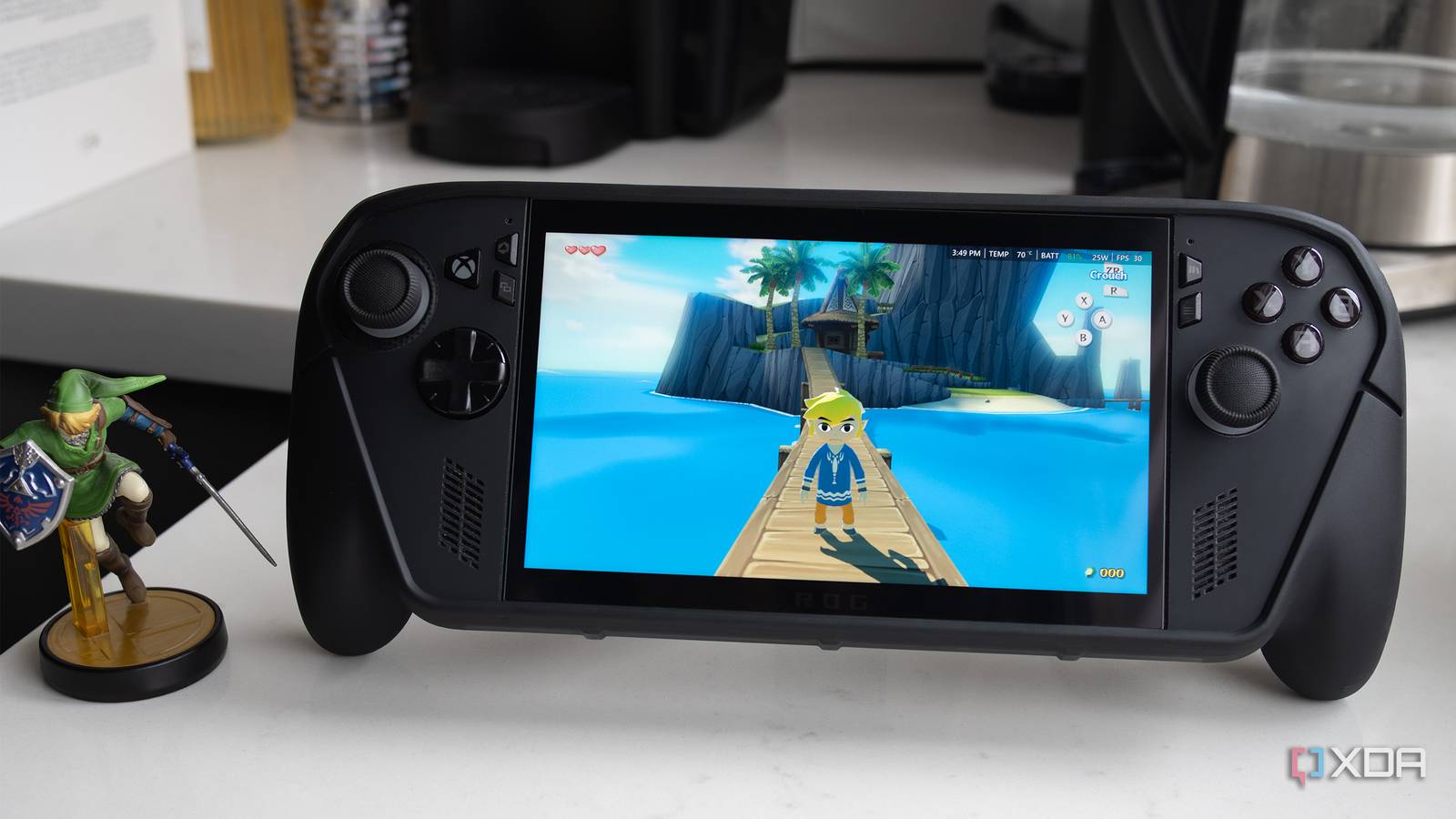
Summary Anthropic has introduced an instruction telling Claude not to recreate specific existing games, even if they're renamed. XDA independently found the instruction in Claude Code's binary, along with separate mechanisms for applying it to different models. Our testing suggests the restriction is active in Opus 5.5, though it doesn't appear to prohibit decompilation or static recompilation outright. The fast-growing scene of AI-assisted retro and modern game ports may have just hit a new roadblock. Anthropic appears to be introducing a restriction in Claude Code that tells its AI models not to recreate specific existing video games, potentially preventing developers from using the tool to port or rebuild older titles. Twitter user and YouTuber @chasm recently shared what appears to be a new instruction delivered by Anthropic's servers through a configuration field called "tengu_heron_brook." The instruction reads as follows: "Do build original games, games in a genre, and games from the user's own designs and assets. Don't build a recreation of a specific existing game, even if it is renamed or called original." XDA independently verified that the exact instruction is present inside v2.1.314 of the Claude Code binary. On further examination, it appears the "tengu_heron_brook" is a mechanism Anthropic has previously used to deliver adjustable system instructions remotely, rather than a flag specifically created for video games. One earlier configuration examined by XDA contained an unrelated instruction concerning reasoning effort, suggesting the mechanism is used to test or roll out changes to Claude's behavior. More importantly, XDA identified a separate mechanism involving original_games_guidance and the opus_5_5_prompt_bundle. This suggests Opus 5.5 can receive the game-recreation instruction independently, while accounts receiving it through tengu_heron_brook will have it applied to all models used in Claude Code. This specific instruction was not found in the ~/.claude.json file on XDA's test account, though it's present in the installed executable. While including the text in Claude Code's binary doesn't necessarily mean every user or model receives it, the separate Opus 5.5 mechanism suggests the restriction isn't exclusively an A/B test for that model. XDA also compared how Opus 5.5 and Opus 5 responded when asked whether they could recreate Pokémon Diamond. Both initially refused, but Opus 5.5 explicitly stated that its session instructions prohibited recreating specific existing games, including renamed versions. The wording closely matched the instructions recovered from the Claude Code binary, providing further evidence that the restriction is active in at least some sessions. Opus 5, meanwhile, initially refused to recreate the game and even suggested that decompiling or porting its ROM was off-limits. However, when asked whether a system instruction was responsible, it denied receiving these restrictions and reconsidered its response, saying it would assist with legitimate decompilation projects. A model's description of its own instructions isn't always a reliable source, but the different responses are consistent with this new guidance being separately activated with Opus 5.5. Right now, it's unclear how widely Anthropic has deployed the instruction, whether the company intends to make it permanent across all of its models, or which kinds of game development it considers a recreation. Claude still appears willing to help with decompilations and recompilations Anthropic already restricts what Claude can do in several ways Claude will still assist developers that are looking to build original video games, including games inspired by particular genres. However, the restriction raises questions about projects such as the Zelda: Wind Waker HD static recompilation and the Wine-like Nxnative compatibility layer, which makes it possible to run Nintendo Switch games on a Mac. Both projects have benefited from AI assistance. In both cases, neither project has recreated an existing game from scratch. Static recompilation translates an existing game's instructions so they can run on another platform, whereas Nxnative provides a compatibility layer for running existing games. The instruction doesn't explicitly prohibit either approach, but Claude might refuse to distinguish between these techniques and recreating a copyrighted game. That uncertainty could become a problem for developers who rely on AI assistance for such projects. From our testing, this restriction may be narrower than initially feared. When asked whether it could help with a Pokémon Diamond decompilation project, Opus 5.5 agreed, explicitly distinguishing reverse engineering from recreating a game. It offered to translate disassembled functions into readable C code, assist with rebuilding the ROM from a user's own copy, and develop tooling for the project. In Opus 5.5, when asked whether it could help create a static recompilation of Pokémon Diamond that could run natively on Windows by translating the original Nintendo DS code and recreating the necessary hardware interfaces, Claude said it could. It even outlined a potential implementation involving an Arm-to-C recompiler, support for Nintendo DS overlays, and a runtime handling graphics, audio, and other hardware functionality. While these tests don't establish whether Claude would actually complete either project, they suggest the instruction's intent isn't to prohibit all reverse engineering or game porting. This doesn't mean that developers won't encounter problems. On October 30th, a developer filed an issue on Anthropic's GitHub repository, reporting that Opus 5.5 had begun refusing to assist with digital board-wargame modules they were building for paying customers. The developer then clarified that these were personalized projects created from materials supplied by customers who owned the physical games, and were not officially licensed publisher projects. They also stated that these refusals began after explicitly asking Claude whether the new rule applied to their work. XDA has not independently reproduced those refusals. Anthropic officially announced Claude's passive monitoring self-assessment system on October 16th, 2026, though it had been running since June. While the AI company emphasized the self-assessment system's role in detecting cyberattacks and other harmful activity, it also flags potential violations of the company's usage policies, which prohibit intellectual property infringement (though Anthropic doesn't mention this specifically in its recent press release about self-assessment). Of course, port creators can shift to other AI tools, including OpenAI's Codex, or return to more traditional reverse-engineering, but the broader AI industry may follow Anthropic's example. We've also seen reports that Opus 5.5's guardrails are now preventing at least some reverse engineering, including TV operating systems. Anthropic has restricted what Claude can do in several ways, including surveillance and data collection, malware, unauthorized hacking, reproducing copyrighted material, and more. While our tests suggest this new instruction may not be a blanket ban on game ports, the reported refusals may concern developers who fear these rules could be interpreted broadly. XDA has reached out to Anthropic for more information about its stance on using its AI tools to create video game ports, decompilations, and recompilations.
Anthropic seems to be testing a potential crackdown on vibe-coded ports of existing games
Full Article
Original Source
Read the full article at Xda-developers →KhanList aggregates and links to publicly available news content. We do not host full articles from third-party sources. Always verify important information with original sources.