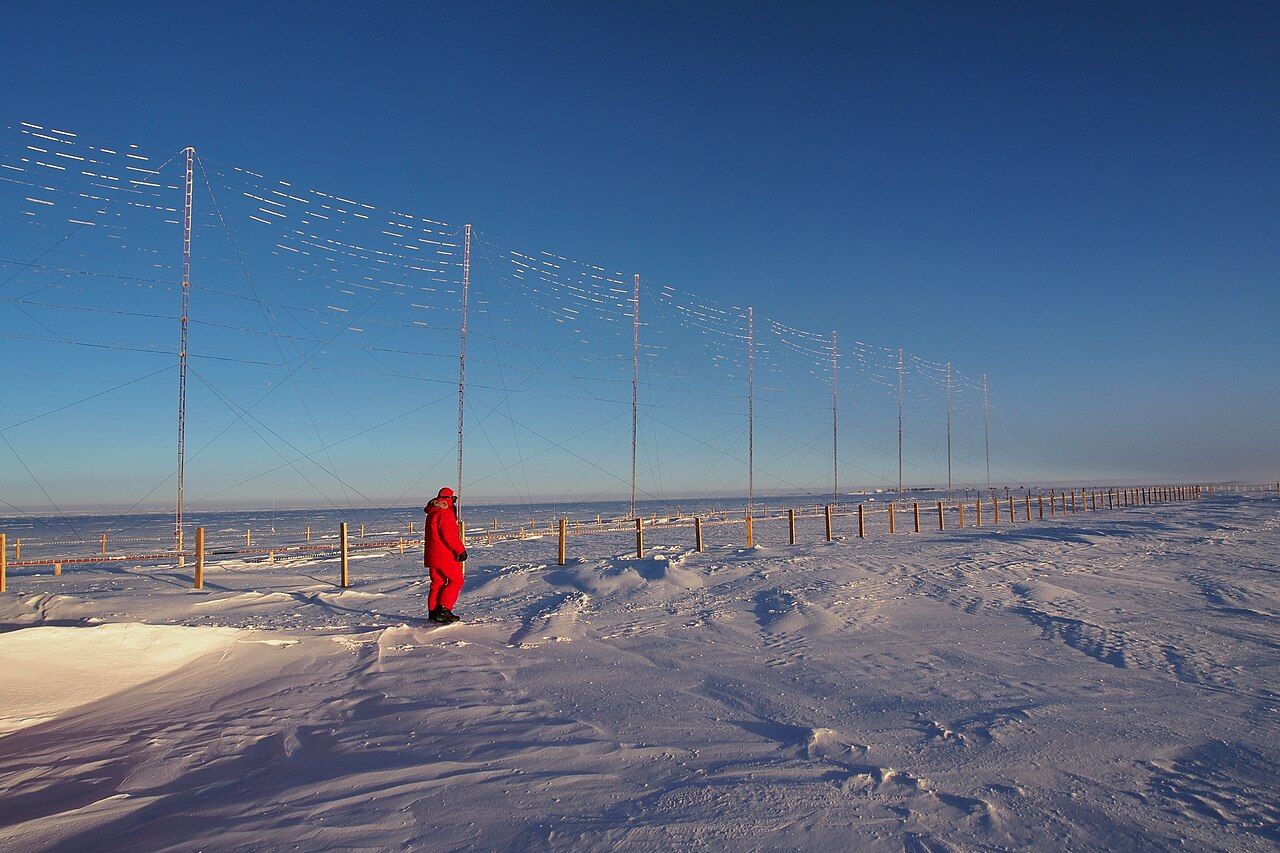
The record-setting cold at the Concordia research station comes just weeks after another part of the southernmost continent experienced the opposite extreme, with winter temperatures climbing to unprecedented highs Concordia is situated atop a 10,800-foot-thick ice cap on the Antarctic Plateau more than 600 miles from the nearest coastline. Paride Legovini via Wikimedia Commons under CC BY-SA 4.0 While much of the Northern Hemisphere is sweltering through summer, Antarctica remains firmly in winter’s grip. Temperatures on the ice-covered continent recently plummeted to minus 119.4 degrees Fahrenheit, the lowest temperature recorded on Earth since 2012. Concordia, a remote, high-elevation research station located in the Antarctic interior, logged the ultra-low temperature twice on July 18, once at 6:25 a.m. and again at 6:34 a.m., reports Live Science’s Patrick Pester. The research station, which is run by Italy’s National Antarctic Research Program and the French Polar Institute Paul-Émile Victor is situated atop a 10,800-foot-thick ice cap on the Antarctic Plateau more than 600 miles from the nearest coastline. Concordia recorded its lowest-ever temperature, minus 120.5 degrees, in 2010. The scientists who work there are accustomed to frigid conditions, often experiencing temperatures as low as minus 112 degrees. Even so, the recent readings are “remarkable” and highlight “how variable Antarctic weather can still be,” Gabriele Carugati, an atmospheric chemist and glaciologist who is the station leader at Concordia, tells Live Science. Even in Antarctica, where temperatures regularly plunge to bitter depths, rising global temperatures—mainly spurred by human activity—are taking their toll. The continent is losing ice, and the surrounding Southern Ocean is warming, changes that are affecting creatures like Antarctic krill, penguins and Antarctic fur seals. “Climate change describes the long-term global trends, while individual weather events can still [bring] exceptional cold,” Carugati tells Live Science. “Antarctica is influenced by complex atmospheric processes, so an extreme low temperature at one location does not contradict the broader picture of global warming.” Did you know? All-time low The lowest temperature ever recorded on Earth came from Russia’s high-altitude Vostok weather station in East Antarctica, which experienced minus 128.6 degrees on July 21, 1983. The record-setting cold at Concordia comes just weeks after another part of Antarctica experienced the opposite extreme, with winter temperatures climbing to unprecedented highs. Argentina’s Esperanza base on Antarctica’s Trinity Peninsula, the northern tip of the broader Antarctic Peninsula, recorded a balmy 59.7 degrees on June 6, a record-setting winter high temperature. The unusually warm reading was recorded amid a prolonged heatwave, during which temperatures rose above freezing for three straight weeks. “This is absolutely crazy,” Raúl Cordero, a climatologist at the University of Groningen in the Netherlands, told the Guardian’s Jonathan Watts last month. “It is also about [36 degrees Fahrenheit] above normal for this time of the year. That is a huge anomaly.” The strange weather in Antarctica comes as parts of North America and Europe endure intense heat waves, drought and destructive wildfires, conditions that scientists say are being exacerbated by human-caused climate change. “2026 is just the beginning,” Johan Rockström, director of the Potsdam Institute for Climate Impact Research in Germany, tells the New York Times’ Mark Landler and Chico Harlan. “It will inevitably get worse. It will get worse and worse and worse to the point where, I’m afraid, we’ll be passing the limits of adaptation.” You Might Also Like Get the latest stories in your inbox every weekday. More about: Antarctica Climate Change Environment evolving climate Weather
Antarctic Interior Hits Minus 119.4 Degrees Fahrenheit, Earth's Lowest Recorded Temperature in More Than a Decade
Full Article
Original Source
Read the full article at Smithsonianmag →KhanList aggregates and links to publicly available news content. We do not host full articles from third-party sources. Always verify important information with original sources.