
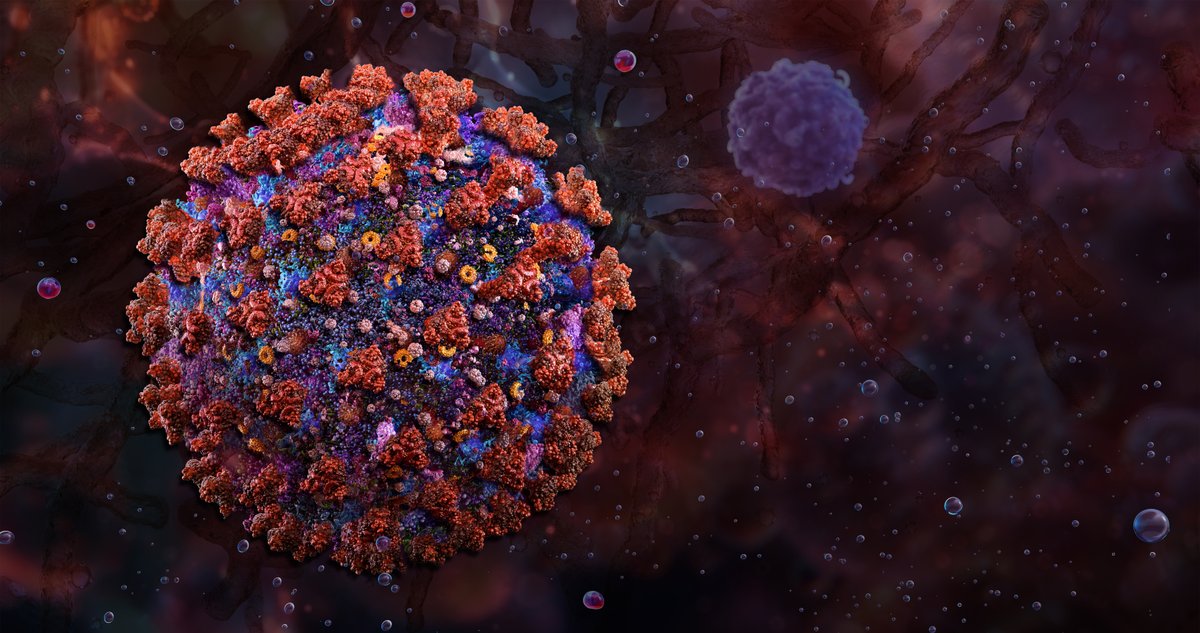
October 28, 20264 min read Add Us On GoogleAdd SciAmThe potential for a wider outbreak is low, but experts are still investigating how the disease-causing virus leaped from animals to humans in the first place Corona Borealis Studio via ShutterstockA person has contracted and died from the Shamonda virus, a disease-causing microbe that had been thought to only infect animals, for the first time. The incident, while unlikely to herald a more widespread outbreak, is a potent reminder of the potential for pathogens to jump from animals to humans—with deadly consequences.The Shamonda virus was first identified in cattle in Nigeria in 1965. Spread by bites from tiny insects called Culicoides midges, it causes several symptoms in the animals, including fever, diarrhea and reduced milk production. The virus has also been known to infect sheep, goats, horses and alpacas. Previously, cases have been detected in some African countries, Japan and—for the first time this summer—Europe. But the virus doesn’t even seem overly contagious and isn’t deadly in adult animals. (Infected pregnant animals can transmit it to their fetus, however, which can result in miscarriage, stillbirth or birth defects.)Yet for the first time in the more than six decades since it was discovered, Shamonda was detected in humans. A 61-year-old man who was undergoing treatment for leukemia at the Civil Hospital of Lyon in France contracted the disease. According to a case report published in Eurosurveillance, the man had undergone a stem cell transplant and experienced fatal encephalitis, or brain swelling. He showed symptoms, such as blindness and confusion, that the report authors say were likely caused by the virus. The man fell into a coma and succumbed to the disease on October 9, 2026, after life support was withdrawn. He is the first person ever known to have contracted the disease and died as a result. There are no vaccines to protect animals or people from Shamonda infections.On supporting science journalismIf you're enjoying this article, consider supporting our award-winning journalism by subscribing. By purchasing a subscription you are helping to ensure the future of impactful stories about the discoveries and ideas shaping our world today.Experts emphasize the need for caution. “At this stage, there is no evidence that the Shamonda virus will become more common in humans,” says clinical virologist Grégory Destras. He is affiliated with the same hospital in Lyon and is a co-author of the report. Destras notes that the virus may have spent several weeks incubating and multiplying in the patient before the neurological symptoms appeared.In a joint statement, the French Ministry of Health and Ministry of Agriculture said that they suspect the patient contracted the disease from a midge bite in eastern France, where the disease has been found in several animals. Officials have reported their findings to the World Health Organization and the European Center for Disease Prevention and Control (ECDC).Shamonda has been found in livestock in 14 European countries. Two new clades of the virus, SHAV-EU1 and SHAV-EU2, were detected earlier this year, and genetic testing revealed traces of the first type in the deceased person’s cerebrospinal fluid, urine and saliva, among other samples.The Shamonda virus is part of the Simbu serogroup and belongs to the genus Orthobunyavirus—the same serogroup and genus as the Oropouche virus, or sloth fever, which caused 9.4 million human infections in Latin America and the Caribbean regions from 1960 to 2025.Indiana University School of Medicine virologist Natasha Tilston-Lunel highlights the Oropouche cases, but notes that the Schmallenberg virus, which is closely related to Shamonda, has been found to be widespread in livestock but not humans. She believes that, based on current information, Shamonda may also have limited infectiousness among people. Continued surveillance of livestock and their aborted fetuses, insects and genomic sequencing of human samples, however, will be critical to detecting any changes to Shamonda’s risk in people, she says. Tilston-Lunel was not associated with the new study.Veterinary virologist Martin Beer of the Friedrich Loeffler Institute in Germany is part of a team that has conducted several studies of the Shamonda virus, including a recent preprint on the first evidence of its presence in European sheep and goats. Beer says that the main transmission route of viruses of the Simbu serogroup are biting midges, which can rapidly spread infections, especially in the summer and autumn. “In winter the transmission cycle stops since the number of biting midges is very low and temperatures below approximately 12 degrees Celsius do not allow efficient virus replication,” he says.A spokesperson for the ECDC told Scientific American that the agency needs clarity regarding the transmission of the virus and the role of vectors in infecting people. Destras suggests that retrospective analyses of stored samples from immunocompromised people could identify asymptomatic infections and the true scale of Shamonda in France.Beer points out that novel cases of unexplained encephalitis have occurred in immunocompromised people who were infected with other orthobunyaviruses, such as the Jamestown Canyon virus or the Cache Valley virus. More studies to analyze antibody prevalence against Shamonda in people could give a clearer picture of whether this particular virus made the leap to humans before and we just didn’t realize because no one died.Subscribe to Support Independent JournalismGreat science journalism requires human expertise, time, effort and creativity. And it costs money. That’s why I and the journalists here at Scientific American hope you’ll join our community.When you subscribe, you are supporting staff and freelance journalists who are passionate about telling science stories that are true, important and compelling. Our editors and reporters are often experts in their fields, which means they understand the nuances of big discoveries and can untangle the breakthroughs from the hype. With a subscription, you are also supporting rigorous fact-checking to ensure the words we publish are precise and accurate. And you’re supporting original illustrations, graphics and photos that bring you closer to an advanced laboratory, an ice sheet in Antarctica or a space mission in orbit. You’re helping us craft other types of high-quality journalism as well: Our newsletters are carefully written, edited and curated by staffers you have or will come to know and love. Our Science Quickly podcast is based on original reporting, collaboration with editors and scientists and exacting production.Subscriptions keep this engine running so we can continue to deliver thoughtful, rigorous and independent science journalism to you. In an era of viral misinformation, this work is crucial. If you value what we do, I hope you’ll consider joining us as a subscriber
Animal-borne Shamonda virus infects and kills a human for the first time
Full Article
Original Source
Read the full article at Scientificamerican →KhanList aggregates and links to publicly available news content. We do not host full articles from third-party sources. Always verify important information with original sources.