
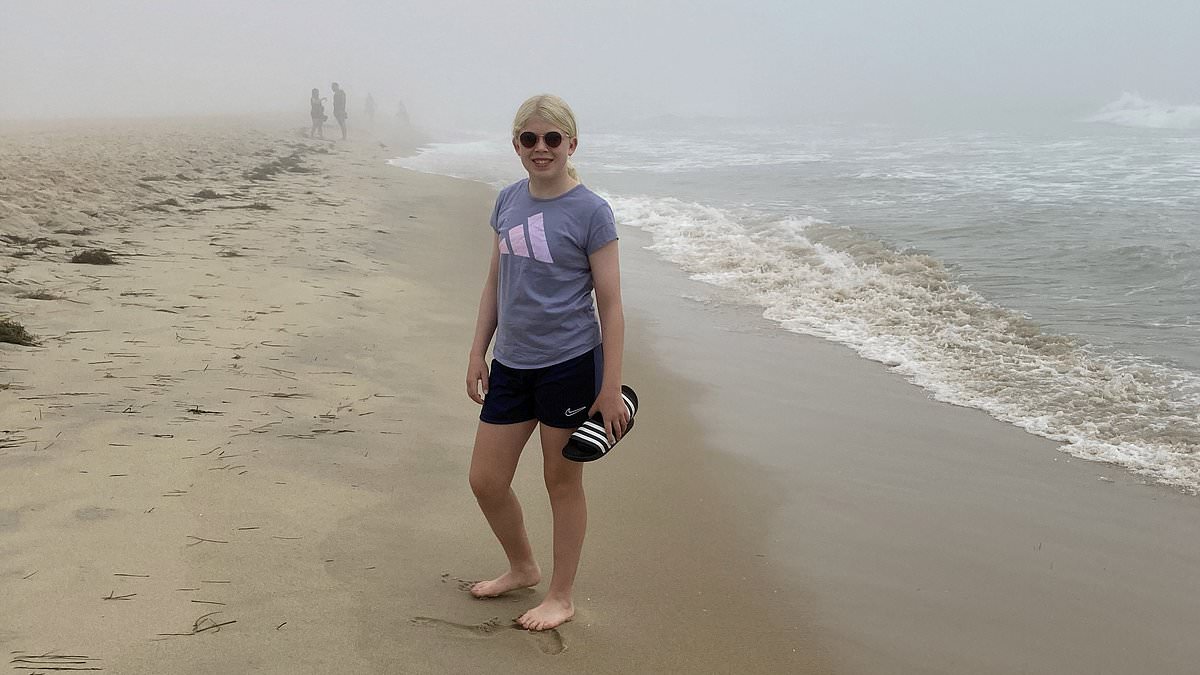
Young people must not assume they're not at risk of deadly stroke - and be wary of red flag warning signs, a teenage survivor has warned.Matilda Stacey was 13 when she first suffered the little-known symptoms of the dangerous blood clot.The teenager, from Northumberland, came down with a feeling of being bunged up, and a headache that was 'constant' and 'not normal' in the summer of 2024, during a trip to visit family in the US.The family sought help from a doctor, who diagnosed sinusitis and prescribed fluids and antibiotics. But when arriving home her condition worsened, and she struggled to eat or drink, felt exhausted and could 'barely lift her head without pain'.On August 16th, Matilda's parents rushed her to A&E where doctors kept her in for monitoring. Within 48 hours she'd developed numbness in her left leg, which nurses dismissed as a 'dead leg' caused by a prolonged period of lying down. Matilda Stacey was just 13 when she suffered a stroke - a result of an infection that had spread The teenager would spend two months in hospital learning to eat, walk and talk againIn fact, tests would later show Matilda was suffering a stroke, caused by an infection that had spread to her brain, interfering with blood supply.Soon after her leg problems began, her speech became jumbled, and while the right side of her body moved uncontrollably, the left side remained unresponsive.'It was terrifying,' said her mother, Kimberly, 51. 'She couldn’t explain what was happening. She or I couldn’t understand it.'We felt frustrated that no one could explain what was going on. We felt like we had lost her.'Matilda was transferred to paediatric intensive care, where she suffered a subsequent catastrophic stroke. The family was told her chances of recovery were small, and 'not to get our hopes up'.Matilda's experience comes amid an intriguing rise in stroke cases in young people.British researchers have found a 67 per cent increase in stroke incidence among adults under 55 between 2010 and 2018. Over the same period, stroke incidence in older adults fell by 15 per cent.'People think strokes only happen to older people,' said Matilda. 'But they can happen to anyone. Even kids.'The schoolgirl spent two weeks in intensive care and a total of two months in hospital whereby she underwent a 'slow, controlled' recovery involving daily physiotherapy to teach her to eat, speak and walk again. Stroke has been rising in young people over the last two decades, studies show Other - just as common - tell-tale signs of a looming stroke, often fall under the radar. These include sudden numbness on one side of the body, sudden vertigo and difficulty swallowingToday, two years on, Matilda still struggles with movement, but is slowly 'getting there'.She has even managed to return to her much-loved football, playing for Newcastle United's Cerebral Palsy team.The teenager has also completed her Bronze Duke of Edinburgh Award.Kimberly, who also has a son William, 18, with husband Robert, 44, said: 'We weren’t sure if she could do it. 'But we realize how strong she is, and how much she can still do.'For Matilda, getting back to sport has been one of her greatest victories.'Being back on the pitch means everything to me. It reminds me that my life didn’t end when I had my stroke.'Strokes affect more than 100,000 Britons annually — one every five minutes — claiming 38,000 lives.This makes it the UK's fourth biggest killer and a leading cause of disability.Age, high blood pressure, smoking, obesity, sedentary lifestyle and diabetes are all known to increase the risk of stroke.While numbness and slurred speech are the most well-known symptoms, other, lesser-known signs include severe headache, memory loss and difficulty swallowing.
Teenager's cold-like symptoms were dismissed as 'sinus problems' - it was a deadly stroke that's left her disabled...here are the unusual warning signs you must not ignore
Full Article
Original Source
Read the full article at Dailymail →KhanList aggregates and links to publicly available news content. We do not host full articles from third-party sources. Always verify important information with original sources.