
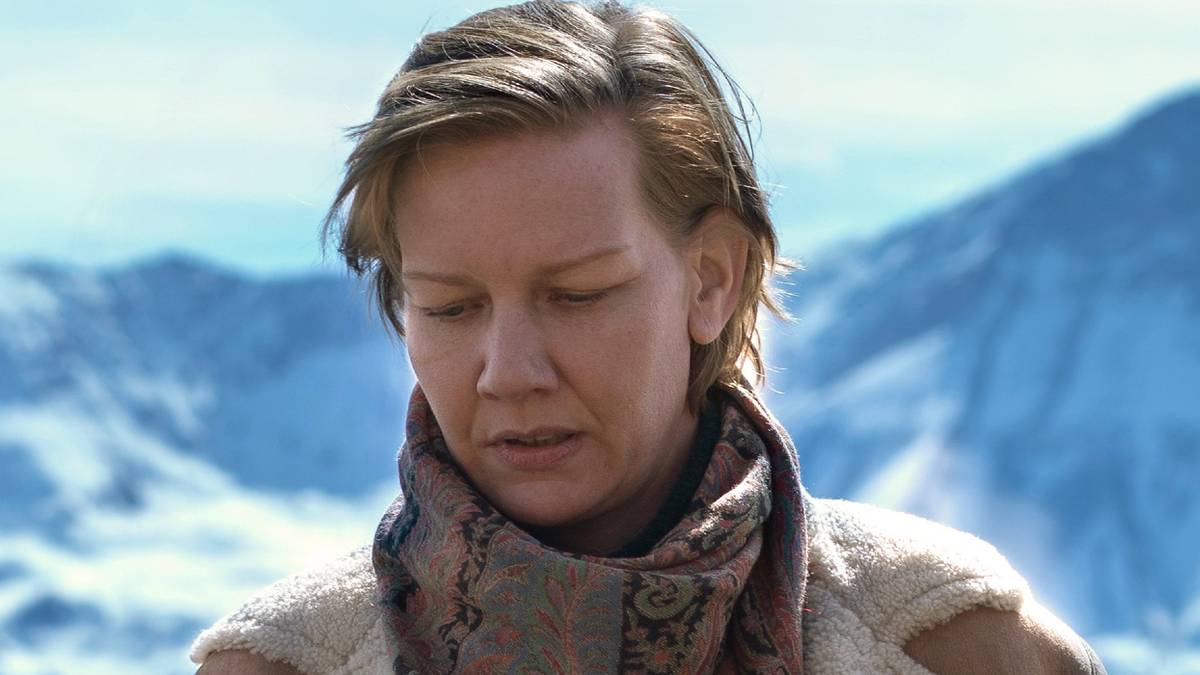
Updated Nov 10, 2026, 5:58 PM EST Stephen has written for Screen Rant since 2016. Stephen sees movies as achievements in art, business, entertainment, and technical craftsmanship, and loves diving deep into the rabbit holes of learning in each of those areas as he strives to better understand and write about the movies we love and the people and industry that makes them. Sign in to your ScreenRant account At the end of Anatomy of a Fall, Sandra is acquitted, although the facts of the case still aren't entirely clear, making the true cause of Samuel's death ambiguous. The 2023 movie is a legal drama from French director Justine Triet, featuring performances from Sandra Hüller, Swann Arlaud, Samuel Theis, Milo Machado Graner, and more. Anatomy of a Fall received great reviews and enjoyed lots of awards success, winning the Palme d'Or at the Cannes Film Festival and picking up five Oscars 2024 nominations, winning for Best Original Screenplay. After the mysterious death of her husband, Samuel (Samuel Theis), Sandra Voyter (Sandra Hüller) becomes the prime suspect. Sandra's best defense is to claim Samuel died by suicide, which even she tells her lawyer, Vincent (Swann Arlaud), is implausible at first. The only person who can back up her version of events is her blind son, Daniel (Milo Machado Graner). When an audio recording revealed in court proves she was also covering up evidence of domestic turmoil, Daniel appears to have doubts about her innocence but ultimately gives testimony that leads to her acquittal. Was Daniel Lying to Protect His Mom? He Changes His Testimony Twice Initially, Daniel said he heard Sandra and Samuel having a casual conversation as he went past the shed to walk the dog, Snoop. He was positive he was standing next to the shed because of the texture of the tape Samuel put there for him to identify the location. It's entirely possible recreating the moment jogged Daniel's memory, but it's also conspicuous that he changed his story to maintain a favorable outlook for Sandra at the end of Anatomy of a Fall. When the investigators tried to recreate the scenario to determine how loud Sandra and Samuel had to be talking to match his story, Samuel suddenly changed his testimony to say he was inside the front door. It's entirely possible recreating the moment jogged Daniel's memory, but it's also conspicuous that he changed his story to maintain a favorable outlook for Sandra at the end of Anatomy of a Fall. Daniel says his memories returned to him again at the last second, providing a new testimony about Snoop eating aspirin from Samuel's vomit to back up Sandra's claim of an alleged suicide attempt. Once again, Daniel's testimony is conveniently altered to favor Sandra's version of events, which supports a suicide theory Sandra didn't even initially agree with when strategizing with Vincent. Daniel's story is plausible, but his odd behavior, asking Sandra to leave the house, and having Snoop eat aspirin before changing his story invites skepticism, especially considering his story seemed to be the deciding factor. Did Samuel Try To Frame Sandra For His Death? His Recording Of Their Argument Threatened Her Credibility The audio recording Samuel makes of his fight with Sandra is one of the most damning pieces of evidence against her, especially since she tried to cover up the fact that they fought at all, but its very existence calls other factors into question. As Sandra says, it's possible Samuel provoked the fight to get a recording. If true, the recording may have been intended for use as literary inspiration, but if he'd already begun contemplating suicide (as his alleged previous suicide attempt would indicate), then the recording may have been an attempt to implicate Sandra in his death. If he was legitimately jealous and resentful of Sandra's success, particularly after she used one of his novel ideas in her own writing, the claims made in the recording tarnish her professionally, in addition to the hit her reputation would take from being indicted in the first place. Considering he was aware of the recording and Sandra wasn't, his accusations against her, while containing legitimate frustrations, could also be performative, knowing the recording would be discovered and played in court after his death. If he was legitimately jealous and resentful of Sandra's success, particularly after she used one of his novel ideas in her own writing, the claims made in the recording tarnish her professionally, in addition to the hit her reputation would take from being indicted in the first place. Granted, Sandra tells Vincent his depiction of Samuel's "final year" wasn't an accurate reflection, so she may not agree with that theory, although the existence of the recording makes it plausible. The only flashbacks in the movie, Samuel's argument with Sandra and his conversation in the car with Daniel, are presented as possible versions of the story, through the audio recording and Daniel's recollection, rather than moments to be taken as fact. Why Wasn't Sandra Happy She Won? Her Sadness May Imply Her Guilt After Sandra is acquitted, she goes to dinner with Vincent and says she feels weird because there's normally a reward for winning. While avoiding a conviction is certainly a form of reward for her, if she's innocent, then she's now left to process Samuel's suicide for the first time. Sandra initially disagreed with the idea that Samuel died by suicide and even disagreed with Vincent's depiction of "Samuel's final year" as presented in court. She may never truly escape her guilt as Daniel will be a constant reminder. For that to be the theory that exonerates her leaves Sandra to process complicated emotions associated with her husband's death for the first time or may even leave her wondering about some other cause. There is also the lingering awkwardness with Daniel. Despite the fact that his testimony saved her, they are both now aware that he at least considered for a time that his mother killed his father. On the other hand, if Sandra truly did kill Samuel, she now has to live a lie for the rest of her life, including lying to Daniel. Additionally, if she was lying about Samuel's suicide to cover up her involvement, Daniel may have also been lying to back her up, in which case she knows Daniel is aware of her deception. Why None Of Anatomy Of A Fall's Evidence Really Makes Sense Human Perspective Plays A Role In Anatomy Of A Fall's Ambiguous Ending Unfortunately, there's no clear explanation for what truly happened to Samuel, and while Sandra may have certainty of her guilt or innocence, it may not be possible for anyone else, including Daniel, to ever truly trust her version of events. For example, the blood splatter and autopsy indicate he was likely struck with a weapon before he fell, but at the same time, it's improbable that Sandra was able to lift and push him over the edge in the way the prosecutor indicated. No single theory fully accounts for both the blood splatter and the body falling where it did. The coroner determines that Samuel received a blow to the head before hitting the ground, but the autopsy proves inconclusive and offers no hard evidence. The prosecution brings in a blood spatter expert who testifies that Samuel's death must have come from an intentional blow to the head, delivered by another human, before his fall. He's clearly convinced of his interpretation and has video simulations to help prove it. A second expert says Samuel fell onto a shed, then bounced into the air, his body spinning, releasing blood in exactly the pattern discovered. Looking closely at the shed after Samuel falls in the beginning of the movie, there appears to be a point of impact where his head could have hit, aligning with the defense's blood splatter theory, but it's still not enough to provide any decisive conclusion about the true nature of Samuel's death. Daniel's testimony is equally shaky, especially considering his own conflict of interest. He knows his testimony could be the strongest factor in influencing his mother's verdict, but he doesn't know if he can fully trust his mom, which is why he seeks advice from Marge (Jehnny Beth), who unfortunately can't comment on the case to him. Memory is fallible, so his multiple shifting testimonies are easy to explain, but the fact that his testimony always shifts in favor of Sandra and only in response to evidence that looks bad for her, makes it look like he's changing his story to protect her. In his final testimony, Daniel recalls that while he and Samuel were driving Snoop to the veterinarian, his father spoke to him about the need to be prepared that those he loves will die. Samuel was specifically talking about Snoop's short lifespan, but Daniel concludes that it reflected his father's own suicidal thoughts. On the witness stand, he says that if his mother did this, he can't understand it, but if his father did it, he can. Knowing he can't be certain what happened, he admits it's easier to believe Samuel died by suicide than that Sandra was a murderer. Daniel's testimony works, and Sandra is acquitted. As the audience, we know even more than the investigators and prosecution, making Sandra's position even more complicated. On one hand, she doubted the suicide theory from the start, but if she were guilty she should be more eager to support the strongest alibi. Looking closely at the shed after Samuel falls in the beginning of the movie, there appears to be a point of impact where his head could have hit, aligning with the defense's blood splatter theory, but it's still not enough to provide any decisive conclusion about the true nature of Samuel's death. At the end of Anatomy of a Fall, there's still a lot of ambiguity around how Samuel died and how truthful Sandra and Daniel are. As Sandra tells Samuel's therapist: "What you say is just a part of the whole situation. You know. I mean, sometimes a couple is kind of a chaos and everybody is lost." Why Anatomy Of A Fall's Final Shot Is Of Sandra & Her Dog Snoop Gets Another Important Moment In The Final Scene Anatomy of a Fall ends not with Sandra alongside her son, but with their dog, Snoop. It's a moment that, aside from showcasing the unconditional love of a dog, highlights how alone Sandra still is. Her husband is dead, and while her son may or may not have lied to protect her, there's still a great distance between them. Having Snoop in there is an important reminder to Sandra there is still love for her, while simultaneously reflecting on her loss and grief. Snoop was played by a border collie named Messi. What Anatomy Of A Fall's Director Has Said About Whether Sandra Is Guilty Or Not Justine Triet Won't Reveal It But Has Some Thoughts Justine Triet doesn't want to over-explain Anatomy of a Fall's ending, which is why the writer-director purposefully made things ambiguous. However, just like audiences, she has her own ideas and feelings about what the truth might actually be. In an interview with The Wrap, she explained that finding the "doubt" was the key to the ending, but when asked how she responds to questions of whether Sandra was guilty or not, she said: Well, what can I say? It’s the same thing as in life. Who knows the real truth? To me, I think maybe that Sandra could be not guilty of murder but responsible for pushing him to commit suicide. Maybe? It’s a question of: What are we all responsible for in our lives? The film is opening so many other doors. And in a way, I think, well, she lied two times in the movie. So maybe we can cast doubt on her and say, “Hmm, is it possible she did do it?” But I don’t want to say that. Sandra Hüller has described her own version of that uncertainty. She said that two days before filming started, she called Triet and thought, "What if she actually tricks me into something?" She had two days to decide what to do, and she realized it's really not so important whether Sandra is a murderer or not. As Hüller put it, it's really about what other people think of her. The Real Meaning Of The Anatomy Of A Fall Ending Was It Murder Or A Complicated Marriage? While the Anatomy of a Fall ending leaves plenty of possibilities of Sandra being guilty, the real purpose behind the movie is the exploration of this marriage. Part of Sandra's frustration is having to defend aspects of her marriage from people who could not possibly know the truth as she does. From the prosecutors to Samuel's therapist to the spectators getting a glimpse inside her intimate world, they are deciding what her marriage was based on very little information. Looking at the ending of the movie as if Sandra is innocent provides perhaps the most compelling arc. While her marriage to Samuel was not perfect, there were no issues that would drive her to murder him. Yet Anatomy of a Fall's courtroom scenes pick apart every aspect of their relationship, magnifying hard moments and blowing them out of proportion. It's frustrating for Sandra that it's almost impossible to combat the assumptions that are made based on this "evidence". She cannot convince people that there is a difference between an argument between a couple and a conflict that leads to death. In that sense, Daniel is the only one who can save her. With no one else able to see what she sees, Daniel chooses to believe his mother in the Anatomy of a Fall ending, even if he might lie in his testimony. His testimony gives the court a believable suicide version of Samuel's death, but it doesn't prove what happened. Daniel chooses the version of his father's death that he can survive, and the movie never confirms that he invented his final testimony. How The Anatomy Of A Fall Ending Was Received The Ending Is One Of Several Celebrated Aspects Of The 2023 Movie Anatomy of a Fall arrived to more-or-less universal praise when it premiered in 2023. Director Justin Triet's legal drama currently holds a 96% critical score and 90% audience score on Rotten Tomatoes. These high numbers represent both the quality of Anatomy of a Fall overall, and the strength of its ending, since movies based on complex legal mysteries are rarely (if ever) well received if the story is betrayed by a sub-par ending. The main praise for Anatomy of a Fall was in two areas - the performance of Sandra Hüller, and the emotional impact of the story. As far as the latter is concerned, the ending is incredibly important. For many critics and audiences alike, the key strength of the ending of Anatomy of a Fall was the way it decompresses the immense tension building throughout the rest of the film, while also leaving things on an ambiguous note. It was incredibly risky for Justin Triet to end the story without fully clarifying if Sandra was guilty or not, but walking this narrative tightrope ultimately became the key strength of the final moments. By refusing to elaborate on Sandra's guilt or innocence, the Anatomy of a Fall ending helped ensure the movie was an intimate psychological character study. Had a definitive answer been given, it would have shifted the tone entirely, especially during second or third viewings. By keeping the possibility that Sandra could be a victim of a terrible situation or the perpetrator of a murder, none of the thematic character-driven depth of Anatomy of a Fall is lost during the final moments. Ultimately, the ending of Anatomy of a Fall was the perfect way to wrap up the story, ending the narrative on an ambiguous yet satisfying note that few dramas, modern or classic, can match. Yes, there were a few plausibility issues, such as with Daniel's testimony, and there are still some viewers out there who would have preferred the movie clarified if Sandra was guilty or innocent (depending on their interpretation). However, these camps are in the minority, and overall the end of Anatomy of a Fall was incredibly well received as a complex ending to an equally complex story. It's Better Not Knowing If Sandra Is Guilty The Characters And The Audience Are Left With Uncertainty While ambiguous endings can be a tricky thing to pull off, some movies, like Anatomy of a Fall, can leave lingering questions because the answer is not the point of the story. This is reminiscent of the ending of Inception, which leaves the audience with the iconic final shot of the top spinning, cutting to black before the audience knows for sure if Dom (Leonardo DiCaprio) is dreaming or awake. While the answer has been debated for years, the point is that Dom doesn't care anymore if this is real or not. Anatomy of a Fall pulls off a similar ending. In fact, the movie is more effective with that fact left as a mystery. That is not to say audiences are meant to continue digging for clues, but rather they are being left with the same uncertainty the characters now have to live with. Without having the answers as well, the audience is put in the same position as these characters in the final moments. Anatomy of a Fall is not about the outcome of a murder trial, it is about these characters and what these accusations have done to their lives. If Sandra is guilty, she and Daniel have to live with knowing he lied to protect her. If she is innocent, she has to live with the knowledge that he might not believe she is innocent. Without having the answers as well, the audience is put in the same position as these characters in the final moments. The ending of Anatomy of a Fall achieves a brilliant sensation of relief followed by the unnerving and sad reality of what comes next. Release Date October 23, 2023 Runtime 151 minutes Director Justine Triet Cast Swann Arlaud Maître Vincent Renzi Sandra Hüller Sandra Voyter Anatomy of a Fall (2023) is a French courtroom drama about a writer accused of murdering her husband after he is found dead outside their isolated Alpine home. As the trial dissects their troubled marriage and forces their blind son to testify, the mystery becomes less about proving exactly what happened than about how imperfectly people can ever know one another. The film won the Palme d’Or at Cannes and the Academy Award for Best Original Screenplay. Studio(s) Les Films Pelléas, Les Films de Pierre Distributor(s) Neon
Anatomy Of A Fall Ending Explained: Was Daniel Lying?
Full Article
Original Source
Read the full article at Screenrant →KhanList aggregates and links to publicly available news content. We do not host full articles from third-party sources. Always verify important information with original sources.