
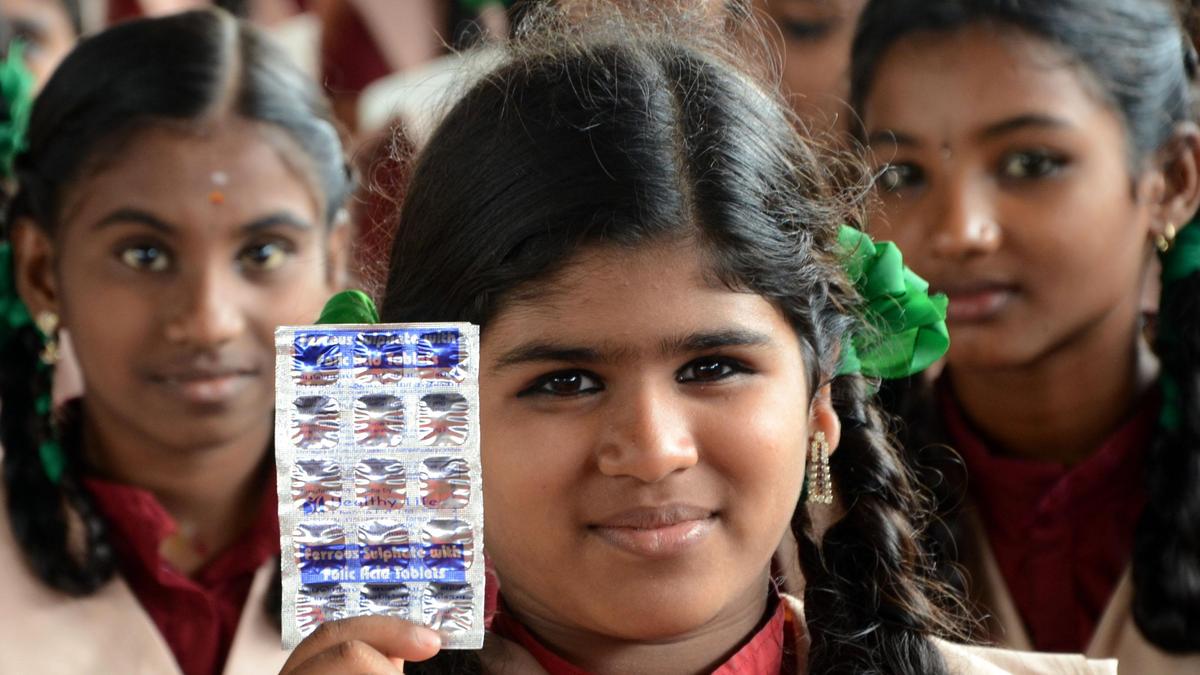
The question is not whether the amount of iron is adequate, but whether it is absorbed adequately. File photograph used for representational purposes only India has had decades of unchanged high anaemia prevalence in women and children that has historically been thought to be due to iron deficiency. This has led firstly to an iron and folic acid (IFA) tablet supplementation targeted at women and children, and secondly to fitful implementation of mandatory fortification of staple foods. IFA is a ‘precision’ strategy, applying as it does to the vulnerable population it is intended for, while fortification is a broad strategy that applies to the entire population. The latter works in controlled settings such as clinical trials, but has not worked in real-world settings, and might have adverse effects when given to those it is unintended for.The reason for pivoting: anaemia is mistakenly conflated with iron deficiency In India. The evidence is otherwise: in national Indian surveys, it has been shown that iron deficiency is not the major cause of anaemia. Indeed, fully one-third of anaemia cases demonstrate no micronutrient deficiency or obvious cause. Even so, giving iron should have sorted out those who did have iron deficiency anaemia, and reduced the general anaemia prevalence. While this could be a problem with inefficient programme implementation, two important questions arise: is there is really a deficiency in dietary iron intake in India? And is the administered iron being adequately absorbed and utilised for haemoglobin formation? Published - November 11, 2026 03:26 pm IST
Anaemia prevention in India: pivoting towards better multidimensional strategies
Full Article
Original Source
Read the full article at Thehindu →KhanList aggregates and links to publicly available news content. We do not host full articles from third-party sources. Always verify important information with original sources.