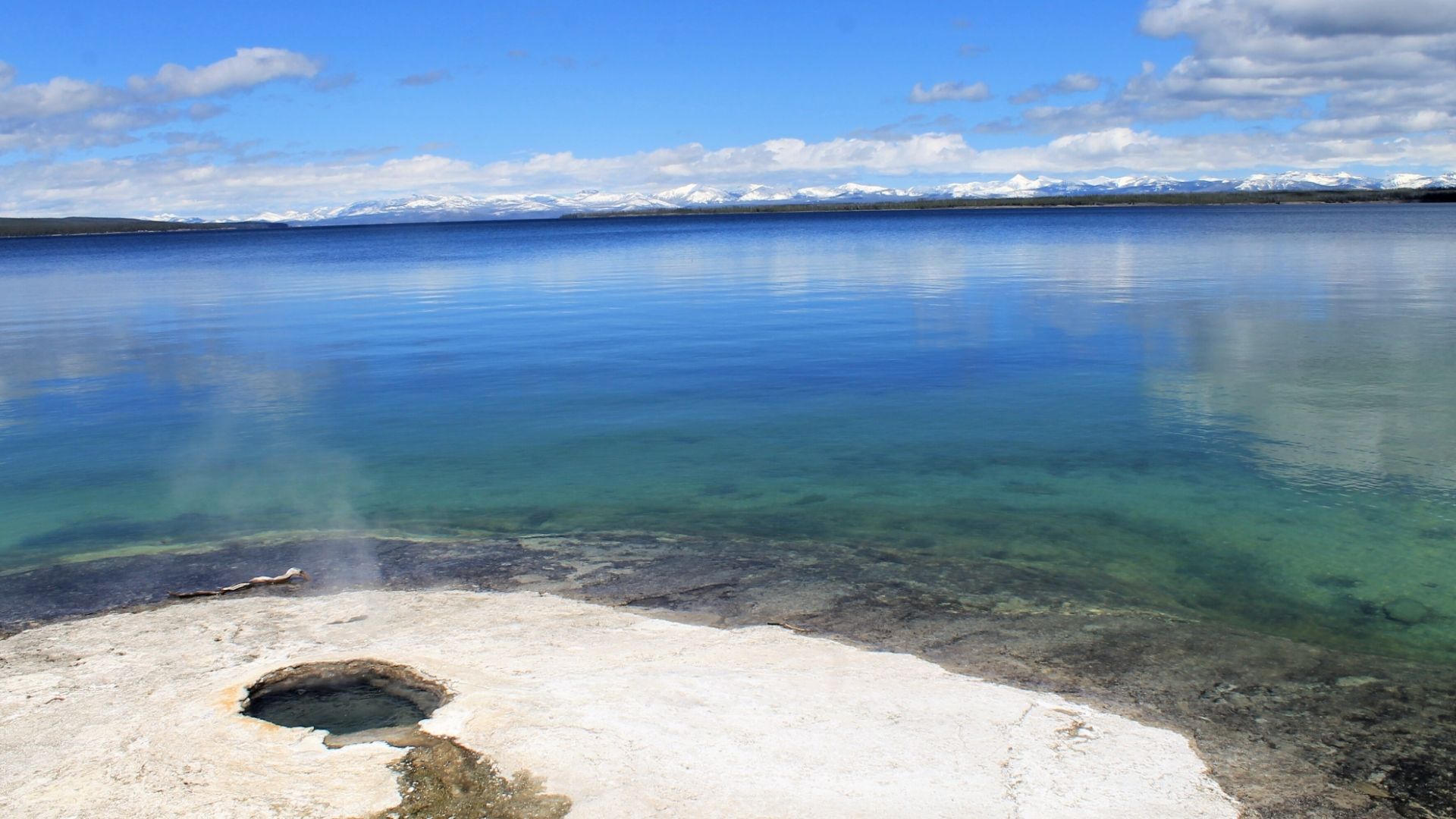
Yellowstone National Park is famous for its geysers, hot springs, and dramatic landscape. However, beneath the park lies an enormous volcanic system capable of producing eruptions far larger than those associated with conventional volcanoes. So, could Yellowstone erupt again? Yes. But scientists say the next eruption is unlikely to be the civilization-ending “supereruption” often depicted in films and online speculation. A smaller lava flow or localized hydrothermal explosion is far more likely. Yellowstone remains an active volcano Yellowstone sits above a hotspot where heat from deep inside Earth melts rock beneath the crust. This heat drives the park’s geysers and hot springs while producing frequent earthquakes and gradual changes in the ground. The volcano has experienced three exceptionally large, caldera-forming eruptions over the past 2.1 million years. The most recent occurred approximately 631,000 years ago, while its latest lava flow took place about 70,000 years ago. This history means Yellowstone is considered active rather than extinct. However, volcanoes do not erupt according to fixed schedules. The idea that Yellowstone is “overdue” is therefore misleading. The US Geological Survey (USGS) says there is currently no evidence that enough eruptible magma has accumulated beneath the park to support another supereruption. As of August 2026, Yellowstone’s alert level remains at “Normal,” with seismic activity and ground deformation at background levels. USGS monitoring data recorded 68 earthquakes during July, the largest measuring magnitude 3.3. Small earthquakes are common around Yellowstone and do not necessarily indicate that magma is rising. Similarly, changes in geyser activity or ground elevation are expected in such a large and dynamic hydrothermal system. What would a likely eruption look like? If Yellowstone erupts again, the most probable outcome is not a continent-spanning explosion. It would instead produce a lava flow involving rhyolite or basalt, potentially accompanied by an explosive phase releasing ash and pumice. Since Yellowstone’s last caldera-forming event, the region has experienced approximately 80 comparatively nonexplosive eruptions, most of which produced lava flows. According to the USGS, a similar event today would severely disrupt the national park but would probably threaten relatively few lives, provided the affected area was evacuated. A hydrothermal explosion is another possibility. These events occur when extremely hot underground water suddenly turns into steam, expands, and blasts apart the surrounding rock. Small explosions happen within the park every few years and generally present localized dangers. Scientists would also expect an impending volcanic eruption to produce warning signs. These could include intense earthquake swarms, rapid ground deformation, changing gas emissions, and unusual heat flow. Yellowstone is monitored using seismometers, GPS stations, satellite observations, and instruments that track water and gas chemistry. What if a supereruption occurred? A full-scale supereruption would be an entirely different scenario. It could expel more than 1,000 cubic kilometres of material and send an ash plume tens of kilometres into the atmosphere. Areas surrounding Yellowstone in Wyoming, Montana, and Idaho would face the greatest destruction. Pyroclastic flows – fast-moving clouds of scorching gas, ash, and rock – could devastate territory near the caldera. Ash would spread much farther across the United States, although its depth would vary with wind and weather. Heavy deposits could collapse roofs, contaminate water, damage machinery, bury crops, disrupt power networks, and make roads difficult to use. Even thin ash can damage aircraft engines, potentially grounding flights across large areas. Agriculture and supply chains would also face major disruption. Ash could damage farmland and livestock operations across the western and central US, while closed airports, blocked roads, and interrupted rail networks would affect the wider economy. Sulfur-rich gases reaching the upper atmosphere could reflect sunlight and temporarily cool the climate, disturbing rainfall and reducing harvests worldwide. The USGS says such climatic consequences could persist for years or possibly decades. Nevertheless, this represents Yellowstone’s most extreme and least likely scenario. Yellowstone can erupt again, but there is no evidence that a supereruption is imminent.Its most realistic hazards remain localized hydrothermal explosions, earthquakes, and the remote possibility of a smaller volcanic eruption.Recommended ArticlesGet the latest in engineering, tech, space & science - delivered daily to your inbox.Atharva is a full-time content writer with a post-graduate degree in media & amp; entertainment and a graduate degree in electronics & telecommunications. He has written in the sports and technology domains respectively. In his leisure time, Atharva loves learning about digital marketing and watching soccer matches. His main goal behind joining Interesting Engineering is to learn more about how the recent technological advancements are helping human beings on both societal and individual levels in their daily lives.
America’s sleeping giant: Could Yellowstone unleash another super eruption?
Full Article
Original Source
Read the full article at Interestingengineering →KhanList aggregates and links to publicly available news content. We do not host full articles from third-party sources. Always verify important information with original sources.