
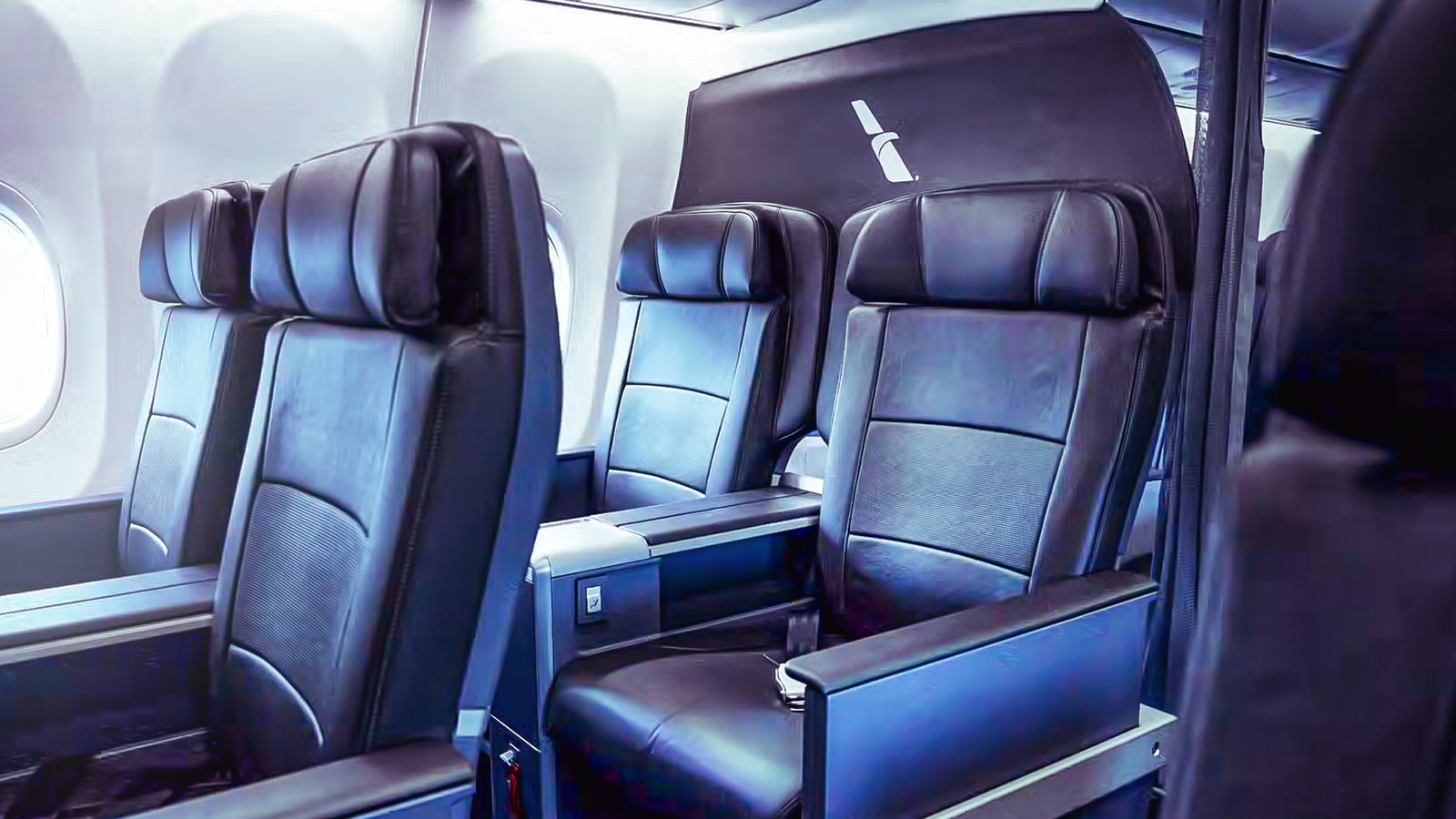
Published Nov 13, 2026, 1:00 PM EST Jasper Yu-Dawidowicz is a New York City-based aviation journalist with over seven years of journalism experience across different publications. Currently an undergradate student, Jasper is pursuing dual degrees in Professional Flight and Aviation management, completing his flight training as part of Purdue's part 141 R-ATP eligible program. In 2017, American Airlines made the consequential decision to remove seatback entertainment (IFE) screens across its mainline narrowbody fleet. The decision, shaped by the belief that the future of inflight media would be on passengers' own devices, sharply differed from that of American’s main US competitors. What initially appeared to potentially be a differentiator amongst the US Big Three eventually led to the Dallas-based carrier struggling to match the domestic passenger experience offered by United Airlines and Delta Air Lines. Nearly a decade later, American has officially reversed its 2017 strategy, announcing plans to install next-gen seatback displays throughout its entire fleet. While American’s new systems will represent a significant improvement, the rollout will not begin until 2028, with retrofits continuing into the early 2030s. By then, American will have spent nearly a decade playing catch-up on a passenger amenity its competitors continued investing in. American Airlines’ 2017 Decision To Abandon Seatback Screens When American Airlines made the consequential decision to move away from traditional inflight entertainment screens in 2017, the decision was not entirely unreasonable. With the arrival of 100 Boeing 737 MAX aircraft beginning that year, the airline announced that these new planes would not feature seatback screens. Instead, the Dallas-based carrier chose to install personal device holders in both first class and economy, encouraging passengers to use their own smartphones, tablets, and laptops to access the airline’s large entertainment library with various movies and TV shows to watch onboard. At the time, American, the largest airline in the United States that year by available seat-miles (ASM), with nearly 244 billion ASMs accounting for 21.1% of the US airline industry, according to the US Department of Transportation, argued that more than 90% of its passengers already traveled with a personal electronic device that could be used to stream movies and TV shows. The airline also doubted the long-term value of installing IFE hardware that would have to be frequently updated with advances in digital technology. Maintaining hundreds of individual screens across the airline’s fleet of over 900 aircraft also promised to add millions in installation and maintenance expenses as well as additional fuel costs due to the inherent weight associated with physical inflight entertainment systems. What started with just incoming Boeing 737 MAX 8 deliveries quickly spread to other aircraft. Newly delivered MAX 8s and A321neos were delivered without physical screens, and the carrier began work to remove existing entertainment screens from its Boeing 737-800s and Airbus A321s, replacing them with the same simple device holders onboard its newest aircraft. While this standardization across its narrowbody fleet helped reduce the complexity of its onboard entertainment hardware, American’s decision also removed an amenity that most passengers had come to expect when flying with full-service legacy carriers. American Never Fully Delivered On BYOD Credit: American Airlines There is an important distinction between the idea of bring-your-own-device (BYOD) entertainment and how American implemented it. BYOD can, in some cases, be an effective alternative to traditional seatback IFE systems, particularly as smartphones and tablets became increasingly capable through the 2010s and into the 2020s. However, the strategy heavily relies on passenger preference and expectations, as well as other factors like reliable internet connectivity, charging options, and sufficient personal space to use personal devices throughout the flight. American’s short-haul cabins did not consistently deliver the complete experience needed to make BYOD successful. Although the airline installed device holders and power outlets on many of its aircraft, the lack of a dedicated entertainment display meant passengers had to rely on their own hardware. Travelers with older devices (or no device at all), limited storage for downloading movies, or low battery levels and forgotten charging cords were left with no entertainment alternative, which was particularly punishing since many of American’s domestic routes can stretch over six hours from coast to coast. Families traveling with children also had to bring multiple devices to keep kids and parents busy throughout the flight. Another factor, particularly for seasoned travelers, was the expectation of seatback screens, especially given American’s digital investments in its long-haul widebody aircraft. Passengers could board one of American’s retrofitted Boeing 787-9s with 4K IFE displays at every seat and connect onwards to a 737 with no screen at all. This inconsistency in the onboard product can, to some, make it seem that American’s entertainment strategy was less about modernization and more a cost-saving measure aimed primarily at its domestic network. Delta & United Took A Vastly Different Approach Credit: United Airlines While American was moving away from seatback entertainment, its two main competitors, Delta Air Lines and United Airlines, were making vastly different decisions about the direction of their inflight entertainment strategies. Delta maintained its investment in traditional inflight TVs, keeping screens onboard throughout its domestic narrowbody and international widebody fleets. This allowed Delta to continue to offer passengers a consistent IFE experience across its fleet, with improvements coming gradually as the carrier accepted new aircraft deliveries, like A321neos, A350s, and soon Boeing 787s and 737 MAX 10s. United, meanwhile, initially considered an approach largely similar to American, with a heavy emphasis on passengers' own personal entertainment devices. However, the Chicago-based airline eventually reversed course and, in 2021, introduced its United Next cabin strategy, which includes plans to install brand-new, modern seatback entertainment screens across its entire fleet. This is especially noticeable on United’s newest aircraft, with its “elevated interior” 787-9 aircraft coming equipped with 13-inch 4K OLED touchscreen displays in the economy cabin, 16-inch screens in Premium Economy, and up to 27” 4K OLED displays in United Polaris, the largest screens on any US-based carrier. What sets United apart even further from American, however, is how much it has invested in its other digital technology, even as it continues to spend millions on seatback screens. As part of the United Next strategy, United’s award-winning app provides access not only to countless travel features, like visual checked bag trackers, automatic rebooking options, and more, but also integrates inflight entertainment, so passengers can stream from their mobile devices if they choose. The carrier also was the first of the “Big Three” US airlines to announce free Starlink Wi-Fi across its entire fleet, a decision American only just recently made as well. How American's Entertainment Gap Became A Competitive Disadvantage Credit: Wenjie Zheng | Shutterstock The difference between American and its competitors became increasingly noticeable as inflight entertainment evolved beyond simply offering movies and TV shows. Travelers today often want to use multiple devices simultaneously, whether that means watching a movie on a seatback screen while texting on their phone or getting some work done on a laptop. American’s screen-free approach forced passengers to choose between their personal devices and the entertainment offered by the airline, rather than allowing them to use both. As Delta and United continued investing in their onboard entertainment offerings, this strategy became increasingly difficult to justify. Ultimately, the problem extended beyond the entertainment itself and became one of brand perception. Following its merger with US Airways, American adopted the slogan “Going for Great,” positioning itself as America’s premium airline. However, compared with Delta and United, American’s Project Oasis cabins increasingly resembled the more basic interiors associated with low-cost carriers like Frontier and the now-defunct Spirit Airlines. The contrast is particularly noticeable for passengers connecting from an international flight to a regional American service. After experiencing the airline’s Flagship Business cabin, travelers can find themselves onboard a narrowbody aircraft with no seatback entertainment at all, not even in first class. While domestic economy cabins are not expected to offer the same product as international business class, passengers still expect a consistent level of quality across an airline’s network. By removing seatback screens, American created a noticeable gap between the experience it wanted to sell and the one many US passengers actually received. 9 Years Later: American Finally Reverses Course With 4K Seatback Screens Credit: American Airlines On August 18, American announced one of its most significant narrowbody cabin upgrades in years, committing to reinstall seatback entertainment screens at every seat across more than 800 mainline single-aisle aircraft. This will include all of American’s 406 Boeing 737s, 318 Airbus A321s, 48 Airbus A320s and 132 Airbus A319s, the latter of which the carrier just finished stripping screens from this summer. The new systems will feature 4K displays, Bluetooth audio pairing, USB-C fast charging, enhanced interactive flight maps and personalized entertainment recommendations for passengers signed in to their AAdvantage account. The displays are expected to be among the largest offered on narrowbody aircraft in North America, rivaling both United and Delta in that regard. Milestone American Airlines' Entertainment Strategy January 2017 American announces screen-free Boeing 737 MAX deliveries 2017 onward Project Oasis removes screens from existing narrowbody aircraft August 2026 American announces 4K screens across more than 800 narrowbodies 2027 American's planned Starlink installation program begins 2028 New narrowbody deliveries and existing fleet retrofits expected to begin Early 2030s American expects fleetwide screen installations to be completed However, passengers should not expect the new screens to appear throughout American’s domestic fleet immediately. New Airbus and Boeing single-aisle deliveries are expected to begin arriving with the updated entertainment systems in 2028. Existing aircraft will also undergo retrofits, with the airline expecting the entire installation program to be completed by the early 2030s. This means that passengers will encounter a mixture of screen-equipped and screen-free aircraft for several more years, depending on the type of aircraft operating each route. Screens, Starlink & More Premium Seats: Can American Close The Gap With Delta & United? Credit: American Airlines The return of seatback entertainment is part of a broader effort by American to improve its domestic offering and compete more effectively with its largest rivals. Alongside the entertainment announcement, the airline revealed plans to increase premium and Main Cabin Extra seating from approximately 25% to 40% of its narrowbody capacity. The changes also include additional First Class seating, expanded extra-legroom options with 33-inches (84 cm) of legroom, and upgraded cabin interiors. These investments suggest American is increasingly focused on attracting premium passengers while improving the overall experience across its entire network. Inflight connectivity will also become an important part of American’s entertainment strategy. In January, American Airlines launched free high-speed WiFi across virtually its entire domestic network, following in the steps of Delta, United, and JetBlue. Just eight months later, however, American expanded its WiFi plans, announcing it would equip its entire mainline fleet of more than 1,000 aircraft with Starlink’s lightning-fast internet service. Combined with the return of seatback screens, American’s investment in inflight technology promises passengers the best of both worlds. Ultimately, American’s original BYOD strategy was not flawed; rather, it did not evolve with consumer preferences, especially after the pandemic. While American spent millions stripping its aircraft of entertainment screens, the airline's future over the next decade promises to compete more strongly with Delta and United on technology and connectivity.
American Airlines' Passenger BYOD Hopes Failed It Long Term As A Domestic Competitor
Full Article
Original Source
Read the full article at Simpleflying →KhanList aggregates and links to publicly available news content. We do not host full articles from third-party sources. Always verify important information with original sources.