
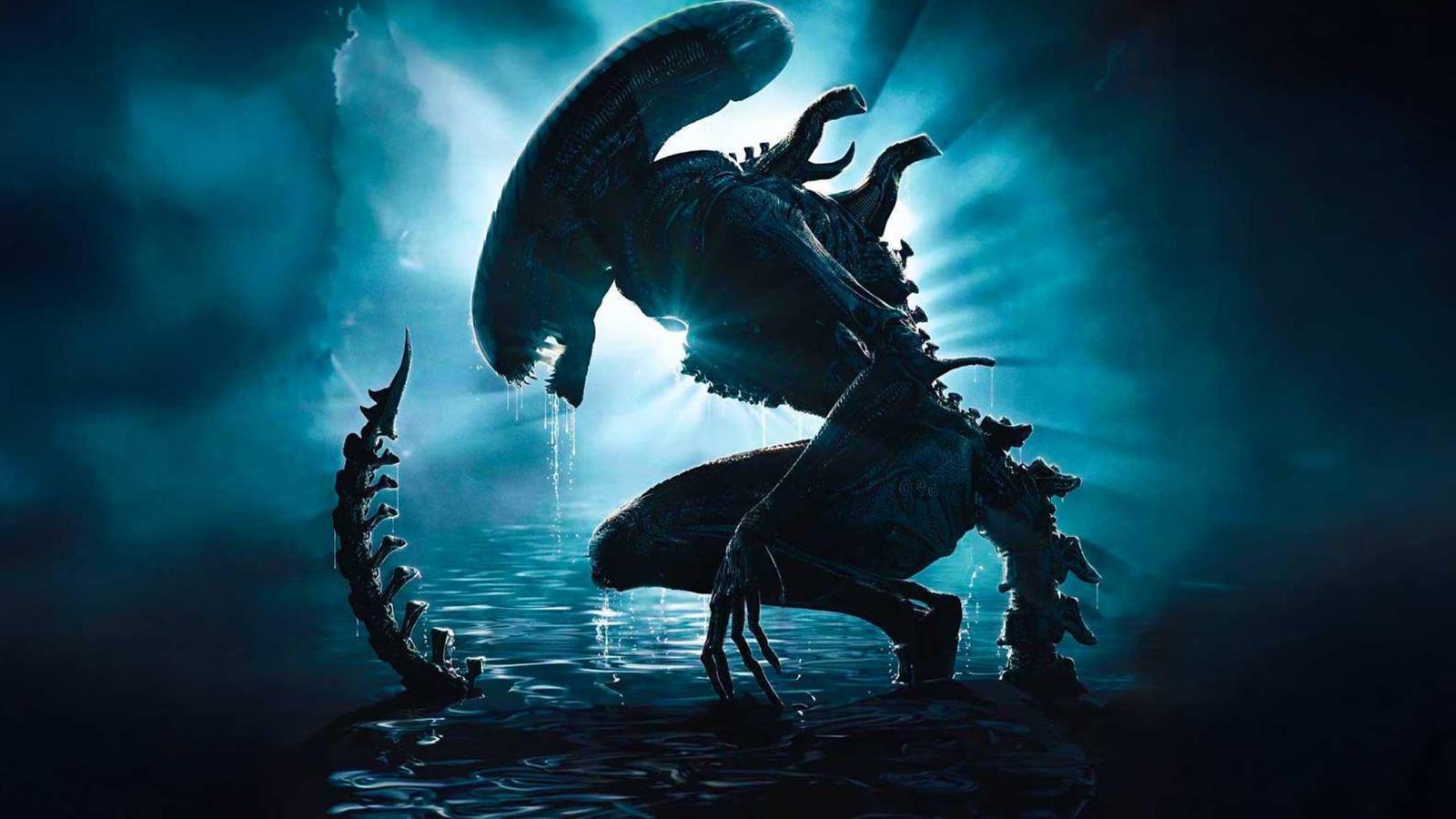
Published Oct 31, 2026, 7:30 PM EDT Since 2019, Kevin Erdmann has been one of Screen Rant's Senior Staff Writers, covering all kinds of Superhero and Star Wars media with Easter egg breakdowns, theory pieces, breaking news, and more. A huge Star Wars & MCU fan, Kevin also loves Batman (because he's Batman), but could talk for hours about why Nightwing is DC's greatest hero. With 8 years of total experience covering entertainment and pop culture, Kevin has gotten the chance to interview top creatives and talent, and has also attended major media events like Disney's D23 convention. Majoring in Cinema Studies with a minor in Comics and Cartoon Studies from the UofO, Kevin lives in Oregon with his wonderful wife, adorable dog, and sinister cat who is no doubt currently plotting his demise. Few sci-fi monsters are more terrifying than the Alien franchise's Xenomorph and its many forms. Since its original debut in Ridley's Scott first Alien film, the Xenomorph and its evolution now includes a truly massive list of deadly organisms and horrifying biological offshoots featured in the movies, shows, games, comics, and more. Across movies and television alone, the Alien franchise has featured the Xenomorph's uniquely distinct (and deadly) stages of its life cycle, variations created by non-human hosts, experimental hybrids, proto-species, and more. While some are far more dangerous than others, all are incredibly dangerous. From the earliest stages of the species' life cycle to its most powerful hybridizations, here are the 17 types of Xenomorph and related creatures from the Alien franchise's movies and TV shows, ranked from least to most threatening. 17 Xenomorph Egg Although the Xenomorph egg is the start of the deadly life cycle, it is less of a threat on its own compared to other stages and variants on this list. It simply has to wait for a victim to approach before opening and releasing a facehugger, making the egg dangerous not for what it can do, but specifically what it contains (as well as the creature who laid the egg in the first place and if they're still around) 16 Juvenile Xenomorph Revealed in Alien: Romulus as a newly revealed cocoon stage of the life cycle between chestburster and full-grown drone. However, the juvenile isn't defenseless, as it can still attack with its tail and spurt acid blood, as seen in Romulus and Bjorn's death. 15 Chestburster The chestburster is the infant stage of a Xenomorph. After violently emerging from its host's chest, the chestburster is small, lacking strength, and will often seek to hide until it can rapidly grow into a full-sized adult. However, it does still have speed and sharp teeth, allowing if to be quite aggressive if cornered. 14 Hammerpede Introduced in Prometheus, the Hammerpede is a snake-like organism created via the Engineers' black pathogen. Essentially a prototype to the Facehugger, Hammerpedes have been shown to aggressively coil around limbs and force their way into hosts' mouths. Combined with acidic blood, a Hammerpede is incredibly dangerous, yet not unstoppable. 13 Facehugger Custom Image by Sophie Evans Facehuggers are among the most effective organisms in the Xenomorph's early life cycle. Capable of leaping onto victims, the facehugger wraps its legs around a person's head before using an appendage to implant an embryo that will eventually become a chestburster. Likewise, their speed makes them incredibly difficult to evade, and trying to remove a facehugger is extremely dangerous due to its acidic blood. Even so, they're still on the low end of the overall threat level. 12 Trilobite Credit: MovieStillsDB The Trilobite from Prometheus is a very large organism produced after Elizabeth Shaw becomes pregnant with an unusual pathogen-created creature. Much bigger than a traditional facehugger, this proto version uses multiple tentacles to capture and restrain its prey, and was developed inside a human host (Shaw) not unlike a chestburster, effectively giving it a reversed lifecycle. As seen in the movie, the Trilobite notably attacks an Engineer and impregnates him before dying following the completion of its biological task. 11 Runner Alien 3's Runner is a Xenomorph born from a quadrupedal host, like a dog, and thus moves primarily on four legs while also being smaller than the average Xenomorph drone. Having increased speed, the Runners are better suited for chasing prey through the narrowest of spaces. Likewise, the Runner also has the same claws, tail, and acid blood, though no dorsal tubes. However, it's doubtful that the Runner has the same strength and durability as a standard drone. 10 Deacon The Deacon appears at the end of Prometheus, emerging after the Trilobite impregnates an Engineer. No doubt connected to the more familiar Xenomorph, its appearance is noticeably different as a product of the black pathogen's unpredictable effects, having an inner mouth and elongated head but no tail. Given the close resemblance, it follows that the Deacon was likely as formidable as a classic drone or warrior, though it's hard to say without any direct evidence in the franchise. 9 Neomorph While not a Xenomorph per se, the Neomorph is a close relative and by far one of the most disturbing creatures introduced in Alien: Covenant and the entire franchise. Created by David through exposure to the black pathogen, the Neomorph has pale skin with a more distinctive appearance. Likewise, its reproductive process begins with spores infecting hosts before Neomorphs violently emerge from various parts of the body depending on where the infection originated, and begin attacking nearby victims almost immediately. 8 Protomorph Also introduced in Alien: Covenant as a creation of David on Planet 4, the Protomorph is effectively a precursor to the more familiar Xenomorph design, with very subtle differences. Created through David's ongoing experiments with the black pathogen, it shares many characteristics with the standard Xenomorph Drone/Warrior variant, though it's been suggested that this earlier species was perhaps more agile.
All 17 Types Of Xenomorph In Alien Movies & TV Shows, Ranked By Threat Level
Full Article
Original Source
Read the full article at Screenrant →KhanList aggregates and links to publicly available news content. We do not host full articles from third-party sources. Always verify important information with original sources.