
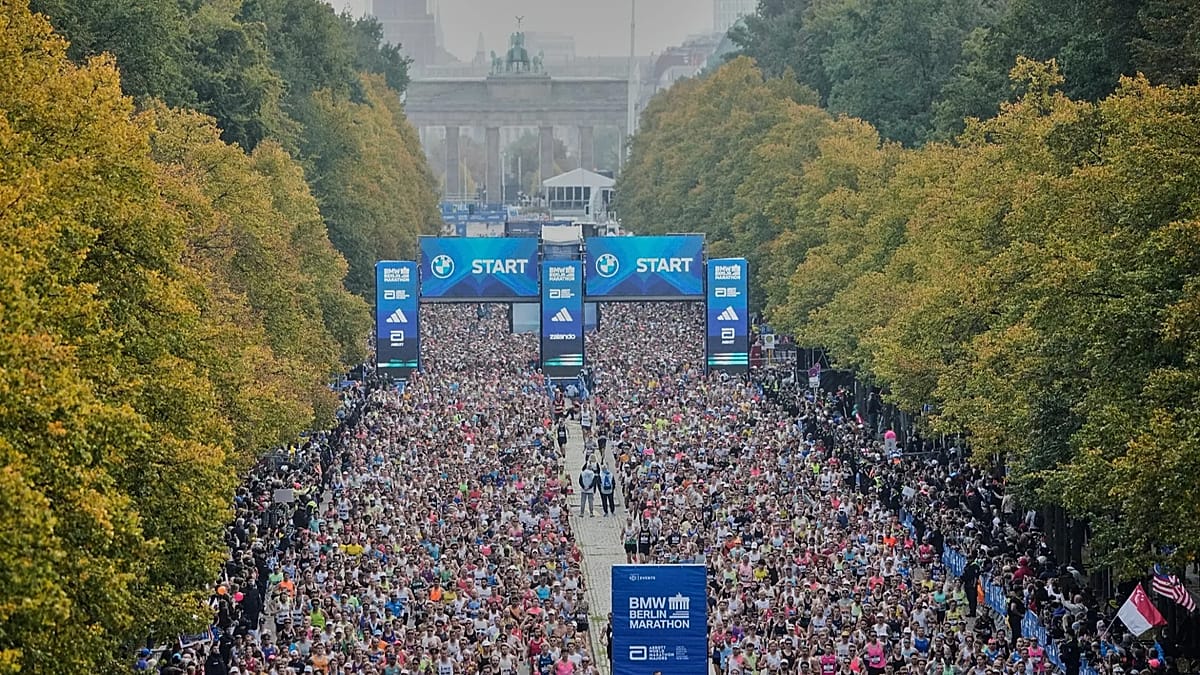
Air pollution added minutes to marathon runners' finishing times across six major races, a new study has found. ADVERTISEMENT ADVERTISEMENT Runners in the Berlin, Boston, Chicago, London, New York City and Tokyo marathons have seen their finishing times affected by air pollution levels on race days in recent years. Researchers at the University of Leicester analysed more than 2.7 million race performances from some of the most popular World Marathon Majors, which host thousands of athletes every year, across editions held between 2010 and 2024. “From our analysis of more than two million marathon runners, we observed that levels of nitrogen dioxide were strongly associated with their finishing time,” said James Donaldson, the study’s lead author. For every microgram-per-cubic-metre (µg/m3) increase in nitrogen dioxide, finishing times were 1.43 minutes slower for men and 1.56 minutes slower for women, the researchers found. On a high-pollution race day when nitrogen dioxide levels reached 10.3 µg/m³ compared with a low-pollution level of 5.2 µg/m³, finishing times were around seven to eight minutes longer. The researchers also analysed fine particulate matter — PM2.5 — but found no statistically significant association with finishing times. The highest median race-day concentration of nitrogen dioxide was recorded in London at 10.9 µg/m³, and the lowest in Berlin at 6.1 µg/m³. The good news, that the situation got better in London. “Despite the known harms of air pollution, it is important to note that levels of nitrogen dioxide and PM2.5 on marathon day in London appear to have fallen substantially since the 2010 event, which is great news for heart health,” said Bryan Williams, chief scientific and medical officer at the British Heart Foundation, which supported the study. Non-elite runners hit the hardest The effect was greater among recreational runners, whose finishing times rose by 2.12 minutes per 1 µg/m³ of nitrogen dioxide, compared with 0.34 minutes for elite runners. Nitrogen dioxide comes primarily from the burning of fossil fuels by human activities, such as cars, trucks and factories, as well as from natural processes and chemical reactions in the air. It has been linked to impaired lung function, airway inflammation and adverse cardiovascular responses. The authors identified several potential explanations for these patterns. As well as spending longer on the course, slower runners are more likely to train in the same urban areas where marathons are held, accumulating chronic pollution exposure, while elite runners typically prepare in cleaner environments and compete internationally, the authors wrote. Donaldson also noted that “the physiological adaptations that result from the high-intensity training undertaken by elite athletes may offer some protection against the harmful effects of air pollution”. “As well as this, the fact remains that exercise is still very beneficial for your cardiovascular health - it can reduce the risk of heart and circulatory diseases by up to 35 per cent,” said Williams, adding that the findings should not put people off running.
Air pollution is slowing down marathon runners, study finds
Full Article
Original Source
Read the full article at Euronews →KhanList aggregates and links to publicly available news content. We do not host full articles from third-party sources. Always verify important information with original sources.