
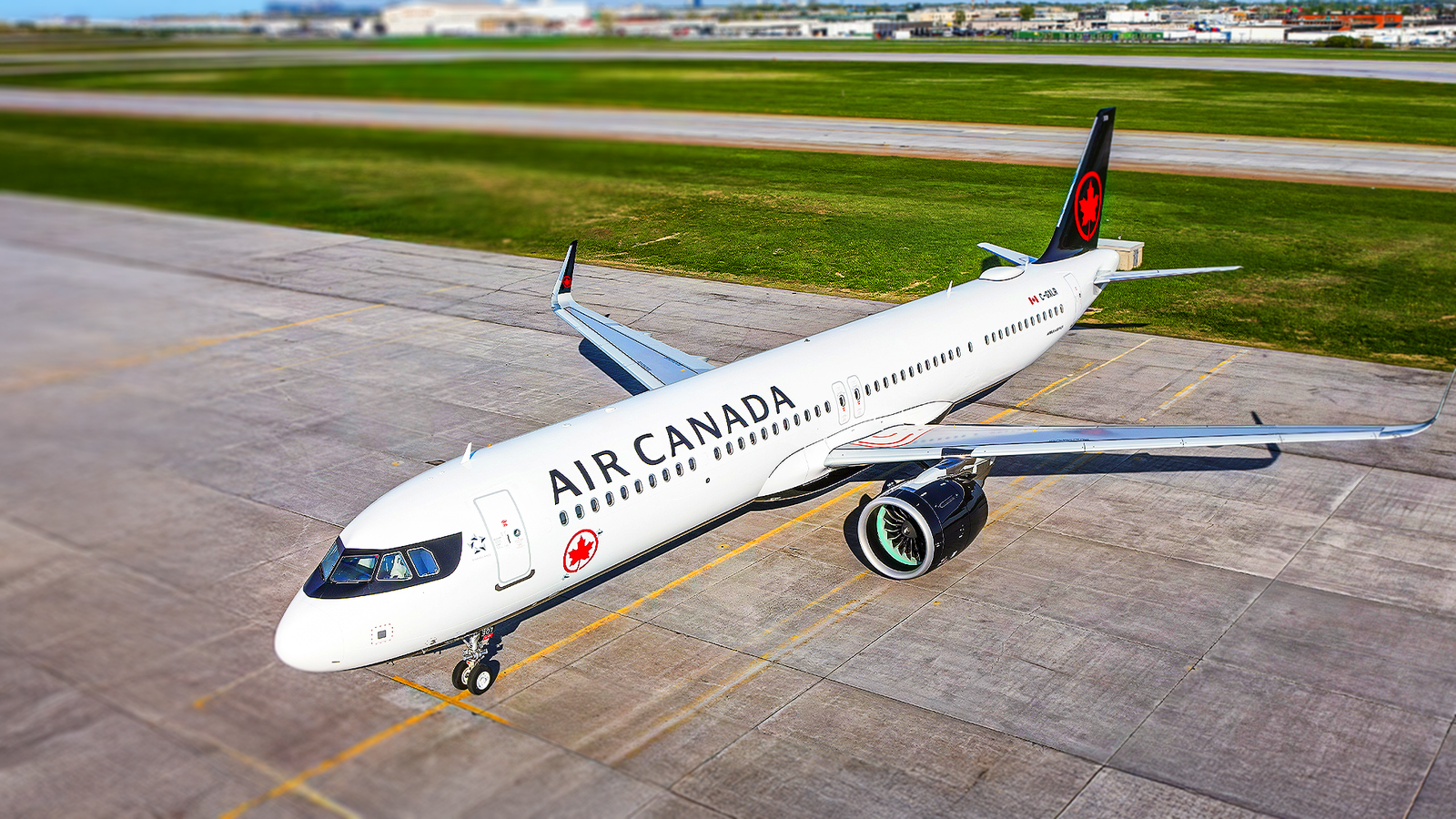
Published Aug 29, 2026, 11:00 AM EDT Airline and Airport Management Graduate, Student Commercial Pilot and Commercial Aviation Writer. Based in London & Nagoya Replacing a widebody jet on a premier long-haul corridor with a single-aisle aircraft sounds like a masterclass in fuel efficiency, but Air Canada quietly abandoned that exact strategy before the first passenger even boarded. When schedule filings initially showed the carrier deploying its brand-new Airbus A321XLR on AC852 between Toronto Pearson(YYZ) and London Heathrow(LHR), it appeared to begin the evolution with which North American network carriers would manage top-tier transatlantic trunk routes. Within months, however, Air Canada pulled the narrowbody from the schedule, restoring twin-aisle Boeing 777 and 787 Dreamlinerservice to protect high-density seat inventory and premium belly-freight capacity. There are now, of course, doubts over whether a narrowbody with an unprecedented range of 4,700 nmi (8,704 km) actually succeeds on high-yield, slot-constrained mega-hubs, or is its real financial power confined to secondary markets? As network planners at Air Canada, United Airlines, and American Airlines recalibrate their narrowbody transatlantic deployments, the decisions made on routes connecting Toronto, Montreal, and London will set the template for single-aisle international expansion across the North Atlantic. Where The A321XLR Can Prove To Be Costly Credit: Air Canada Using the A321XLR on a route like Toronto to London Heathrow solves one financial equation while severely compromising two others. The A321XLR's appeal lies in its unit-cost advantage: it uses up to 30% less fuel per seat than previous-generation jets on sectors over 3,500 nautical miles (6,482 km). However, at slot-constrained hubs like London Heathrow, landing slots are far too scarce to waste on aircraft with limited total passenger counts. Air Canada’s dual-class A321XLR layout seats 182 passengers, whereas the 777-300ER and A330-300offer between 297 and 400 seats. Swapping a widebody for an A321XLR on flight AC852, Air Canada slashed its available seat capacity on that specific departure by more than half overnight. On primary trunk routes where high-volume business travel and connecting traffic from across Canada fill widebody cabins year-round, capping capacity at 182 seats creates an immediate revenue ceiling. Furthermore, single-aisle airframes lack the underfloor container volume required for heavy palletized cargo, stranding thousands of pounds of high-margin freight that widebody lower decks accommodate with ease. The initial schedule assignment demonstrated that even advanced long-range narrowbodies cannot simply act as one-for-one replacements for widebody airframes on tier-one corridors. This paradox leads Air Canada’s network planners to re-evaluate where the A321XLR's true economic sweet spot lies. The Revenue From Below Credit: Airbus Network planners calculate route viability by analyzing total payload capacity rather than passenger ticket sales alone. On a high-density, year-round corridor, lower-deck cargo freight generates millions in supplemental revenue, as per Air Cargo Week, offsetting seasonal drops in passenger demand. Widebody aircraft like the 777-200LR and 787-9 feature expansive lower holds that accommodate LD3 cargo containers and palletized freight. In contrast, the A321XLR features a narrow, unpalletized hold space that limits belly cargo to loose passenger luggage and minimal expedited freight, stripping away a critical revenue stream that helps sustain year-round daily frequencies. To achieve its extended operating range of 4,700 nautical miles (8,704 km) to 5,400 nautical miles (10,000 km), Airbus engineered the A321XLR with a permanently integrated Rear Center Tank (RCT) located directly behind the main landing gear well. The RCT holds up to 3,400 gal (12,900 L) of jet fuel to power eight-hour transoceanic legs, but its placement absorbs valuable lower-deck volume that would otherwise carry cargo. The A321XLR cargo hold is essentially maxed out once 182 passengers check their luggage, which, on a premium freight route like London Heathrow, leaves tens of thousands of pounds of high-yield cargo on the tarmac and invalidates the fuel-burn reduction achieved by operating a single-aisle airframe from an economics standpoint. Failing to capture high-margin cargo yields on primary hub corridors highlights the structural boundary of long-range narrowbodies, despite the marketing. Removing the A321XLR from the Toronto–London Heathrow flight schedule confirms that single-aisle long-haul aircraft cannot displace widebodies on mature, heavy trunk routes. If lower-deck freight demands and slot limitations lock single-aisle jets out of established megahubs, network planners must find secondary point-to-point markets where lower operating costs create a distinct competitive advantage. What Is The Point Of The A321XLR? Credit: Air Canada A 182-seat long-range narrowbody delivers positive economics by opening markets on thin transatlantic corridors where widebodies carry excessive financial risk. Rather than forcing single-aisle aircraft into high-density megahub slots, network planners use the A321XLR to connect secondary city pairs that generate steady point-to-point passenger demand without requiring heavy lower-deck freight yields. Operating a single-aisle jet on these thin sectors cuts total trip costs by 45% compared to a twin-aisle widebody, allowing an airline to launch new long-haul destinations at significantly lower break-even load factors. This strategy came to life on June 17, 2026, when Air Canada launched a nonstop service from Montréal–Trudeau International Airport (YUL) to Palma De Mallorca Airport(PMI), spanning 3,282 nautical miles (6,078 km). The carrier subsequently expanded its single-aisle European footprint with transatlantic flights from Montreal to Toulouse, Edinburgh, and Dublin. By deploying its first A321XLR deliveries onto secondary leisure and regional business routes, Air Canada can capture point-to-point summer demand that would never justify assigning a 255-seat 787-8 or 300-seat 777-200LR. Thin point-to-point routes avoid the cargo and slot constraints of primary hubs; however, shifting long-haul flights to single-aisle aircraft creates a new financial challenge inside the passenger cabin. The trouble is that narrowbodies carry fewer seats on eight-hour flights, so airlines operating these aircraft must maintain exceptionally high ticket prices across both cabins to cover single-aisle operating overhead. Needing To Keep Load Factors High Credit: Airbus Single-aisle aircraft carry an inherently higher cost per available seat mile (CASM) than twin-aisle widebodies because fixed operational overheads, such as flight crew wages, navigation fees, and cockpit avionics, are distributed across significantly fewer seats. To offset this structural CASM penalty on eight-hour transoceanic sectors, the airline needs high revenue per available seat mile (RASM) through a heavy premium-cabin ratio. A 300-seat widebody can easily absorb a few empty business class seats thanks to sheer economy passenger volume, but missing just two or three executive bookings on a 182-seat single-aisle flight severely impacts the profit margin of the entire trip. Air Canada addressed this delicate yield balance by configuring its fleet of 30 Airbus A321XLR aircraft, comprising 15 direct purchases from Airbus and 15 long-term leased units delivering through 2029, with 14 lie-flat Signature Class suites and 168 economy seats. Taking delivery of its initial airframe in April 2026, the airline dedicated the forward section to direct-aisle-access suites in a one-by-one configuration, so that single-aisle premium travelers receive the same hard-product standards found on international widebodies. Those 14 Signature Class suites occupy nearly 30% of the passenger cabin floor space while representing under eight percent of total seat capacity, so maintaining high load factors in the front cabin at top-tier fares is the single most vital requirement for single-aisle long-haul profitability. Cabin Section Seat Capacity Floor Space Share Hard Product Specification Operational Financial Role Signature Class 14 seats ~30% of cabin floor Direct-aisle access lie-flat suites (1-1 layout) Primary RASM driver; offsets single-aisle CASM penalty Economy Class 168 seats ~70% of cabin floor Standard 3-3 layout with 4K IFE screens Baseline volume driver; covers direct operating fuel costs Relying on a tightly packed 182-seat layout to offset single-aisle unit costs assumes the aircraft can consistently carry full passenger loads across all four seasons. However, translating theoretical yield models into reliable daily flights becomes far more complicated when extreme summer heat, seasonal jet stream shifts, and runway performance constraints push single-aisle aircraft to their physical limits. When Operational Conditions Further Complicate Network Planning Credit: Air Canada Operational restrictions materialize when seasonal wind profiles and summer temperature extremes test the limits of narrowbody range. On westbound transatlantic crossings, strong winter jet streams that push headwinds above 100 kt (185 km/h) require heavy fuel loads, creating a difficult balance between fuel weight and payload capacity. Conversely, peak summer heat at European origin airports reduces air density, limiting maximum takeoff weight and creating scenarios where a single-aisle aircraft must choose between capping passenger seats or offloading checked baggage. A summer departure from Palma de Mallorca to Montreal, covering 3,282 nautical miles (6,078 km), illustrates these operational boundaries. When runway temperatures exceed 95°F (35°C) at Mediterranean gateways, the A321XLR’s dual CFM LEAP-1A engines face thrust limits that cap allowable departure weights. On severe westbound winter sectors, wind components can consume the aircraft's 4,700 nautical miles (8,704 km) nominal range buffer, creating the risk of an unscheduled fuel stop at Goose Bay or St. John's. These operating constraints show that long-range single-aisle jets need precise dispatch planning and active seasonal route management to realize their potential benefits. Because environmental variables can quickly erode operating margins, network planners must determine whether the aircraft can reliably sustain year-round long-haul service or must remain restricted to seasonal summer schedules. This is ultimately why Air Canada moved to take the A321XLR off its original deployment course; it simply was not sustainable. The Biggest Test Lies Ahead Credit: Air Canada Air Canada's swift departure from the Toronto–London Heathrow corridor with the Airbus A321XLR does not mark a failure of the platform, but rather a rapid calibration of its true commercial role. Rather than serving as a direct substitute for widebodies on high-capacity, freight-heavy trunk routes, the extra-long-range narrowbody is establishing itself as an agile market opener for secondary market expansion. How legacy transatlantic carriers balance single-aisle operational savings against lower-hold cargo losses will show whether the long-haul narrowbody remains a specialized secondary-market asset or fundamentally alters global route networks. The real test of this network philosophy will unfold as Air Canada takes delivery of its full order of 30 A321XLR aircraft through 2029. As 15 leased and 15 direct-purchased airframes join the fleet, it will become far clearer whether the carrier can sustain year-round, nonstop connections to secondary European destinations like Toulouse, Edinburgh, and Dublin without requiring seasonal widebody upgauges during peak winter months or suffering severe cargo trade-offs. With rival transatlantic operators including United Airlines and American Airlines close by and preparing to integrate their own long-range narrowbody fleets onto European sectors, the aviation industry will soon see if single-aisle long-haul flying expands beyond niche point-to-point corridors. Can airlines generate consistent year-round profits on thin transatlantic city pairs without the revenue safety net of widebody lower-deck freight holds?
Air Canada's Brand-New Airbus A321XLR Failed Its Highest-Profile Transatlantic Route Within Weeks
Full Article
Original Source
Read the full article at Simpleflying →KhanList aggregates and links to publicly available news content. We do not host full articles from third-party sources. Always verify important information with original sources.