
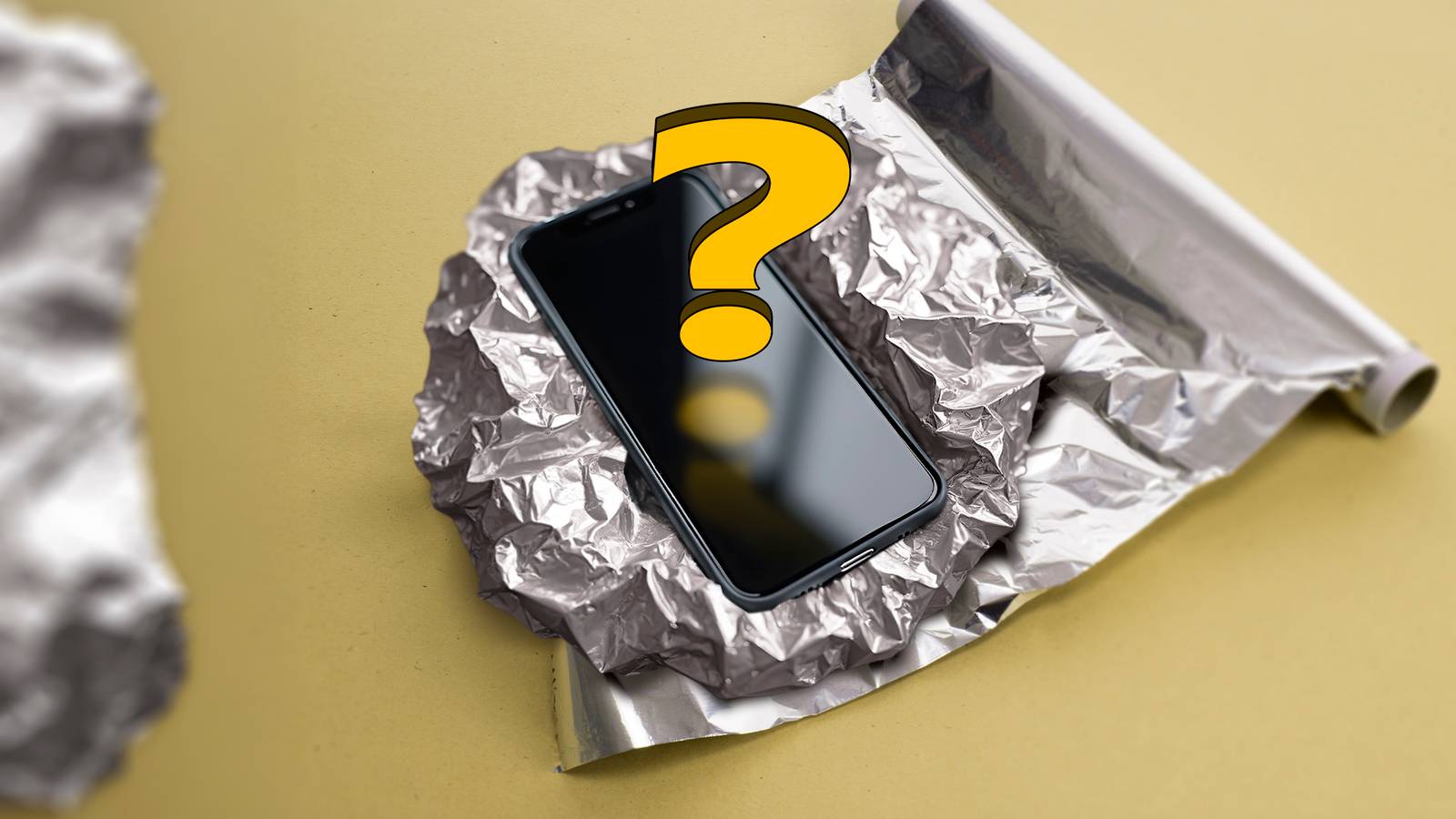
Published Aug 29, 2026, 12:30 PM EDT Ray discovered her passion for technology and writing at a young age. This combination led her to pursue a career in cybersecurity. She earned a bachelor's degree in this field, building on her lifelong interest in web technologies. After graduation, Ray began her career as a support engineer for DNS security startups, where her blend of technical skills and creativity proved valuable. Later, she transitioned into the exciting areas of threat intelligence and dark web research. Ray is also skilled at writing about technical topics, creating both technical documentation and content for product marketing. This mix of abilities makes her a versatile and valuable team member in various roles. Outside of work, Ray enjoys coding in Python to keep her skills sharp and loves hiking and experimenting with new recipes in her free time. Ever wondered what happens when you wrap your phone in tinfoil? I decided to try it out to see if there’s any truth—or benefit—to the idea. Why does foil block wireless signals? Absorption, reflection, and destructive interference Credit: Adam Davidson / How-To Geek Wireless signals are ultimately just radio waves, which are a type of electromagnetic wave. Metals, like aluminum foil, are electrically conductive, and can block or reflect radio waves that come into contact with them. So, if you surround something that can transmit or receive wireless signals with aluminum, it’ll block those signals. I wrapped my Android phone in aluminum foil For science! Since smartphones use built-in antennas to connect to the Internet via Wi-Fi or a cellular connection (as well as Bluetooth and GPS), wrapping the device in aluminum foil should block those connections. So, just for fun, I decided to try it out. I wrapped my Android phone with two layers of aluminum foil and used another device to call my WhatsApp account (which uses Wi-Fi or cellular data to make and receive calls). Did it ring? Nope, since these connections were blocked by the foil, the call didn’t go through. I also tried calling my phone through the regular cell network, and it did the exact same thing—nothing. It didn't receive texts either, as expected. Does wrapping your phone in tinfoil shield you from 5G or Wi-Fi? You don't need to do this Credit: Nathaniel Pangaro / How-To Geek Current scientific evidence does not indicate that regular exposure to 5G or Wi-Fi signals emitted from phones, cell towers, or routers is harmful to your health. Besides, these signals are emitted at a much lower power from your phone (compared to cell towers). Everything that we know about 5G tells us that we don't have to worry. On top of that, there's electromagnetic radiation (radio) waves literally everywhere. They are transmitted from large antennas used for radio and TV (usually located on tall towers or mountaintops), as well as the sun that our planet orbits. Without radio waves, we'd have no wireless communication, and the world would be closer to what it was like before the late 19th and 20th centuries when we began to use wireless technologies. So, in short, even if you somehow block internet signals, you can't stop radio waves from being around you. They're a component of both nature and modern society. Does aluminum foil protect your phone from getting hacked? You're better off adhering to basic security practices Since wrapping your phone blocks wireless signals, it can prevent remote hacking attempts temporarily; however, it's not a reliable or practical way to protect your phone from hacking, especially in everyday situations. If your device is already compromised with existing malware or a virus, it will not protect against that. Robust security includes using strong passwords and multifactor authentication, keeping software and apps updated on Android and iPhones, avoiding suspicious emails or links, and using built-in security available on your devices. Are there any benefits to wrapping your phone in aluminum foil? Kind of, but it depends on your profession Credit: Adam Davidson / How-To Geek From a security and privacy perspective, there is one benefit to doing this. Law enforcement and digital forensic teams will often place seized mobile devices into Faraday bags or foil-like envelopes that can block wireless signals. Storing the device like this can block wireless signals and prevent the device from being remotely accessed or wiped. This is because Faraday bags are made of conductive materials including thin layers of metals such as aluminum, copper, or nickel, or have a sheet of foil around them. One interesting fact is that a microwave also acts as a Faraday cage, so the same thing can be achieved by leaving a mobile device in a microwave (of course, don't turn it on). The metal grating in the window of microwaves is actually used to keep the microwaves from escaping outside it, for the purpose of safety and efficiency. This is also how RFID cardholders work, and these holders prevent external RFID readers from accessing the data stored on the embedded chips. This is just another example of the Faraday Cage concept. It's the same principle as microwaves except different frequencies are used. Leave the foil in your cupboard Wrapping your phone in tinfoil may block wireless signals, but there's no real benefit for regular everyday use. To protect yourself, stick to good security practices—and save the foil for leftovers.
Here's what wrapping your phone in aluminum foil does
Full Article
Original Source
Read the full article at Howtogeek →KhanList aggregates and links to publicly available news content. We do not host full articles from third-party sources. Always verify important information with original sources.