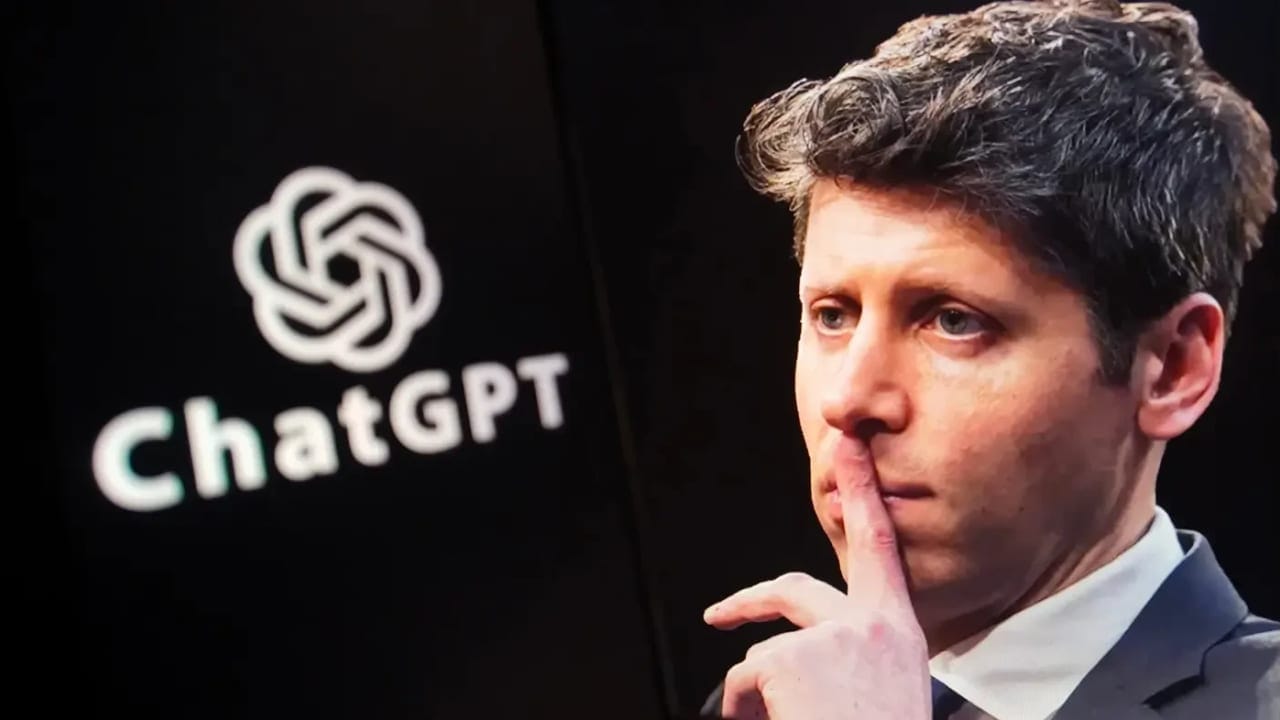
ByTOBIAS HOLCMANJULY 27, 2026 19:07Updated: JULY 27, 2026 20:28OpenAI CEO Sam Altman claimed on Friday that the company is currently working with artificial intelligence models at "the singularity point," which represents the moment when AI becomes better at generating results than humans can.And Altman's claims might not be unfounded, as Technion-Israel Institute of Technology Professor Yaniv Romano told The Jerusalem Post that he believes the singularity might have been reached, citing recent studies showing that AI models can solve mathematical problems humans can't."We are now in the singularity; this is the moment," Altman claimed during an interview with the Relentless podcast, adding that the idea of reaching this point was unthinkable ten years ago, being a "far-off dream at best, while now it's actually the moment that we used to talk about in a very not serious way.""What Altman says when talking about the singularity is that AI has become better than us at solving problems," Prof. Romano, who is the associate professor of Electrical Engineering and Computer Science at the Technion, said. "There is good evidence that it's already possible with current models.""There was a case when ChatGPT [OpenAI's main commercial AI model] was able to solve a math problem which was impossible to do by a human who is not highly trained to work on those problems," he added. "That's the most interesting part, that these results were reached while using publicly available software."AI is at the singularity point, but how can we verify itProf. Romano also told the Post that one point to consider when checking whether an AI has reached the singularity is to verify that the results are correct and not merely hallucinations."When we are checking for code or simple tasks, it is easy to understand where the AI made a mistake. But when talking about tasks that humans can't do under normal circumstances, then we start to have problems verification problems," he said."The models are capable of generating thousands of results that even the best mathematicians in the world would take years to get. And it takes an even longer time to verify that these results are actually correct, and not just mistakes made by the system," he pointed out. "It's the burden of verification, and it's much higher than the burden it represents to create models capable of generating content."And this also brings a big problem and challenge for humanity, because when models become more intelligent than most of us, then we start to rely more on them for answers and lose the capacity to think of a solution in our own way," he added.Humanity's next challenge with AIAccording to Prof. Romano, a problem that might appear for future generations is the fact that most people will rely on AI in the same way that "a child relies on a parent when searching for answers.""This means both that people think less, that we take for granted that the AI model is always correct, and, in the long run, that we stop having people capable of verifying the AI results," he said.At this point, Prof. Romano said, the AI models are capable of working math problems the same way that they did with code. And mathematicians might begin to use them that way, sacrificing in the process their own thought capacity."Nowadays, OpenAI and other top AI companies are employing the best mathematicians in the world to verify their models' results. But who will they take in one or two decades when all of the scholars learn by using AI models to think for them?" he asked."Academia needs to address this situation, because it's a very slippery road if we start to over-rely on AI models to think for us. And we must adhere to the highest possible standards, the same ones that previous professionals in maths, physics, or computer science adhered to, in order not to fall into this situation," he concluded.Follow us on Google
AI singularity is here, OpenAI's Sam Altman claims: Technion expert says that he may be right
Full Article
Original Source
Read the full article at Jpost →KhanList aggregates and links to publicly available news content. We do not host full articles from third-party sources. Always verify important information with original sources.