
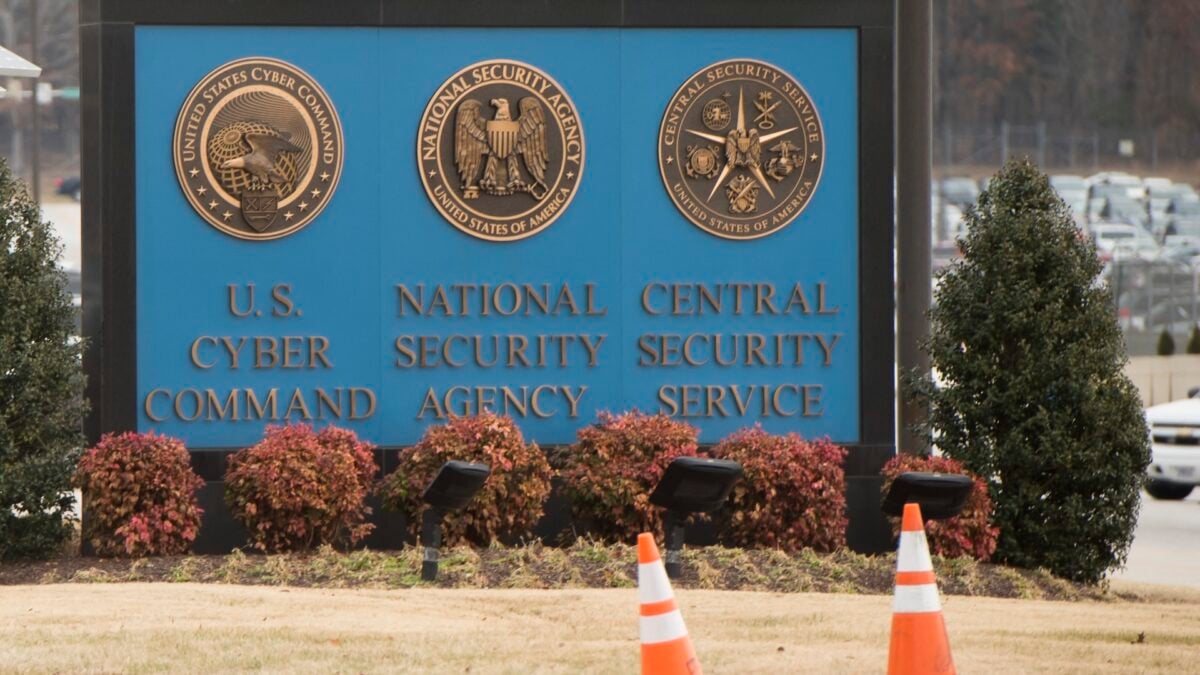
Frontier AI models are getting really good at finding cybersecurity vulnerabilities, maybe a little too good. Now, the rush to fix those flaws may actually be breaking the very systems they’re supposed to protect. The Washington Sun reported Tuesday, citing people familiar with the matter, that the National Security Agency (NSA) and Wall Street executives told members of Congress that recent tech outages were caused by efforts to fix security vulnerabilities discovered by AI. “These models are identifying massive vulnerabilities, and that increases the urgency to patch right away,” a congressional official briefed on the matter told the Sun. “They’re trying to push through a lot of patches all at once — more than the system was designed for.” The report comes after a week of major tech outages at government agencies and some of America’s biggest companies. It all started Thursday, Nov. 12, when Microsoft experienced a massive outage that disrupted Outlook, Teams, and other Microsoft 365 services worldwide for nearly 24 hours. Microsoft has since said the disruption was due in part to an update in July that contained a software bug that could overwhelm servers and cause them to stop responding. The next day, the Federal Aviation Administration (FAA) ordered a nationwide ground stop that lasted more than four hours. Officials said that a telecommunications problem responsible for the ground stop may have originated with a router installed during routine maintenance. According to the FAA, the problems began when excessive network traffic overwhelmed its aging telecommunications infrastructure. Then on Monday, customers at some of America’s largest banks reported problems accessing their accounts and transferring money. JPMorgan Chase has since blamed a software bug in its internal systems that delayed transactions. Neither Microsoft nor JPMorgan Chase has publicly attributed its outage to efforts to fix vulnerabilities discovered by AI. The FAA has also offered a different, more specific explanation for its telecommunications failure. While officials and cybersecurity experts believe the rush to patch AI-discovered vulnerabilities may be contributing to widespread instability, it remains unclear how many of the recent disruptions can be directly tied to that problem. And most recently, the NSA experienced an outage Tuesday affecting its classified internal communications network. Director of National Intelligence Jay Clayton told Fox Business on Tuesday that the NSA outage was caused by software patches addressing recently discovered PHP vulnerabilities. Reuters reported that the vulnerabilities had been discovered with AI. Now, Clayton isn’t the only government official connecting the recent outages to efforts to fix AI-discovered security flaws. “At this point, there is no indication that these incidents are the result of a cyber attack, foreign interference or some co-ordinated effort,” Sen. Mark Warner, vice chair of the Senate Intelligence Committee, told the Financial Times. “What appears to be happening instead is a consequence of how quickly artificial intelligence is changing the cyber security landscape.” Cybersecurity experts are also warning that the problem could get worse. “We are now entirely dependent on software systems that almost nobody understands end to end, that increasingly few people can repair, and that attackers can now probe at machine speed,” cybersecurity expert Nicole Perlroth posted on X. During a House Homeland Security Committee hearing Wednesday, Homeland Security Secretary Markwayne Mullin reiterated that officials had seen nothing indicating that these incidents were related. Still, in his written testimony, Mullin warned that cyberattacks are still a threat and said that hackers linked to Iran have been targeting American infrastructure for months. “Iranian government cyber actors and pro-Iran cybercriminals have targeted US critical infrastructure networks since the conflict with Iran began earlier this year,” Mullin said. He added that the attacks have targeted transportation, healthcare, water, energy, and financial services. Such operations have historically produced “localized and minimally disruptive effects,” Mullin said, although he warned that vulnerabilities in critical infrastructure could lead to more serious consequences. For now, the recent outages appear to be technical failures rather than coordinated cyberattacks. But if the reports about AI-driven security patching are true, efforts to make computer systems safer may be creating a whole new set of problems. The NSA and JPMorgan Chase did not immediately respond to requests for comment.
AI May Be Breaking Everything Because It’s Finding Too Many Things to Fix
Full Article
Original Source
Read the full article at Gizmodo →KhanList aggregates and links to publicly available news content. We do not host full articles from third-party sources. Always verify important information with original sources.