
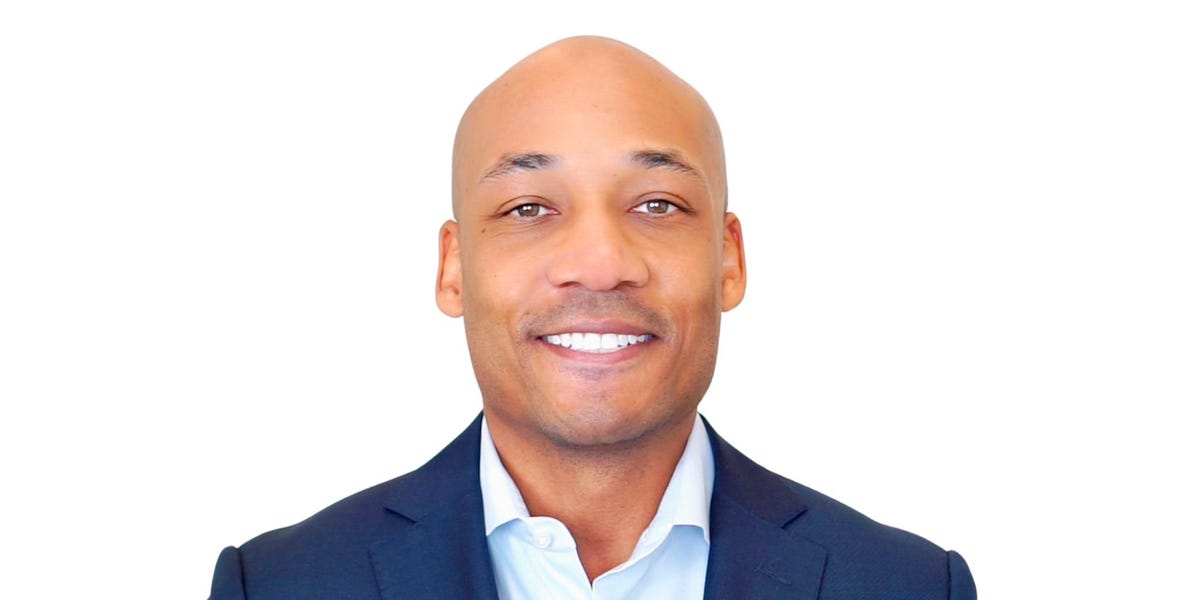
Rick Nott, Senior Managing Director at Angeles Investments Angeles Investments Rick Nott is a senior managing director and private wealth advisor at Santa Monica, California-based Angeles Investments. He spoke to Business Insider about how he uses AI, and why he's excited and afraid when looking at AI-native financial planning platforms. The conversation has been edited for length and clarity.When Claude first rolled out its solution for financial advisors, I felt fear and excitement. How complicated will it be? How will it work?I'm not a software developer, but I have some basic tech skills. LLMs have allowed me to dig into coding, which I'd been avoiding learning because it's a lot of work. I know enough to know what I want, how it should look, and how to check the outputs, and now I can automate more of my process. AI has become the glue between the various systems we use and the different workflows we have.I've shown some colleagues how I operate. One told me that I basically have another full-time employee's worth of output through the technology, by automating data collection processes and making it easier to analyze my clients' portfolios.What AI unlocksI started my career while still in college in the late 2000s doing data reporting work for a wealth firm. Between all of the software advisors use, there's a lot of manual work, typically done in Excel, to connect it together.Previously, I could only provide balance sheet reporting for clients with more than $100 million because it took so much manual work. Now I can do it with someone with significantly less.As a family's net worth grows, so does complexity. For many, understanding their overall financial system is their biggest pain point.Banks and brokerage accounts are the easy part, but trusts, business ownership structures, and private investments, which all report differently and require cash on hand to make capital calls, can take huge amounts of manual work to analyze.Imagine a wealth advisory business serving 30 families, each holding about 10 private investments. Each investment generates about 10 documents a year, including quarterly reports, capital calls, distribution notices, and tax documents. Each of these 3,000 documents takes a skilled analyst 15 to 30 minutes to analyze and distill into our reports. That's 750 to 1,500 hours a year, most of it crammed into the few weeks after each quarter closes. With AI, that data is extracted and mapped as it arrives, and one analyst reviews the work instead of a team racing against a deadline.Our goal is to create a one-page document or report on their phone that's as close to real-time as possible. There's a lot you can do with all of your data in one place. For example, a two- or three-sentence prompt could expand into a full email to a client, with all relevant and accurate information already populated. You can then personalize that to fit the right tone for your client.How AI changes the jobAI tools like Claude for financial advisors will be disruptive, and others will gain access to the same connectivity I've built.I think of it as part of a dynamic that's been going on for years in my industry. Vanguard, ETFs, lower costs, and robo-advisors have all put a squeeze on financial advisors.But if you believe a lawyer's only job is writing contracts, or a financial advisor's only job is putting together a portfolio, there's a fundamental kind of misunderstanding of what the actual job is.As long as investing involves human judgment, financial advisors will have a job. AI doesn't improve investment decisions or results.I tell my clients that my role is to be the architect of their financial operating system, and, as with an actual operating system, a centralized source of data is essential.When you have a big-picture view of what your family's mission is, you can avoid getting distracted by market noise and news. From there, you can go a layer down to make strategic plans and ask if we're moving in the right direction, and what opportunities we may have. Another layer down, we work with a CPA to save money on taxes.A full picture of a balance sheet makes it possible to actually know what liquidity you have available. Now I can spend more time developing relationships, the thing that runs our business. I get to know anything and everything about the clients I'm working with and those I'd like to work with.The future of financial advisors and AII have a natural excitement around tech, and watching the Anthropic webinar was incredible. My main concern is that it's not a subscription-based plan; it's token-based, which could lead to surprise bills for users who don't yet know how to manage their token usage.At small RIAs without the expertise, people will be uploading 100-page PDF documents just to ask basic questions, like the ages of kids in a trust. That will rip through tokens.We priced it out internally, and we would have to pay significantly more for a token-based plan instead of the subscription-based licenses we have now. Maybe eventually everyone will have to pay for tokens that way, and the cost of tokens is going down.We learn to do things faster and at lower cost, but in this industry, we do that for a particular reason: to spend more time with the people we serve.The primary way that our clients give us information is still by talking. There's a significant amount of nuance. You may be able to understand something and infer what's really being said. But note-taking software is still wrong all the time. You have to review it.Money is emotional, and I seriously question whether AI can replace our need to connect with another human being.Do I see someone sitting across the table from AI on a speakerphone? Probably not. Read next Business Insider tells the innovative stories you want to know Business Insider tells the innovative stories you want to know Business Insider tells the innovative stories you want to know Business Insider tells the innovative stories you want to know Alex is a reporter at Business Insider writing about how people, from billionaires to penny-pinchers, save, invest, and manage their money. He previously covered private credit and equity, real estate, and real estate technology for Business Insider.Recently, he's covered Steve Schwarzman's hidden family office, private capital's push into your retirement account, a massive Airbnb tax-break unlocked by President Trump, and the ex-McKinsey consultant connecting Zohran Mamdani to the business world. According to one Fortune 500 CEO, he's a "fringe reporter."Before joining Business Insider in 2019, he worked for Bridgewater Associates and Peloton. He is the interim vice-chair of the Insider Union.He welcomes any and all reachouts, prioritizes his source's safety, and has a long record of working with confidential sources to tell deeply reported, complicated stories. He loves to yap.Get in touch! Contact this reporter via encrypted messaging app Signal at @alexnicoll.01 using a non-work phone, email at anicoll@businessinsider.com or alexonicoll@protonmail.com, or Twitter DM at @nicollsanddimes. as told to AI
AI helped me automate some of my wealth advisor job. Here's why I'm not worried about it stealing my edge.
Full Article
Original Source
Read the full article at Businessinsider →KhanList aggregates and links to publicly available news content. We do not host full articles from third-party sources. Always verify important information with original sources.