
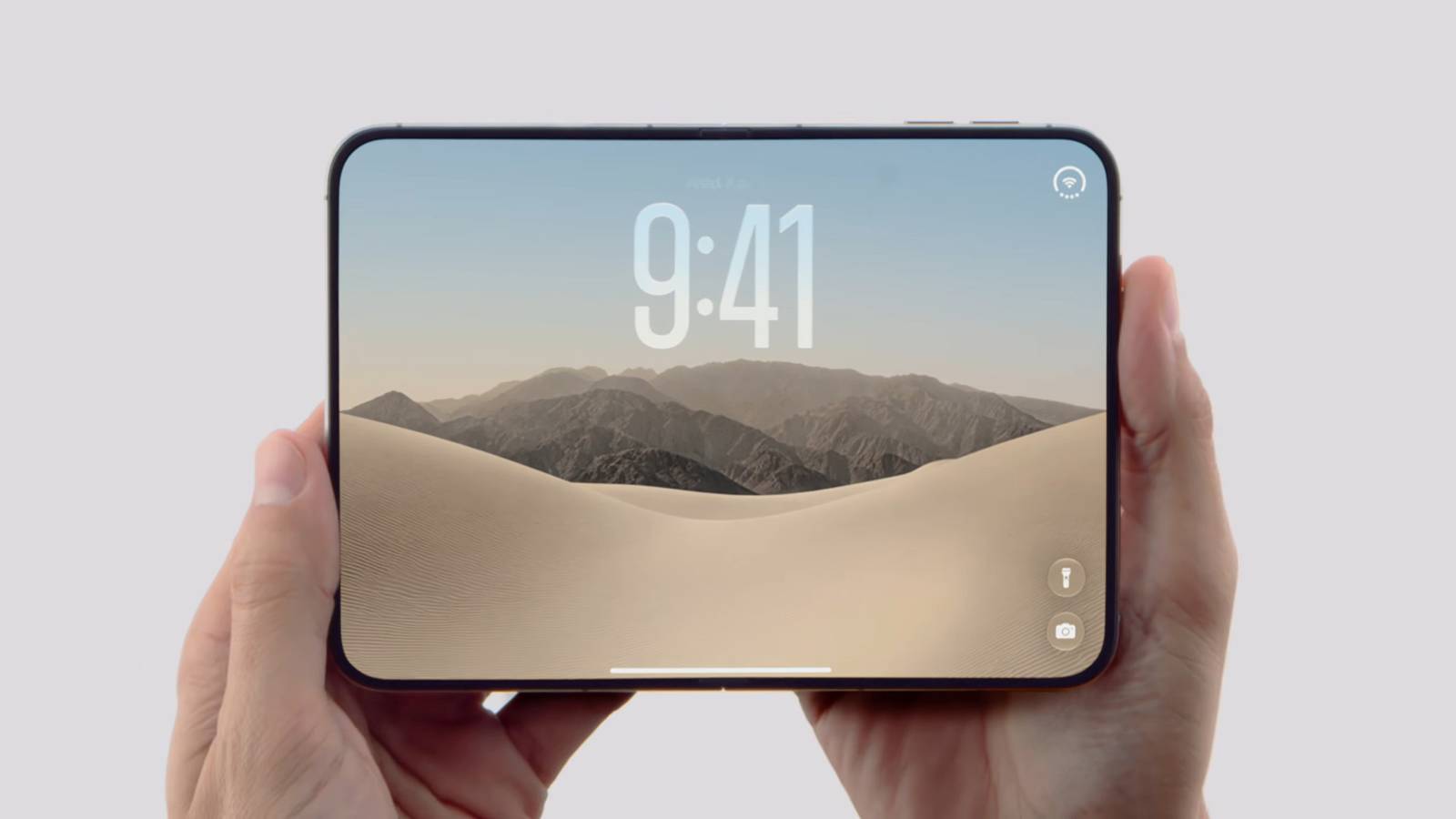
Published Sep 9, 2026, 1:57 PM EDT Patrick O'Rourke is XDA's News Editor and Entertainment Segment Lead. Previously, he was Pocket-lint's Editor-in-Chief, the Editor-in-Chief of Canadian tech publication MobileSyrup, and earlier in his career, he worked as the technology editor at the Financial Post and Postmedia. He's based in Toronto. Over the past 15 years, he's written thousands of articles. Patrick has also interviewed dozens of tech industry executives and covered GDC, E3, Gamescom, WWDC, Apple keynotes, Samsung Unpacked events and more. Patrick has a BA in journalism from Toronto Metropolitan University. Borrowing at least part of its name from Microsoft's ill-fated Surface Duo to some extent, Apple has finally revealed the iPhone Duo, the tech giant's first foldable smartphone. Rumors about Apple working on a foldable iPhone have swirled for what feels like nearly a decade. Right off the top, it's important to mention that this device is arriving seven years after Samsung's first foldable smartphone released. It's also very pricey at an eye-watering $2,000, similar to foldable smartphones from other companies. In many ways, this is the tech giant playing catch-up not only with Samsung, but also with Chinese smartphone manufacturers like Huawei, Oppo, and Honor. The phone is roughly the size of a passport at 5.4-inches when folded, but it opens into what Apple calls its largest iPhone display ever: 7.6-inches. Both displays feature the same aspect ratio, but the inner screen is 50 percent bigger than the iPhone 18 Pro Max and 80 percent bigger than the iPhone 18 Pro. During the keynote, Apple emphasized that the iPhone Duo is designed to be comfortably used in portrait and landscape mode. The tech giant added that the Duo's hinge mechanism features a custom torque profile that closes securely and lays completely flat when open. During the keynote, Apple emphasized the iPhone Duo's durability The tech giant might have an advantage on the software side of things Credit: Apple Other key features include a titanium frame, which makes sense given foldables are often rather heavy. It also has Ceramic Shield glass on the back and Ceramic Shield 2 on the front, alongside IP68 dust and water resistance, so it should be a pretty durable device. On the software front, when you open the iPhone Duo, apps move seamlessly from the smaller screen to the larger foldable display. Apple also showed off how the iPhone Duo can be used half-folded, similar to the Galaxy Z Fold 8 Ultra and previous versions of Samsung's foldables (the Galaxy Z Fold 8 can't be used half-folded). Storage options include 256GB, 512GB, 1TB, and 2TB. In terms of cameras, there's a selfie shooter in the top-right corner of the screen, but there's no Dynamic Island or Face ID camera on the front of the phone. Instead, there's an under-display camera inside the foldable screen. Touch ID is built into one of the side buttons. On the design front, the device feels a little bit behind the sleek-looking, squared-off Galaxy Z Fold 8. Its bezels are pretty chunky, and despite being Apple's thinnest iPhone ever, it still seems rather thick compared to its competitors. Where Apple's iPhone Duo might have an advantage over other foldables is the end-to-end control the tech giant has over its operating system and apps, which lets it better adapt iOS to the smartphone and push third-party app developers to adapt their apps to the unique design. iPhone Duo colors include Star White and Night Sky. As expected, the iPhone Duo is expensive, starting at $2,000 for the 256GB version. The phone will be available to pre-order on October 16th and releases on October 23rd.
After years of rumors, Apple has finally revealed its foldable iPhone Duo — and it starts at $2000
Full Article
Original Source
Read the full article at Xda-developers →KhanList aggregates and links to publicly available news content. We do not host full articles from third-party sources. Always verify important information with original sources.